Behavior
What are quick tips for Boxer anxiety?
Establish a routine, provide regular exercise, and use positive reinforcement training methods to help manage Boxer anxiety.

Quick answer
What are quick tips for Boxer anxiety?
Establish a routine, provide regular exercise, and use positive reinforcement training methods to help manage Boxer anxiety.
Boxer anxiety can be a challenging issue for both you and your dog.
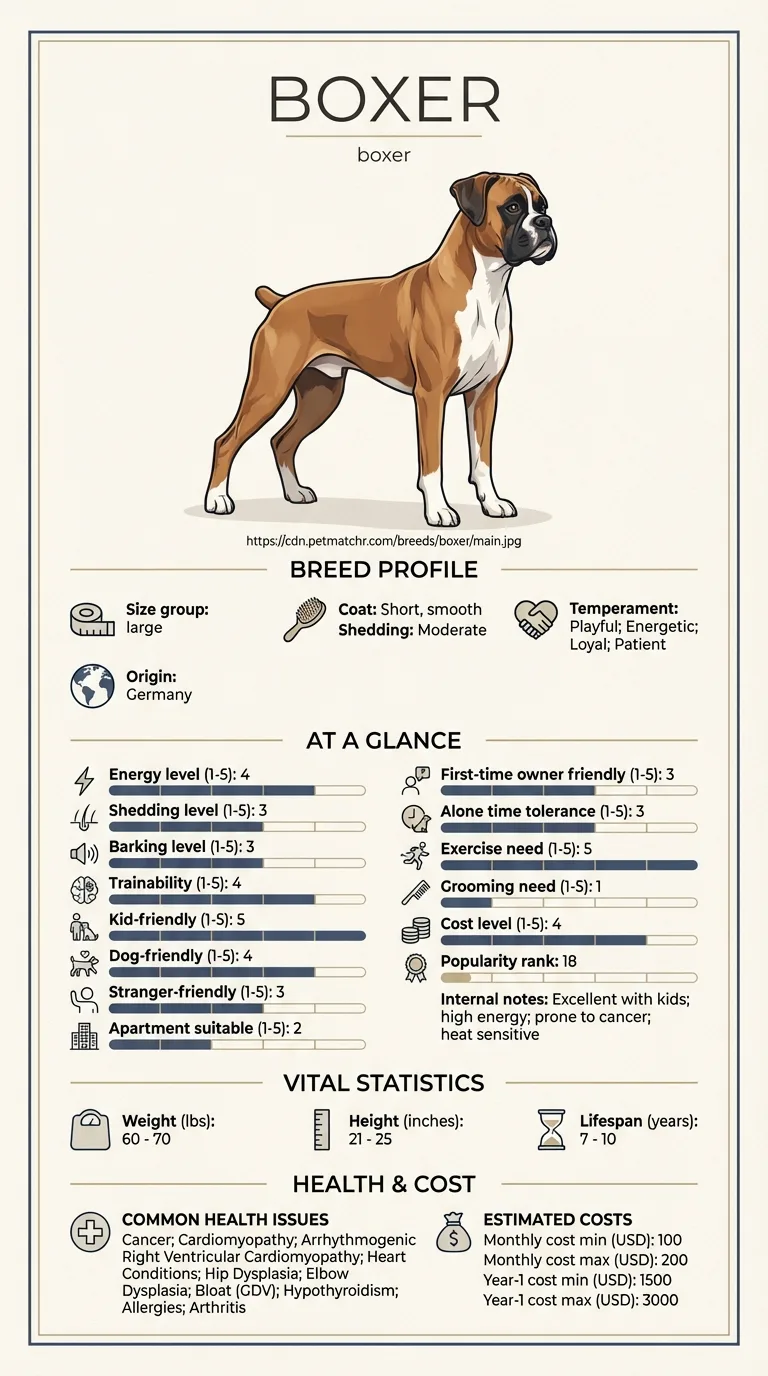
This guide is perfect for Boxer owners who notice signs of anxiety in their dogs and want to find effective training and management strategies.
Boxer anxiety can manifest as excessive barking, pacing, or destructive behavior. These dogs may seem restless and on edge, especially when left alone or in new situations. Owners often notice their Boxers becoming clingy or overly protective, which highlights their need for security and comfort.
If your Boxer shows severe anxiety that disrupts daily life, professional training may be necessary. Look for trainers who specialize in anxiety-related issues.
Consult a vet or behaviorist if your Boxer exhibits signs of extreme anxiety, such as destructive behavior or excessive barking. A professional can provide tailored advice and treatment options.
Several tools and products can help manage Boxer anxiety effectively. From calming aids to training programs, these resources can support your efforts.
Lifestyle adjustments can greatly help in managing Boxer anxiety. Start by creating a consistent daily schedule. Boxers thrive on routine, so feeding, walks, and playtime should happen at the same times each day.
This predictability can reduce anxiety as your dog knows what to expect.
Exercise is crucial for Boxers, as they have high energy levels. Aim for at least an hour of vigorous activity daily, such as running, playing fetch, or agility training. Regular exercise not only helps expend energy but also promotes mental stimulation, which can alleviate anxiety.
Alone time is another factor to consider. Boxers can be prone to separation anxiety, so gradually increase the time they spend alone. Start with short periods and slowly extend them.
Consider leaving a special toy or treat to keep them occupied. Adjusting household routines can also help. For example, if your dog gets anxious during loud noises, create a quiet space with comfortable bedding and calming music.
Lastly, establish a calming routine before leaving the house. Spend a few minutes engaging in a relaxing activity, like gentle petting or a short training session. This can ease the transition and reduce anxiety symptoms.
By making these lifestyle adjustments, you can better support your Boxer and help them feel more secure.
Tracking progress with your Boxer's anxiety can help you see small victories along the way. Micro-wins could be as simple as your dog being calmer during short absences or showing interest in play when you return home. Celebrate these moments, as they indicate that your training efforts are starting to pay off.
However, setbacks are normal. You might notice your Boxer becoming anxious during unexpected changes, like new visitors or loud noises. Recognizing these moments is crucial, as they can signal when to adjust your training plan.
If your dog has a bad day, remind yourself that progress isn’t always linear.
Look for consistent signs that your Boxer's anxiety is decreasing. This could include reduced whining or barking when left alone, more relaxed body language, or even a willingness to explore new environments. If you notice these improvements, it’s a good sign that your training techniques are effective.
If anxiety continues to escalate despite your efforts, it may be time to consult a professional trainer or a veterinarian for additional strategies or support.

Meet Sarah, a busy nurse from Atlanta, who adopted a Boxer named Max. Max was sweet and energetic, but he struggled with anxiety whenever Sarah left for work. He would bark excessively and chew on furniture, making Sarah worried about his well-being. After some research, she started implementing simple strategies at home, like leaving a special toy filled with treats to keep him occupied. She also tried creating a calm space with soft music. Despite these efforts, Max's anxiety persisted, so Sarah decided to seek professional help. She enrolled Max in a Boxer anxiety training program, where he learned to cope better with his feelings of loneliness. After a few weeks, they noticed a significant improvement. Max became more relaxed when left alone, and Sarah could focus on her job without guilt. Their bond grew stronger, and they started enjoying more adventures together.
Key takeaway: If your Boxer struggles with anxiety, try home strategies first, but don’t hesitate to seek professional help if needed. Training can make a big difference!
Boxers may experience anxiety due to various factors, such as lack of socialization, changes in their environment, or separation from their owners. It can also stem from their high energy levels, which might not be adequately channeled. Understanding the root cause is essential for effective management.
To help manage Boxer anxiety, consider establishing a consistent routine and providing plenty of exercise. Engaging in training sessions can also provide mental stimulation and build confidence. If anxiety persists, consulting a veterinarian or a professional trainer may be necessary.
Yes, training can significantly help reduce Boxer anxiety. Techniques like desensitization and positive reinforcement can teach your dog to cope with triggers. Consistent training not only improves behavior but also strengthens the bond between you and your Boxer.
Yes, there are various products designed to help manage Boxer anxiety, including calming collars, anxiety wraps, and pheromone diffusers. These can provide comfort and help your Boxer feel more secure. Always consult your vet before introducing new products.
Traveling can be stressful for some Boxers. To help, gradually acclimate your dog to car rides and use calming aids, like anxiety wraps or pheromone sprays. Break up long trips with regular stops for exercise and bathroom breaks.
Yes, older Boxers may develop anxiety due to changes in their health or environment. Keep an eye out for signs like increased vocalization or destructive behavior. Consult your vet for guidance on how to manage anxiety in senior dogs.
Boxer separation anxiety is common and can be managed with training and environmental adjustments. Start by creating a safe space for your dog and gradually increasing their alone time. Consider using interactive toys to keep them engaged while you're away.
Boxers can experience anxiety in multi-dog households, especially if there's competition for attention. Ensure each dog has their own space and time for one-on-one interaction. Monitor their behavior and address any signs of stress promptly.
Natural remedies for Boxer anxiety include calming supplements with ingredients like chamomile or valerian root. Regular exercise, a consistent routine, and enriching activities can also help reduce anxiety levels. Always consult your vet before trying new remedies.
Establish a routine, provide regular exercise, and use positive reinforcement training methods to help manage Boxer anxiety.
Create a safe space for your Boxer with their favorite toys and blankets, and consider using calming music or white noise during storms.
Medication can be an option for severe anxiety, but it should always be discussed with your veterinarian to ensure it's appropriate and safe.
Yes, Boxer anxiety is common, especially in puppies or those not properly socialized. Early intervention can lead to better outcomes.
Anxiety and pain look alike from the outside. Get the prep sheet for this breed's separation-anxiety page and take it to the vet.
You get: Vet visit prep sheet
No spam. One-click unsubscribe. See our privacy policy.
Preview page 1 before you decide.
This guide is not medical advice. If your dog shows pain, sudden behavior change, or worsening symptoms, consult a licensed veterinarian.
Some links may be affiliate links. We may earn a commission at no extra cost to you. We only suggest products we believe are helpful for dog owners.
We research and check what we publish, but we do not warrant that any figure, date, price, or statement is accurate, complete, or current, and we accept no liability for any loss, cost, injury, or other harm arising from the use of this site. Use it as one reference among several. You remain responsible for your own decisions and for your dog's care - confirm anything that matters with a licensed veterinarian or another qualified professional before you act on it. Full disclaimer.
Not sure which breed is right for you? Take our 2-minute quiz to find out.
Take the quiz