Behavior
What are quick tips for Border Collie anxiety?
Provide regular exercise, use calming products, and maintain a structured routine to help reduce anxiety. Engaging your Border Collie mentally can also make a big difference.

Quick answer
What are quick tips for Border Collie anxiety?
Provide regular exercise, use calming products, and maintain a structured routine to help reduce anxiety. Engaging your Border Collie mentally can also make a big difference.
Border Collie anxiety can be a real challenge for both you and your dog.
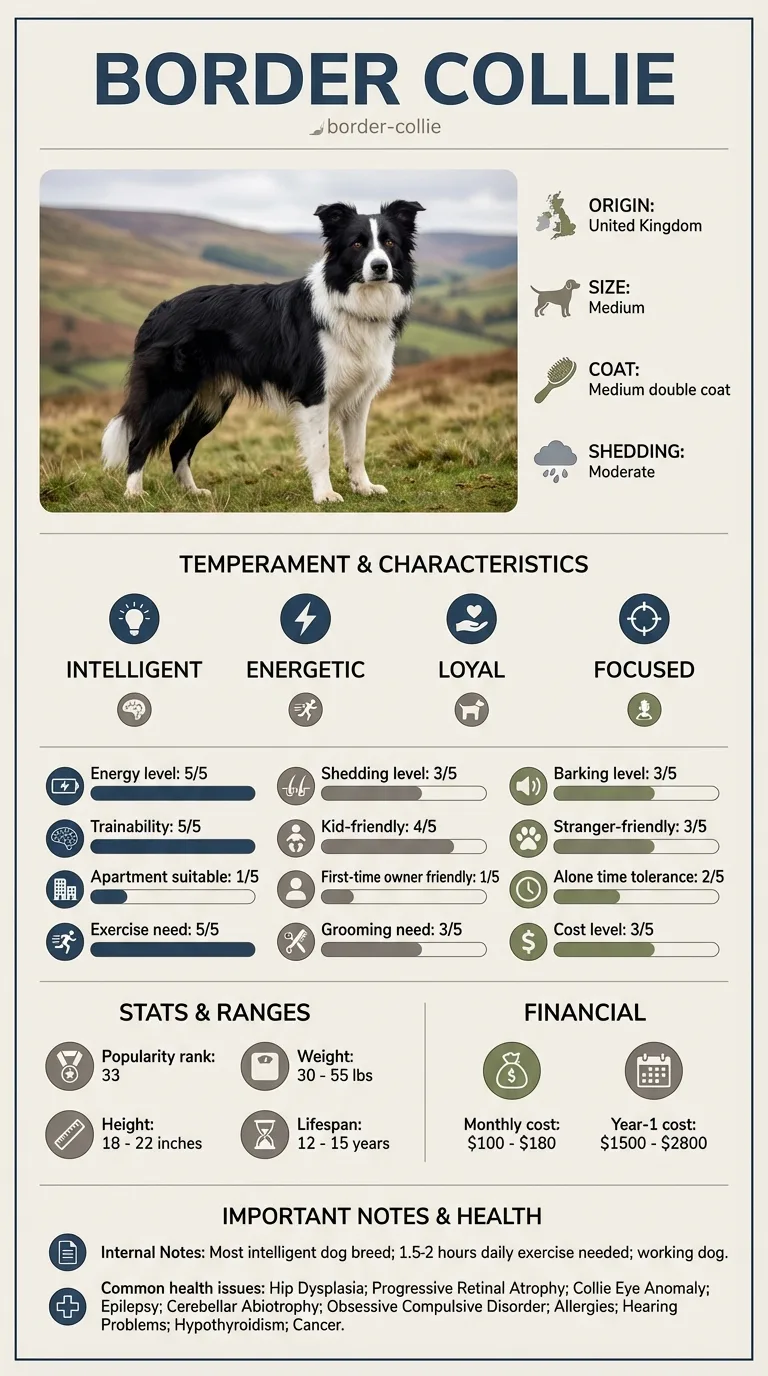
This guide is for Border Collie owners who are noticing signs of anxiety in their pets and are looking for practical solutions to improve their dog's well-being.
Border Collie anxiety often manifests as restlessness and an inability to settle down. Owners may notice their dog pacing, whining, or showing signs of distress when left alone or faced with loud noises. Over time, this anxiety can lead to destructive behaviors, making life challenging for both the dog and the owner.
If your Border Collie's anxiety persists despite your efforts, consider professional training to address specific behaviors and reactions.
Consult a vet or behaviorist if your dog's anxiety leads to destructive behavior, excessive barking, or health issues.
Helpful tools and products can support your Border Collie's anxiety management and training.
Making lifestyle adjustments can significantly help with Border Collie anxiety. These dogs thrive on routine, so establishing a consistent daily schedule is crucial. Regular feeding times, walks, and play sessions can provide a sense of stability, reducing anxiety levels.
Exercise is vital for a Border Collie, as they have high energy levels. Aim for at least 1.5 to 2 hours of physical activity each day. Activities like running, agility training, or fetching can help burn off excess energy.
This not only keeps them fit but also prevents boredom, which can lead to anxiety.
It's essential to gradually increase alone-time windows. Start by leaving your Border Collie alone for short periods and gradually extend that time. This can help them build confidence and reduce separation anxiety.
In addition, incorporating interactive toys or puzzles can keep them engaged while you’re away.
Adjusting household routines can also make a difference. Create a calm environment by designating a quiet space for your dog with their bed and favorite toys. Calming scents like lavender can help soothe their nerves.
Finally, consider practicing relaxation techniques like gentle massage or playing soft music to help ease anxiety during stressful moments.
Tracking progress with Border Collie anxiety is crucial. Look for small victories, like your dog staying calm during brief periods of separation or responding better to commands. These micro-wins indicate that training is working and that your dog is becoming more comfortable with their environment.
However, setbacks can occur. If your dog suddenly refuses to enter their crate or shows signs of stress during walks, it might be time to reassess your approach. Recognizing these moments is key to understanding your dog's needs.
It’s important to remember that progress isn't always linear; some days will be better than others.
As you continue with Border Collie anxiety training, monitor your dog's reactions. If your pup exhibits more relaxed behaviors, like resting calmly when left alone or playing with toys instead of pacing, you’re on the right track. Keep a journal to note these changes and adjust your training methods as needed.
If you notice consistent improvement, celebrate those small wins and build on them! If not, consider seeking advice from a professional.

Jenna, a busy nurse in Seattle, adopted Max, a three-year-old Border Collie. After a few weeks, she noticed he was anxious, especially during thunderstorms and when left alone. She tried dog puzzles and interactive toys to occupy him, but Max still barked excessively and paced around. Realizing she needed help, Jenna consulted a dog trainer who suggested structured training and gradual desensitization to common stressors. They worked on commands and introduced calming techniques like deep pressure therapy with a weighted blanket. Over several months, Max grew more confident and relaxed, showing significant improvement during storms and when left alone.
Key takeaway: Understanding and addressing Border Collie anxiety requires patience, structured training, and sometimes professional help. Small changes can lead to big improvements.
Border Collie anxiety can stem from various factors, including lack of socialization, past trauma, or insufficient exercise. These dogs are highly intelligent and energetic, so they may become anxious if their needs aren't met. Understanding the root cause is key to effective management.
To help your Border Collie, create a consistent routine, provide plenty of physical and mental stimulation, and consider anxiety training techniques. Gradual desensitization and positive reinforcement can also be beneficial. Consult with a professional trainer for tailored strategies.
In some cases, medication may help manage severe anxiety in Border Collies. It's essential to consult your veterinarian to discuss options and determine the best approach for your dog's specific needs. Medication should ideally accompany behavioral training.
Training techniques like crate training, desensitization to triggers, and obedience commands can help reduce anxiety. Incorporating puzzle toys and interactive games may also keep your Border Collie engaged and less anxious. Consistency and patience are key.
The duration of anxiety in Border Collies varies widely based on individual circumstances and training efforts. With time, proper training, and management, many dogs show significant improvement. It's important to remain patient and committed to the process.
Signs of Border Collie anxiety can include excessive barking, destructive behavior, or trembling. You might also notice your dog trying to hide or showing clinginess. If these behaviors persist, it’s important to seek help.
Older Border Collies may experience anxiety due to health issues or changes in their routine. Providing a calm environment, sticking to a consistent schedule, and gentle exercise can help. Consulting a vet for tailored advice is also a good idea.
Yes, traveling can exacerbate anxiety in Border Collies, especially if they are not used to new environments. It’s helpful to prepare them with gradual exposure to different settings and to bring along familiar items like toys or blankets.
If one of your Border Collies is anxious, it’s essential to give that dog individual attention while also managing the pack dynamic. Create a safe space for the anxious dog and consider training to help reduce stress for all pets.
Border Collies are high-energy dogs that require substantial exercise. A lack of physical activity can lead to anxiety and behavioral issues. Regular, engaging activities like fetch or agility training can significantly alleviate anxiety symptoms.
Provide regular exercise, use calming products, and maintain a structured routine to help reduce anxiety. Engaging your Border Collie mentally can also make a big difference.
Border Collies typically need 1.5 to 2 hours of exercise daily to stay happy and healthy. This helps prevent anxiety and boredom.
Signs of anxiety in Border Collies include excessive barking, destructive behavior, and clinginess. Observe your dog's behavior closely for any changes.
Interactive toys and puzzle feeders can help keep your Border Collie engaged and reduce anxiety levels. These toys stimulate their minds while providing a distraction.
Anxiety and pain look alike from the outside. Get the prep sheet for this breed's separation-anxiety page and take it to the vet.
You get: Vet visit prep sheet
No spam. One-click unsubscribe. See our privacy policy.
Preview page 1 before you decide.
This guide is not medical advice. If your dog shows pain, sudden behavior change, or worsening symptoms, consult a licensed veterinarian.
Some links may be affiliate links. We may earn a commission at no extra cost to you. We only suggest products we believe are helpful for dog owners.
We research and check what we publish, but we do not warrant that any figure, date, price, or statement is accurate, complete, or current, and we accept no liability for any loss, cost, injury, or other harm arising from the use of this site. Use it as one reference among several. You remain responsible for your own decisions and for your dog's care - confirm anything that matters with a licensed veterinarian or another qualified professional before you act on it. Full disclaimer.
Not sure which breed is right for you? Take our 2-minute quiz to find out.
Take the quiz