Behavior
What are quick tips for Yorkshire Terrier progressive retinal atrophy (pra-rcd3)?
Keep your home environment consistent and clutter-free. Use command training and noise-making toys to assist navigation.
Yorkshire Terrier progressive retinal atrophy (PRA-RCD3) is a serious condition that leads to vision loss.
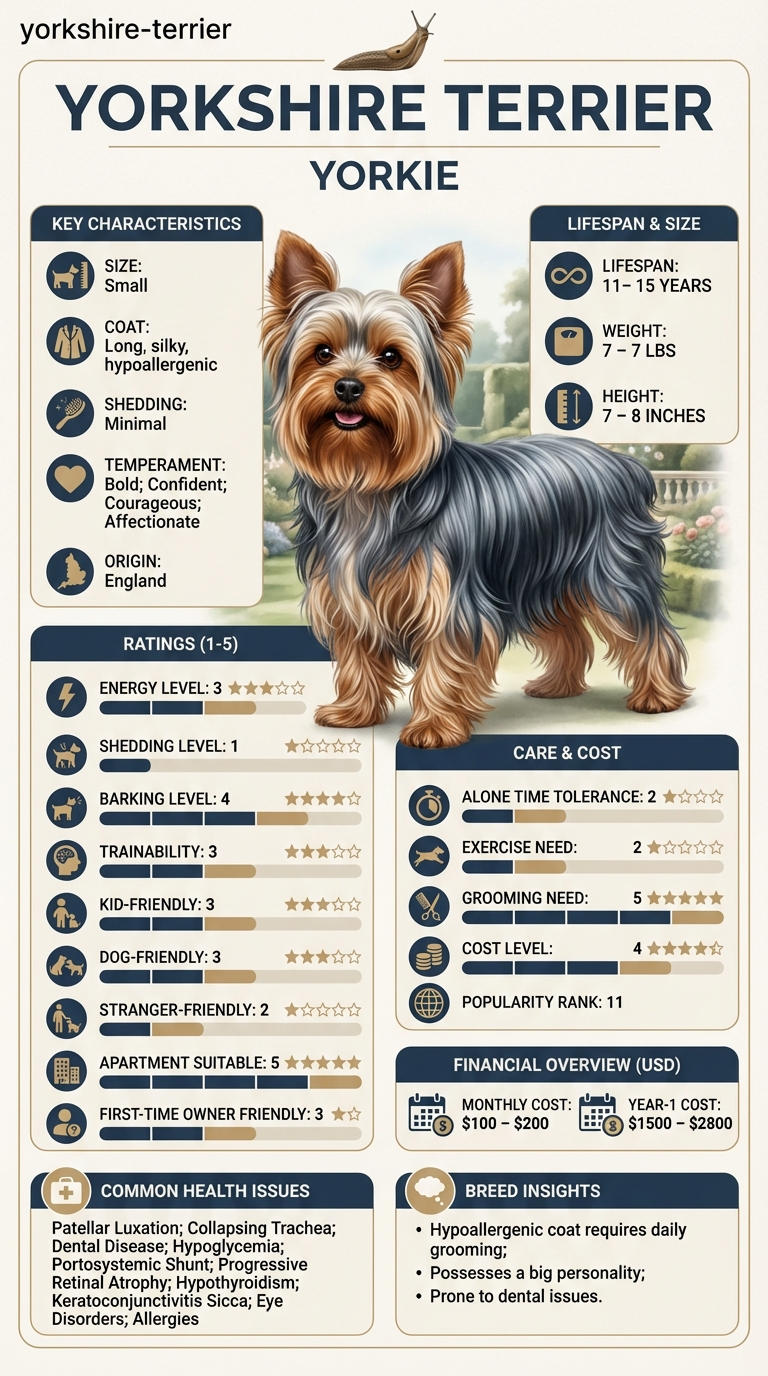
Owners of Yorkshire Terriers may face this problem, especially those who are unaware of their dog's genetic predisposition to eye issues. Busy families or first-time dog owners might find it particularly challenging to recognize and manage the symptoms.
This guide is not medical advice. If your dog shows pain, sudden behavior change, or worsening symptoms, consult a licensed veterinarian.
Some links may be affiliate links. We may earn a commission at no extra cost to you. We only suggest products we believe are helpful for dog owners.
Yorkshire Terrier progressive retinal atrophy (pra-rcd3) is a genetic condition that leads to gradual vision loss. Day-to-day, this might look like your Yorkie struggling to navigate familiar spaces or bumping into furniture. As the disease progresses, they may become more hesitant and anxious, especially in new environments.
This condition is relatively common in Yorkshire Terriers, with studies suggesting that around 10-20% of this breed may be affected by some form of progressive retinal atrophy. Early diagnosis and regular eye check-ups can help manage the condition effectively.
Yorkshire Terriers are prone to genetic conditions like progressive retinal atrophy (PRA-rcd3). This inherited disorder affects the retina, leading to vision loss. Since it's a trait common in the breed, Yorkies may face this issue more frequently than other breeds.
Environmental factors can also contribute to the progression of PRA-rcd3. Poor lighting or an environment that does not accommodate a dog’s visual limitations can exacerbate the problem. Stressful situations may further hinder their ability to adapt to changes related to their vision.
If your Yorkie's behavior changes significantly or they seem anxious navigating their environment, it may be time to consult a professional trainer. A trainer experienced with sight-impaired dogs can provide tailored strategies to help them adjust.
Consult your vet if you notice signs of worsening vision, such as bumping into objects or difficulty finding food. They can assess your Yorkie's condition and recommend treatment options, which may include specialized diets or supplements.
You can expect to see gradual changes in your Yorkshire Terrier's vision over several months to years. Early intervention and consistent care can help manage the condition effectively.
Success means maintaining your dog's quality of life despite vision loss. This includes adapting their environment and ensuring they remain active and engaged.
Understanding common mistakes can help you better manage your Yorkshire Terrier's progressive retinal atrophy (PRA-rcd3). Here are some behaviors to avoid and safer alternatives to consider.
Knowing when Yorkshire Terrier progressive retinal atrophy (PRA-rcd3) becomes an emergency is crucial. While some signs may be mild and manageable, others can indicate a serious situation that requires immediate veterinary attention. Here are the red-flag signs to watch for and how to differentiate them from mild cases.

If your Yorkshire Terrier shows any of the following symptoms, contact your vet immediately: - Sudden vision loss or extreme difficulty navigating around familiar spaces. - Disorientation or confusion, especially in new environments. - Signs of severe eye discomfort, such as excessive squinting or pawing at the eyes.
In some instances, your Yorkshire Terrier may exhibit mild symptoms that can be monitored at home. If you notice these signs, keep an eye on your pup and consult your vet during your next visit: - Gradual changes in vision or difficulty seeing in low light. - Occasional clumsiness when moving around.
- Mild eye discharge or redness that does not worsen.

When Lisa adopted Maggie, her Yorkshire Terrier, she was excited to have a lively companion. However, after a few months, Lisa noticed Maggie bumping into furniture and struggling to navigate stairs. A visit to the vet confirmed Maggie had progressive retinal atrophy (PRA-rcd3). Determined to help, Lisa adjusted their home by removing obstacles and keeping pathways clear. She also started using sound-based toys to help Maggie play independently. Over time, Maggie adapted well, and Lisa learned to appreciate their bond in new ways.
Key takeaway: With patience and proactive adjustments, you can help your Yorkshire Terrier navigate life with progressive retinal atrophy, ensuring they stay happy and engaged.
Yorkshire Terrier progressive retinal atrophy (pra-rcd3) is a genetic condition that leads to vision loss over time. It is caused by mutations in specific genes that affect the retina. Regular veterinary check-ups can help monitor your Yorkie's eye health.
Signs of pra-rcd3 in your Yorkshire Terrier include difficulty seeing in low light, bumping into objects, or hesitance in unfamiliar environments. If you notice these symptoms, consult your vet for a thorough eye examination.
Currently, there is no cure for Yorkshire Terrier progressive retinal atrophy (pra-rcd3). However, early detection and supportive care can help manage the condition and improve your dog's quality of life.
To help your Yorkshire Terrier, maintain a consistent home environment, avoid rearranging furniture, and use voice commands to guide them. Additionally, provide them with toys that make noise to help them navigate.
Training can enhance your Yorkshire Terrier's confidence and comfort in navigating their surroundings. Use positive reinforcement techniques to teach them commands that aid in mobility, like 'find it' or 'come here.'
Yorkies with pra-rcd3 may exhibit anxiety or fear due to their vision loss. It's crucial to provide reassurance and maintain routines to help them adjust to their condition.
Early signs of Yorkshire Terrier progressive retinal atrophy (pra-rcd3) include difficulty seeing in low light, bumping into objects, or hesitating before jumping. You might also notice your Yorkie becoming less active or showing unusual behavior due to vision loss.
Unfortunately, Yorkshire Terrier progressive retinal atrophy (pra-rcd3) is a progressive condition with no cure. While treatment options may help manage symptoms, such as providing a safe environment and using supplements, the vision loss itself cannot be reversed.
Yes, progressive retinal atrophy (pra-rcd3) is more commonly diagnosed in older Yorkshire Terriers. However, it can also occur in younger dogs, especially if there is a genetic predisposition. Regular vet check-ups are essential for early detection.
To help your Yorkshire Terrier adjust, maintain a consistent environment to prevent confusion. Using scent cues and voice commands can also guide them. Training for specific commands can aid in navigation and enhance their confidence.
If you notice changes in your Yorkshire Terrier's behavior, such as bumping into things or hesitating in familiar spaces, it's time to consult a vet. Early diagnosis and management can help improve their quality of life.
Keep your home environment consistent and clutter-free. Use command training and noise-making toys to assist navigation.
Regular vet check-ups are essential. Monitor their behavior for changes and provide emotional support as they adapt.
Expect to spend on regular veterinary visits and specialized care, which can range from $100 to $200 monthly.

