Understanding Poodle (Standard) Heat Sensitivity & Hyperthermia
Poodles (Standard) can be especially sensitive to heat, putting them at risk for hyperthermia. This is a serious condition that can lead to heatstroke if not addressed. (Poodle (Standard) heat sensitivity & hyperthermia)

What you can try
- Limit outdoor activities during the hottest parts of the day, typically between 10 AM and 4 PM.
- Ensure your Poodle has access to fresh water at all times, especially during warm weather.
- Create a cool environment at home using fans or air conditioning, and provide a shaded area when outdoors.
- Consider using cooling vests or mats designed for dogs to help regulate their body temperature.
- Observe your Poodle for signs of overheating, such as excessive panting, drooling, or lethargy, and respond quickly.
Mistakes that make this worse
Avoiding common pitfalls can help manage your Poodle's heat sensitivity and prevent hyperthermia. Here are some mistakes to watch out for.
- Ignoring temperature warnings: Many owners underestimate how quickly a Poodle can overheat. Always check the weather and keep walks short on hot days.
- Forgetting hydration: Some owners assume their dog will drink enough water. Always provide fresh water, especially during and after exercise.
- Overexerting during play: Allowing your Poodle to play too hard in the heat can lead to exhaustion. Instead, opt for gentle play and frequent breaks in the shade.
- Not recognizing signs of distress: Owners might miss signs of overheating, such as excessive panting or lethargy. Learn to recognize these signs and respond immediately.
- Neglecting grooming: Poodles require regular grooming to maintain their coat. A well-groomed coat can help regulate their temperature, so keep up with professional grooming.
- Using improper training techniques: Some owners use harsh corrections for unwanted behavior during hot weather. Instead, focus on positive reinforcement to build trust and reduce stress.
- Discounting cooling products: Many owners don’t utilize cooling vests or mats. Invest in these tools to help keep your Poodle comfortable during warm days.
When Poodle (Standard) Heat Sensitivity & Hyperthermia is an Emergency
Heat sensitivity and hyperthermia can be serious for your Poodle (Standard). It’s important to know when to act quickly. If your dog exhibits any of the following red-flag signs, call your vet immediately: excessive panting, drooling, vomiting, or lethargy. These symptoms can indicate heatstroke, which is life-threatening and requires urgent medical attention.

When to Watch and Wait
On the other hand, if your Poodle is simply showing mild signs of heat sensitivity—like a bit of panting after playing outside—this can often be monitored at home. Ensure your dog is hydrated, provide a cool place to rest, and limit outdoor activities during peak heat. Keeping an eye on their behavior can help you decide if further action is needed.

Frequently asked questions
Why does my Poodle (Standard) have heat sensitivity & hyperthermia?
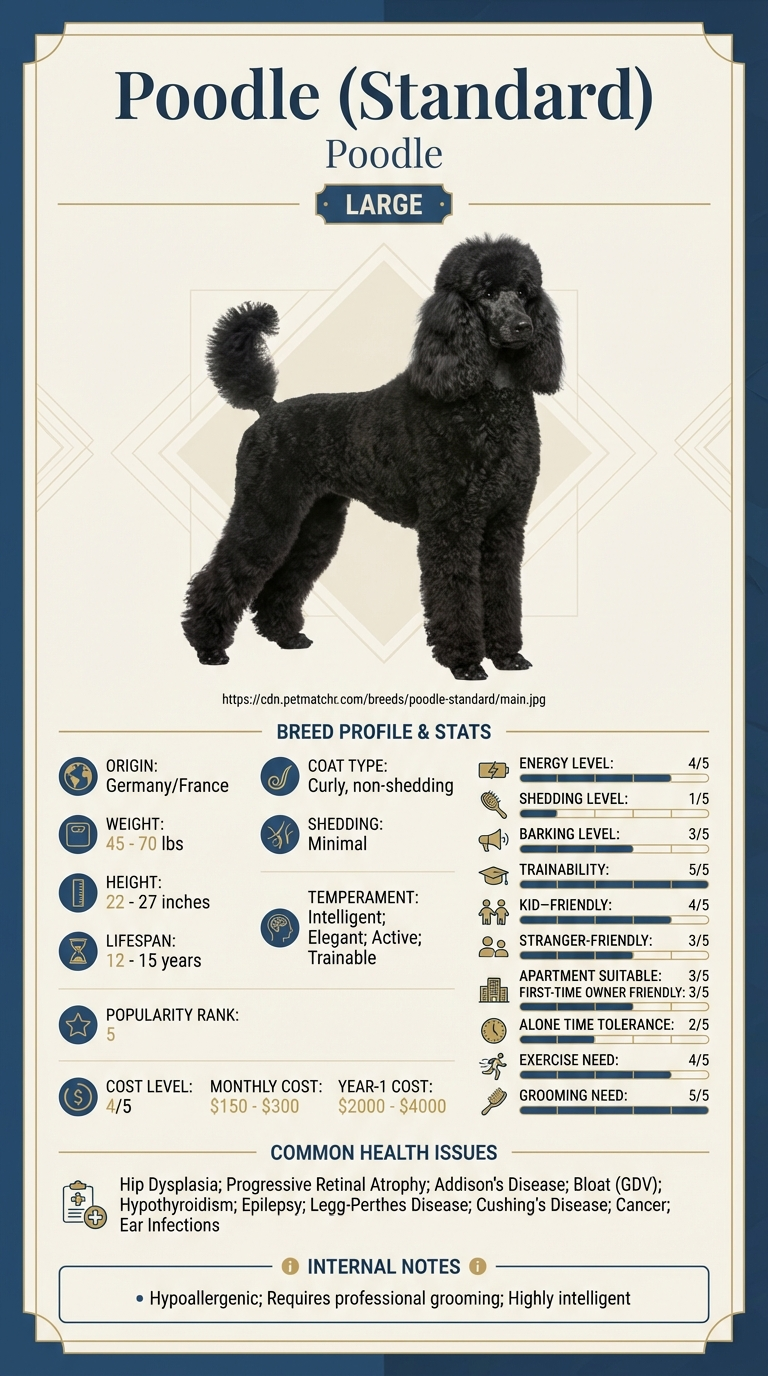
Poodles (Standard) are more prone to heat sensitivity and hyperthermia due to their thick, curly coats and active nature. They can struggle to cool themselves down effectively in high temperatures. This makes it crucial to monitor their activity levels and provide plenty of water and shade. This answer relates to Poodle (Standard) heat sensitivity & hyperthermia.
How can I stop my Poodle (Standard) from overheating?
To prevent overheating, ensure your Poodle has access to cool, shaded areas and limit exercise during the hottest parts of the day. Always have fresh water available and consider using cooling mats or vests during walks. If your dog shows signs of distress, take immediate action to cool them down.
What are the signs of heat sensitivity in Poodles (Standard)?
Signs of heat sensitivity in Poodles (Standard) include excessive panting, lethargy, drooling, and difficulty standing. If you notice any of these symptoms, it's essential to take quick action to cool your dog down. Ignoring these signs can lead to hyperthermia, which can be life-threatening.
What should I do if I suspect my Poodle (Standard) is experiencing hyperthermia?
If you suspect hyperthermia, move your Poodle to a cooler area immediately. Offer them water and apply cool (not ice-cold) water to their body. Contact your veterinarian for further advice, especially if symptoms persist.
Can training help with my Poodle's heat sensitivity?
Yes, training can help your Poodle understand when to rest and when to play. Incorporating commands like 'stay' can encourage them to take breaks. Additionally, teaching them to recognize their limits can prevent overheating during exercise.
What signs should I look for if my Poodle (Standard) is overheating?
If your Poodle is overheating, watch for excessive panting, drooling, or lethargy. You might also notice a rapid heart rate or vomiting. If you suspect heatstroke, it's crucial to cool them down and contact a vet immediately.
Are certain times of the year worse for Poodles when it comes to heat sensitivity?
Yes, hot summer months pose a higher risk for Poodles. High humidity can make it even worse. Always be cautious during peak heat times, and consider indoor activities during these months.
How can I help my older Poodle (Standard) with heat sensitivity?
Older Poodles may have a harder time regulating their body temperature. Ensure they have plenty of cool water, access to shaded areas, and limit outdoor activities during hot weather. Regular vet check-ups can also help manage their heat sensitivity.
Can heat sensitivity in Poodles be managed through training?
While training won't eliminate heat sensitivity, you can teach your Poodle to recognize signs of discomfort and seek shade or cool areas. Using positive reinforcement, train them to respond to cues when it's too hot outside.
What should I do if my Poodle (Standard) refuses to drink water during hot weather?
If your Poodle isn't drinking enough water, try offering ice cubes or adding water to their food. You can also entice them with low-sodium broth. If they still refuse to drink, consult your vet to prevent dehydration.