What are quick tips for managing Poodle (Standard) cardiomyopathy?
Monitor your Poodle's weight and diet, provide regular vet check-ups, and ensure a low-stress environment. Medication may be necessary based on your vet's guidance.
Poodle (Standard) cardiomyopathy is a serious heart condition that affects the dog's quality of life. Understanding this problem is crucial for any owner.

Typically, owners of Poodles, especially those with older dogs, may notice these troubling signs. First-time dog parents might feel overwhelmed, unsure of how to manage their Poodle's health needs in such situations.
This guide is not medical advice. If your dog shows pain, sudden behavior change, or worsening symptoms, consult a licensed veterinarian.
Some links may be affiliate links. We may earn a commission at no extra cost to you. We only suggest products we believe are helpful for dog owners.
Poodle (Standard) cardiomyopathy is a serious heart condition that affects the heart muscle, leading to decreased heart function. This can manifest as lethargy, coughing, or difficulty breathing. Owners may notice their Poodle becoming less active or showing signs of distress during exercise or play.
Cardiomyopathy is a significant concern among Poodles, particularly as they age. While not all Poodles will develop this condition, it is relatively common, especially in middle-aged to older dogs.
Poodles (Standard) can be predisposed to cardiomyopathy due to genetic factors. This breed is known for certain heart conditions that can develop as they age, particularly dilated cardiomyopathy, which affects their heart muscle's ability to pump blood effectively.
Environmental factors also play a role in cardiomyopathy. Stressful living conditions, poor diet, and lack of exercise can exacerbate heart issues. Additionally, exposure to toxins or obesity can increase the risk of developing heart disease.
If your Poodle shows signs of anxiety or stress-related behaviors, consider hiring a professional trainer. A trainer can help address behavioral issues that may contribute to heart problems, like excessive barking or destructive behavior.
If you notice any symptoms of cardiomyopathy, such as coughing, fatigue, or weight loss, contact your vet immediately. Early intervention is crucial in managing heart conditions effectively.
Managing Poodle (Standard) cardiomyopathy typically takes several months to a year. Initial adjustments and training to support your dog's health will be ongoing.
Success means your Poodle shows improved energy levels, responds well to training, and maintains a stable weight. Regular vet check-ups will also show no progression of the disease.
Avoiding common pitfalls can help you manage your Poodle's cardiomyopathy. Here are mistakes to watch out for, along with better approaches.
Recognizing when Poodle (Standard) cardiomyopathy becomes an emergency is crucial. If your dog shows severe symptoms like collapsing, extreme lethargy, or difficulty breathing, you must call your vet immediately. These signs indicate that the heart is struggling significantly, and prompt medical attention is essential.
Less severe symptoms, such as occasional coughing, mild fatigue, or decreased appetite, can often be monitored at home. In these cases, it’s important to keep a close eye on your Poodle and maintain regular vet check-ups. Document any changes in behavior or health to discuss with your veterinarian during visits.
If your Poodle is experiencing heart-related symptoms but doesn’t seem to be in immediate distress, creating a monitoring plan with your vet may help. Ensure they have a comfortable space to rest and avoid strenuous activities until you can get professional advice.

Sarah, a busy teacher in Seattle, noticed her Standard Poodle, Max, was more lethargic than usual. After a vet visit, she learned he had cardiomyopathy. Determined to help Max, Sarah researched how to stop Poodle (Standard) cardiomyopathy through better nutrition and tailored exercise. She started a low-impact exercise routine and consulted a dog trainer specialized in heart health. Over the months, Max regained some energy and seemed happier during their daily walks.
Key takeaway: With the right support and adjustments in lifestyle, managing Poodle (Standard) cardiomyopathy can lead to a better quality of life for your dog.
Poodle (Standard) cardiomyopathy can occur due to genetics, age, or diet. Regular vet check-ups can help identify early signs. If you notice symptoms like lethargy or coughing, consult your vet immediately.
To manage Poodle (Standard) cardiomyopathy, ensure your dog has a balanced diet and regular exercise. Medication prescribed by your vet may also help. Keeping stress levels low is important for heart health.
Signs of Poodle (Standard) cardiomyopathy include difficulty breathing, coughing, and fatigue. If your Poodle shows any of these symptoms, it's crucial to seek veterinary advice promptly. Early detection can improve outcomes.
While training won't cure Poodle (Standard) cardiomyopathy, it can help manage anxiety and stress. Incorporating calm and positive reinforcement techniques into your dog's routine can be beneficial. Always consult your vet for tailored advice.
Cardiomyopathy is a known health issue in Poodles, though not all will develop it. Regular health screenings can aid in early detection. Be proactive about your Poodle's health to minimize risks.
Signs of cardiomyopathy in your Poodle (Standard) can include lethargy, coughing, difficulty breathing, and fainting spells. If you notice any of these symptoms, it's crucial to consult your vet as soon as possible.
Yes, cardiomyopathy can develop in older Poodles (Standard). As your dog ages, regular check-ups become increasingly important to monitor heart health and catch any issues early.
The exact cause of cardiomyopathy can vary, but it may be related to genetics, diet, or other health conditions. A vet can help determine the underlying cause and suggest appropriate treatments.
To support your Poodle (Standard) with cardiomyopathy, follow your vet's recommendations for diet, exercise, and medication. Keeping stress low and providing a calm environment can also be beneficial.
A heart-healthy diet is essential for Poodles (Standard) with cardiomyopathy. Your vet may recommend specific low-sodium diets or supplements to support heart function, so be sure to consult them for personalized advice.
Monitor your Poodle's weight and diet, provide regular vet check-ups, and ensure a low-stress environment. Medication may be necessary based on your vet's guidance.
Create a calm space at home, stick to a routine, and engage in gentle play. Avoid loud noises and sudden changes in environment.
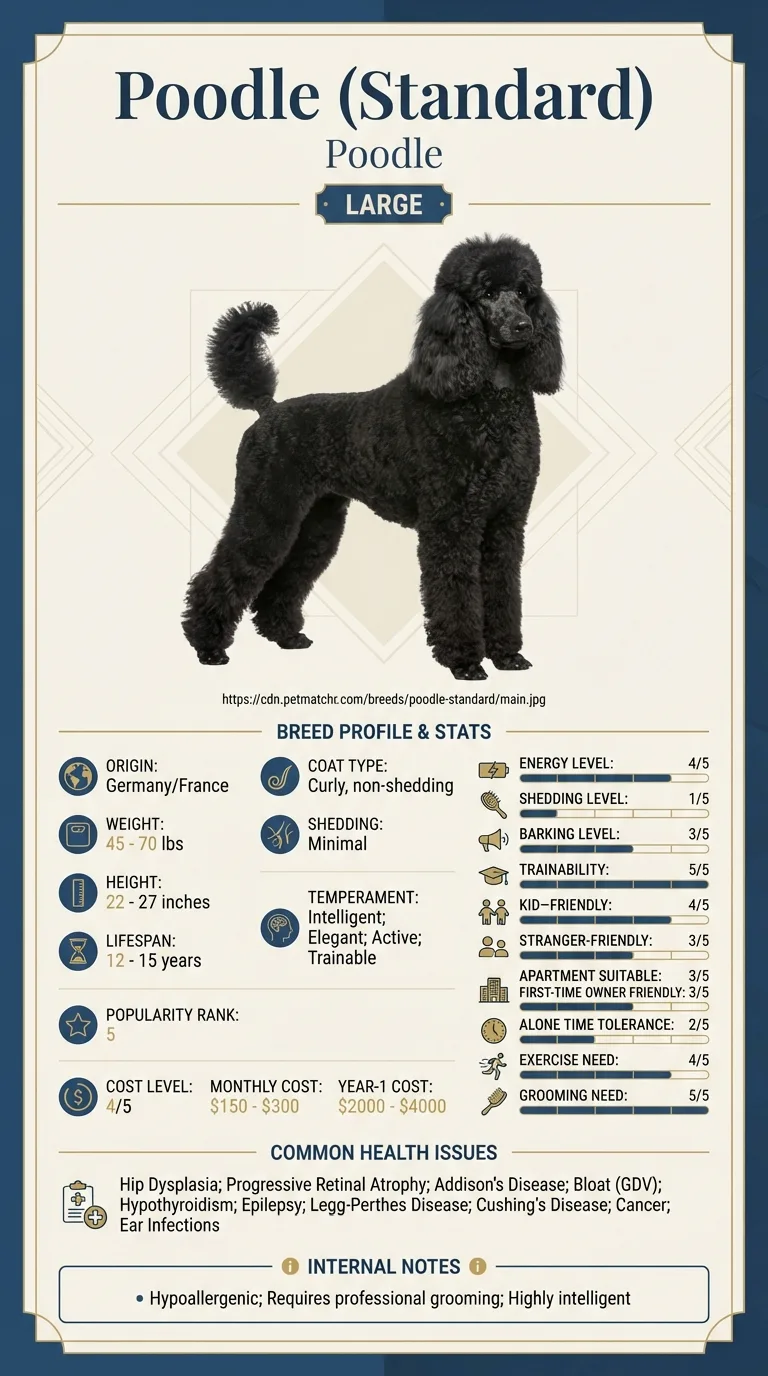
Treatment costs for Poodle (Standard) cardiomyopathy can range from $150 to $300 monthly, depending on medication and vet visits. Budgeting for potential emergencies is wise.
Consult your vet about dietary changes. A heart-healthy diet can support your Poodle's health and may involve specific nutrients.