Behavior
What are quick tips for managing Poodle (All Sizes) von Willebrand's disease (vwd1)?
Keep your Poodle's environment safe to minimize injury, and avoid rough play. Regular check-ups with your vet are essential for monitoring their condition.
Poodle (All Sizes) von Willebrand's disease (vWD1) is a genetic bleeding disorder that can affect your dog's health and wellbeing.
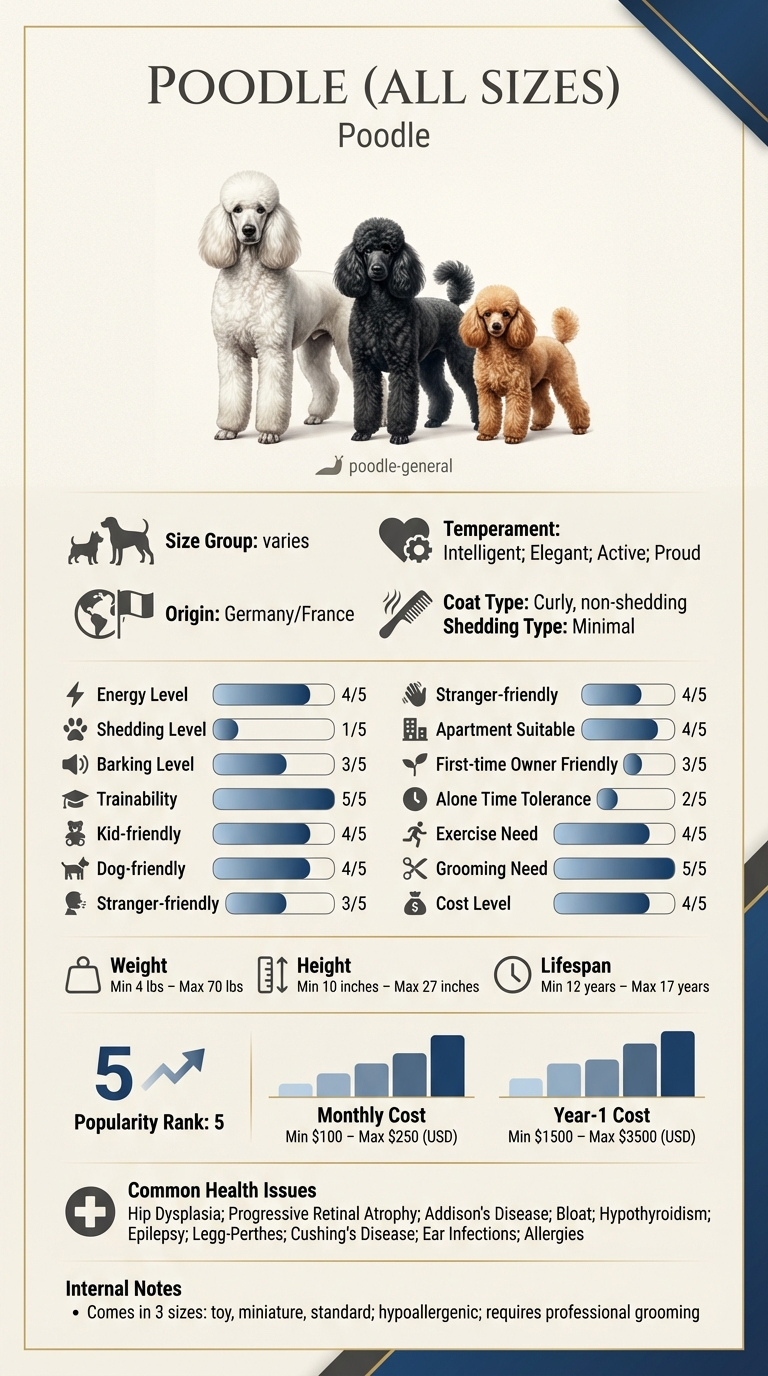
Typically, Poodle owners who are unaware of their dog's genetic predisposition may face challenges. First-time dog owners or those with limited experience in recognizing health problems often struggle to identify vWD1 symptoms early.
This guide is not medical advice. If your dog shows pain, sudden behavior change, or worsening symptoms, consult a licensed veterinarian.
Some links may be affiliate links. We may earn a commission at no extra cost to you. We only suggest products we believe are helpful for dog owners.
Poodle (All Sizes) von Willebrand's disease (vWD1) is a genetic bleeding disorder that affects the blood's ability to clot. This condition can lead to excessive bleeding from minor injuries, prolonged bleeding during surgery, or even spontaneous bleeding episodes. Owners may notice their Poodle bruising easily, bleeding gums, or blood in their urine, which can be alarming and requires immediate veterinary attention.
Von Willebrand's disease (vWD1) is relatively common in Poodles, as it is an inherited condition. It affects a significant number of individuals in this breed, making it essential for potential owners to be aware of the risks and consider genetic testing.
Poodles, regardless of size, are prone to von Willebrand's disease (vWD1) due to genetic factors. This inherited bleeding disorder affects their blood's ability to clot properly. If a Poodle has a family history of this condition, they are at a higher risk.
While von Willebrand's disease is primarily genetic, environmental factors can influence its severity. Stress, injuries, or surgeries that lead to bleeding can exacerbate symptoms. Additionally, living in a high-stress environment may impact your Poodle's overall health.
If your Poodle shows signs of anxiety or stress that impact their behavior, a professional trainer can help. Look for trainers experienced with Poodles and behavior issues, as they can offer tailored strategies to manage anxiety and promote confidence.
Consult your vet if you notice any unusual bleeding, bruising, or lethargy. If your Poodle has a known history of vWD1, discuss the best management strategies and any necessary medical interventions with your veterinarian.
Managing von Willebrand's disease (vWD1) in your Poodle may take several weeks to months. Regular vet check-ups and a consistent care routine are crucial.
Success means your Poodle lives a happy, active life with minimal bleeding episodes. You'll feel confident in recognizing symptoms and preventing complications.
Avoiding certain common mistakes can help manage your Poodle's von Willebrand's disease (vWD1) more effectively. Here are some behaviors to watch out for, along with safer alternatives.
Call your vet immediately if your Poodle shows severe symptoms such as excessive bleeding from the gums, nosebleeds, or blood in urine or stool. Additionally, if your dog has trouble breathing or seems lethargic, these are red flags that cannot be ignored.
On the other hand, if your Poodle experiences mild symptoms like occasional nose bleeds or minor bruising, you might consider monitoring them at home. Keep a close eye on these symptoms and maintain a record of any occurrences. If they worsen, then consult your vet for guidance.
In short, always err on the side of caution. If you’re ever in doubt about your Poodle's health, it’s better to seek veterinary advice sooner rather than later. Your pet's well-being is the priority, and quick action can make all the difference.
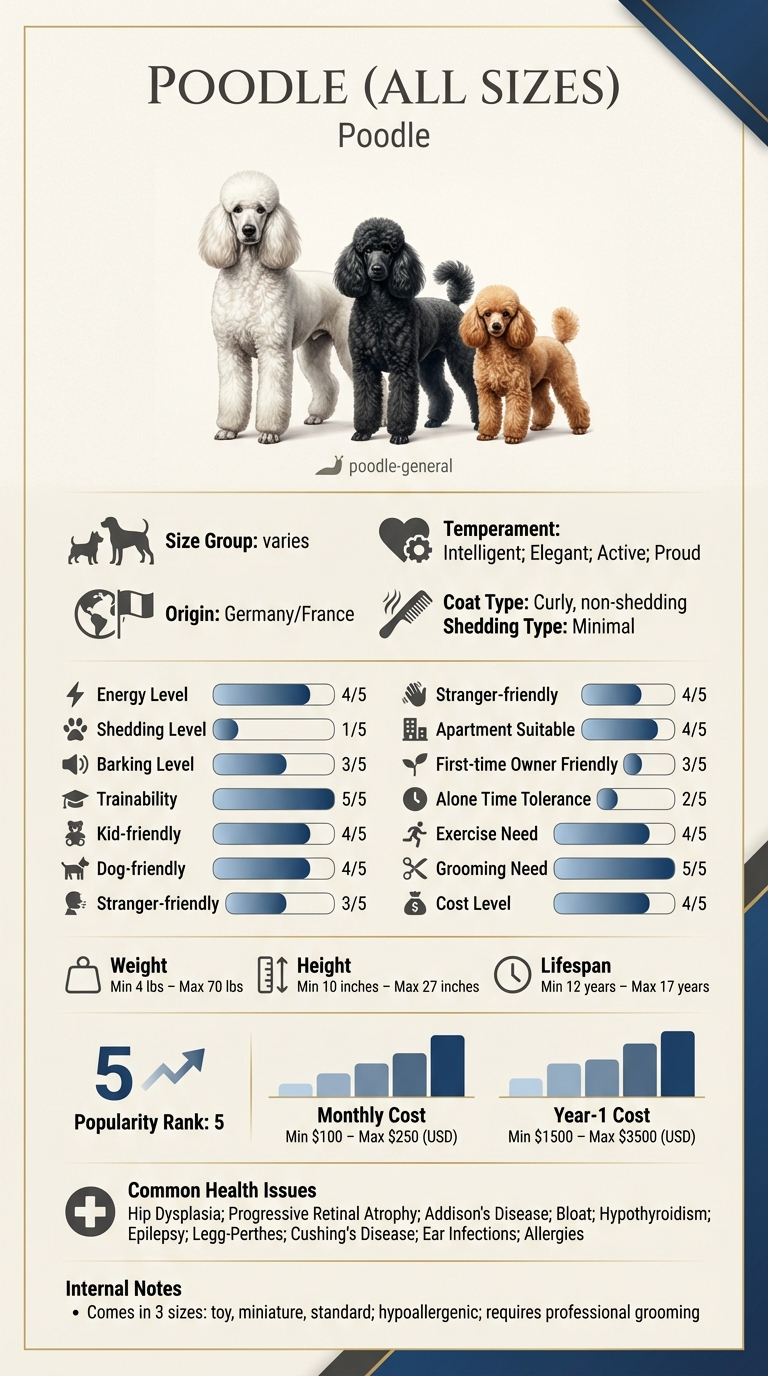
Jenna, a first-time dog owner, adopted Max, a spirited Poodle. Shortly after bringing him home, she learned he had von Willebrand's disease (vWD1). Initially overwhelmed, Jenna educated herself about the condition, established a strict vet schedule, and learned to monitor Max for signs of bleeding. With consistent care and training, Max thrived. Jenna became adept at managing his health, ensuring he enjoyed daily walks and playtime without fear.
Key takeaway: Education and proactive management are key. Understanding your Poodle's health condition helps ensure they live a joyful life.
Poodle (All Sizes) von Willebrand's disease (vwd1) is a genetic bleeding disorder that affects the dog's ability to clot blood. It results from a deficiency in a specific protein needed for blood coagulation. This condition can lead to excessive bleeding from injuries or during surgery.
Signs of vwd1 in your Poodle (All Sizes) may include frequent nosebleeds, unusual bleeding after minor injuries, or prolonged bleeding during heat cycles. If you notice these symptoms, consult your veterinarian for proper testing and diagnosis.
While there is no cure for vwd1, treatment options include medications to help manage bleeding episodes and possible blood transfusions in severe cases. Regular check-ups with your vet can help monitor your dog's condition and adjust treatments as needed.
Since vwd1 is a genetic condition, prevention is challenging. Responsible breeding practices can help reduce the incidence of this disease. If you're considering adopting a Poodle, ask the breeder about health screenings for vwd1.
Von Willebrand's disease (vwd1) is hereditary, meaning it is passed down from parent dogs. If your Poodle has this condition, it's likely due to inherited genetics. Knowing the dog's lineage can help you understand potential health issues.
Yes, while von Willebrand's disease (vWD1) is a genetic condition, symptoms can become more noticeable as your Poodle ages. If you notice unusual bleeding or bruising, consult your vet for an evaluation.
If your Poodle has been diagnosed with vWD1, it's essential to work closely with your veterinarian. They can provide guidance on managing the condition and suggest lifestyle changes or treatments to reduce bleeding risks.
Unfortunately, since vWD1 is inherited, there is no way to prevent it from occurring in your Poodle. However, responsible breeding practices can reduce the risk of passing it on in future litters.
Signs of a bleeding episode in Poodles with vWD1 can include excessive bleeding from minor wounds, nosebleeds, or blood in the urine. If you notice these symptoms, seek veterinary assistance immediately.
Training methods for Poodles with vWD1 should focus on gentle reinforcement to avoid stress. It's crucial to keep training sessions calm and positive, ensuring your dog remains comfortable and happy.
Keep your Poodle's environment safe to minimize injury, and avoid rough play. Regular check-ups with your vet are essential for monitoring their condition.
Yes, von Willebrand's disease (vwd1) is one of the more common health issues in Poodles due to their genetic background. Awareness and early detection are key.
Provide a calm and safe living space, and follow your vet's advice on diet and exercise. This will help manage their overall health effectively.