Behavior
What are Poodle (All Sizes) eye problems quick tips?
Regular grooming and eye cleaning can help prevent eye problems. Consult your vet for any concerning symptoms early.

Quick answer
What are Poodle (All Sizes) eye problems quick tips?
Regular grooming and eye cleaning can help prevent eye problems. Consult your vet for any concerning symptoms early.
Poodle (All Sizes) eye problems can be frustrating and concerning for dog owners. These issues often stem from genetics or environmental factors.
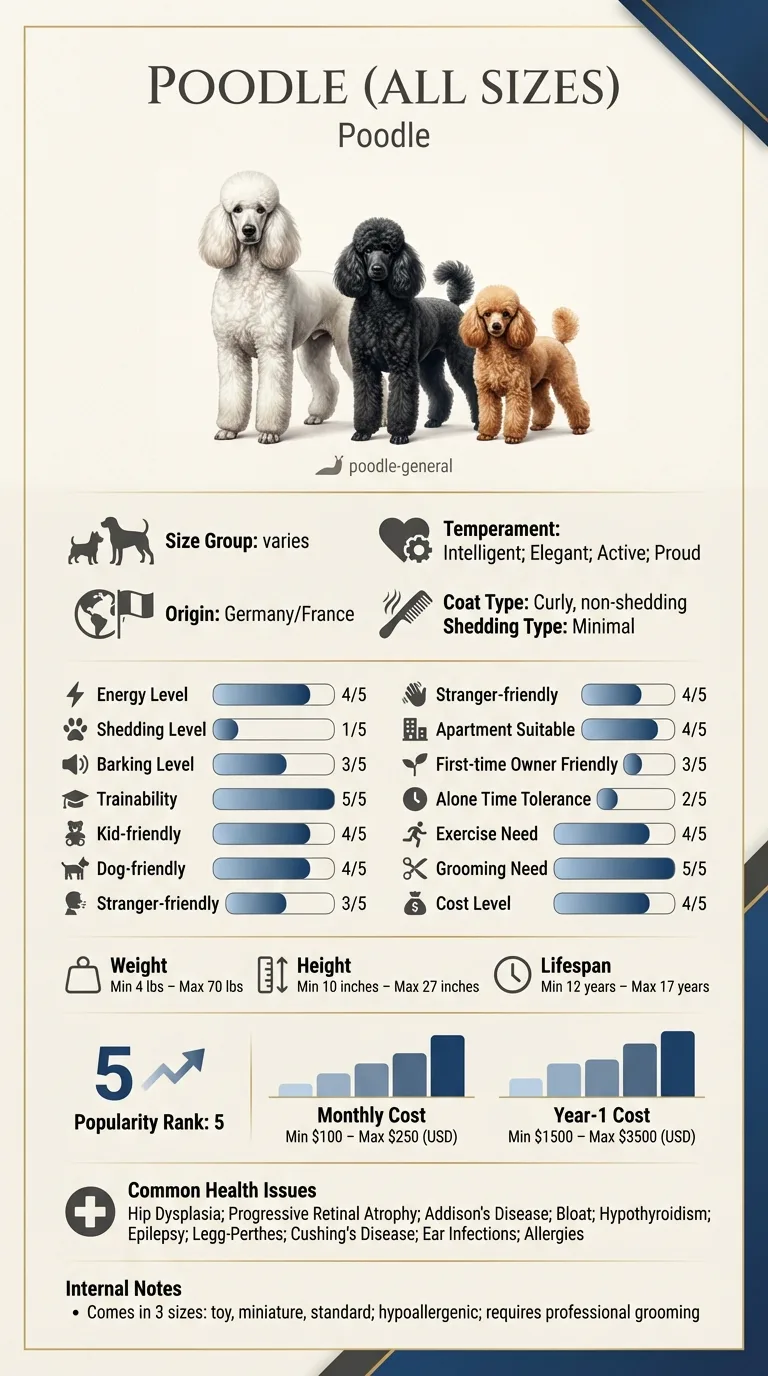
This problem typically affects first-time Poodle owners or busy families who may not notice subtle changes in their dog's behavior or health. Owners who are unaware of their Poodle's specific health needs might also find themselves struggling with these issues.
This guide is not medical advice. If your dog shows pain, sudden behavior change, or worsening symptoms, consult a licensed veterinarian.
Some links may be affiliate links. We may earn a commission at no extra cost to you. We only suggest products we believe are helpful for dog owners.
We research and check what we publish, but we do not warrant that any figure, date, price, or statement is accurate, complete, or current, and we accept no liability for any loss, cost, injury, or other harm arising from the use of this site. Use it as one reference among several. You remain responsible for your own decisions and for your dog's care - confirm anything that matters with a licensed veterinarian or another qualified professional before you act on it. Full disclaimer.
Check this first
Poodle (All Sizes) eye problems can vary in severity. It's important to know when to act quickly and when to monitor your dog’s condition. If you notice any of the following red-flag signs, call your vet immediately.
If any of these apply, call your vet or an emergency clinic now. The rest of this page is for the cases that are not an emergency.
Poodle (All Sizes) eye problems can manifest as excessive tearing, redness, or discharge. These issues may arise from various factors, including allergies, genetic predispositions, or environmental irritants. Owners may notice their Poodles squinting or rubbing their eyes, which can indicate discomfort.
Eye problems are fairly common in Poodles due to their sensitive nature and specific breed characteristics. Many Poodles experience some form of eye issue during their lifetime, making awareness and proactive care important for their well-being.
Poodles are susceptible to various eye problems due to their genetics. Common issues include Progressive Retinal Atrophy and other hereditary conditions. Their unique eye structure can also make them more prone to injury and infections.
Environmental factors can exacerbate eye problems in Poodles. Dust, allergens, and irritants can lead to eye irritation. Additionally, a lack of proper grooming can result in fur blocking their vision, leading to injuries.
If you notice persistent redness, swelling, or discharge, consult your vet right away. Also, if your Poodle is squinting or seems sensitive to light, these can be signs of serious eye problems that need immediate attention.
Avoiding these common mistakes can help you better manage your Poodle's eye problems.
Start here: Poodle (All Sizes) Genetic Disorders: What to Screen For
See all Poodle General health problems, which breeds are prone to eye problems, or the full Poodle General breed guide for temperament, exercise needs and ownership costs.
You can expect to see improvements in your Poodle's eye problems within 3 to 6 months of consistent care and follow-up with your vet.
Success means your Poodle shows reduced symptoms, improved comfort, and a decrease in the frequency of eye issues.
In less severe cases, you can monitor your Poodle. Look out for mild symptoms such as occasional tearing or slight redness. If these symptoms don't worsen, you may manage them at home, but make a plan to check in with your vet if they persist or escalate.

Meet Sarah, a busy nurse from Chicago. Sarah's Poodle, Max, had frequent eye issues that left him uncomfortable and occasionally irritated. After visiting the vet, she learned that consistent grooming and eye care could significantly help. They set up a routine that included regular grooming sessions and eye drops. Over a few months, Max's symptoms improved, and he was much happier and more active.
Key takeaway: Regular grooming and attention to eye care can lead to significant improvements in your Poodle's eye health.
Poodles can experience eye problems due to genetics, injuries, or environmental factors. Common issues include cataracts and progressive retinal atrophy. Regular vet check-ups can help detect problems early.
Look for signs like excessive tearing, redness, cloudiness, or squinting. If your Poodle frequently rubs their eyes or seems to have trouble seeing, it's time for a vet visit. Early detection is key to managing eye problems.
Poodles may face various eye issues, including cataracts, cherry eye, and progressive retinal atrophy. Each condition requires different treatments, so consulting a vet is essential for proper diagnosis and care.
Preventing eye problems involves regular grooming, maintaining eye hygiene, and avoiding allergens. Keep your Poodle's living space clean and consult your vet about preventive care practices tailored to your dog.
Treatments vary by condition and can include medication, surgery, or specialized eye drops. Always consult your vet for a personalized treatment plan that addresses your Poodle's specific eye issues.
Poodles can experience various eye issues, including cataracts, progressive retinal atrophy, and cherry eye. Regular vet check-ups can help catch these problems early.
If your Poodle shows signs like excessive tearing, redness, squinting, or any change in vision, it's time to consult a vet. Prompt attention can prevent more serious conditions.
Yes, older Poodles are more prone to eye issues such as cataracts and glaucoma. Regular eye examinations are essential to monitor their eye health as they age.
Keeping your Poodle's face clean and avoiding exposure to irritants can help prevent eye issues. Regular grooming and check-ups are also key to maintaining their eye health.
To help your Poodle, ensure they have a safe environment, avoid potential eye irritants, and keep their eyes clean. However, always follow up with professional veterinary advice for proper treatment.
Regular grooming and eye cleaning can help prevent eye problems. Consult your vet for any concerning symptoms early.
Check your Poodle's eyes daily for signs of irritation or changes in appearance. Early detection can lead to better outcomes.
If your Poodle's eyes are watering excessively, gently clean the area and contact your vet for further advice.
A one-page prep sheet for this condition: the signs, the questions to ask, what to get priced. Unlocks here.
You get: Vet visit prep sheet
No spam. One-click unsubscribe. See our privacy policy.
Preview page 1 before you decide.