Pomeranian Progressive Retinal Atrophy (PRA-RCD3): What You Need to Know
Pomeranian progressive retinal atrophy (PRA-RCD3) is a genetic eye disorder that leads to vision loss over time.
Owners of Pomeranians, especially those with a family history of eye issues, may face challenges as their dogs experience gradual vision impairment.
Important reminder
This guide is not medical advice. If your dog shows pain, sudden behavior change, or worsening symptoms, consult a licensed veterinarian.
Some links may be affiliate links. We may earn a commission at no extra cost to you. We only suggest products we believe are helpful for dog owners.
What this problem looks like
Pomeranian progressive retinal atrophy (PRA-rcd3) is a genetic eye disorder that leads to gradual vision loss. Day-to-day, you might notice your Pomeranian bumping into furniture or having difficulty navigating familiar environments. This condition typically starts with night blindness before advancing to daytime vision issues, affecting their quality of life.
Common triggers
Genetic predisposition
Age-related changes
Bright lights or sudden changes in lighting
PRA-rcd3 is relatively common in Pomeranians, especially as they age. Many Poms may show signs of the condition by middle age, making it essential for owners to monitor their dog's vision closely.
Why this happens
Breed factors
Pomeranians are genetically predisposed to progressive retinal atrophy (PRA-rcd3). This inherited condition affects the photoreceptor cells in their eyes, leading to gradual vision loss. As a small breed, Pomeranians often have unique eye structures that can make them more susceptible to this condition.
Environment factors
Environmental factors can also contribute to the severity of PRA-rcd3. Poor lighting conditions, lack of stimulation, or inadequate socialization can affect your Pomeranian's ability to adapt to vision loss. Additionally, other health issues or aging can exacerbate the symptoms of PRA.
What you can try
At-home strategies
Create a safe environment by removing obstacles that could cause your Pomeranian to trip or bump into things. Make sure furniture and decor are arranged consistently to help your dog navigate easily.
Use verbal cues and touch to guide your dog when moving around the house. This can help your Pomeranian feel more secure and less anxious about losing vision.
Engage your Pomeranian in scent-based games or activities to stimulate their other senses. This can help keep them mentally active and reduce stress related to vision loss.
When to consider a trainer
If your Pomeranian shows signs of anxiety or confusion due to their vision loss, consider consulting a professional dog trainer. They can provide tailored strategies and training techniques to help your dog adjust to their changing abilities.
When to talk to your vet
It's important to talk to your vet if you notice any sudden changes in your Pomeranian's behavior or if you're unsure about managing their condition. Your vet can provide guidance on care strategies and discuss potential treatments or interventions for PRA-rcd3.
Realistic expectations
It typically takes several months to see improvements in managing Pomeranian progressive retinal atrophy (pra-rcd3) through training and lifestyle adjustments.
Success looks like your Pomeranian adapting to their vision changes by learning alternative ways to navigate their environment and responding well to cues.
Mistakes that make this worse
Avoiding these common mistakes can help manage your Pomeranian's progressive retinal atrophy (PRA-rcd3) more effectively.
Ignoring early signs of vision loss: Many owners miss subtle cues that their Pomeranian is having trouble seeing. If you notice your dog bumping into things or hesitating before jumping, consult a vet.
Failing to adjust the environment: Leaving furniture in the same place can make it difficult for your dog to navigate. Consistently keeping pathways clear and familiar will help your Pom feel safer.
Overreacting to their anxiety: When a Pomeranian feels anxious about their vision loss, scolding or punishing them can worsen the problem. Instead, provide comfort and reassurance.
Neglecting mental stimulation: A common mistake is assuming that vision loss means your dog needs less activity. Engaging your dog with scent games or interactive toys can help maintain their overall happiness.
Rushing into training: Pressuring your Pomeranian to adapt too quickly may lead to frustration. Take your time and use positive reinforcement to encourage gradual adjustments.
Not seeking professional help: Some owners try to manage their dog's anxiety on their own. If you find your Pomeranian is struggling, consider consulting a trainer or behaviorist specializing in dog anxiety.
When Pomeranian Progressive Retinal Atrophy (PRA-RCD3) is an Emergency
Recognizing the severity of Pomeranian progressive retinal atrophy (PRA-RCD3) is crucial for your pet's well-being. In some cases, immediate veterinary attention is necessary. If your Pomeranian shows sudden vision loss, signs of pain, or unusual behavior such as bumping into objects or avoiding light, these are red flags that warrant an emergency vet visit.
On the other hand, if your Pomeranian is experiencing gradual vision changes without these concerning symptoms, it's usually safe to monitor their condition. Keep track of any difficulty navigating familiar environments or changes in their response to commands. Regular check-ups with your vet can help assess their condition and develop a management plan.
To summarize, here are some signs to watch for:
- **Emergency Signs:** Sudden vision loss, pain, or behavioral changes.
- **Monitor Cases:** Gradual vision loss without distress or extreme behavior changes.
Pomeranian Progressive Retinal Atrophy (PRA-RCD3): What You Need to Know - When Pomeranian Progressive Retinal Atrophy (PRA-RCD3) is an Emergency
Emily and Her Pomeranian, Bella
Emily, a busy nurse, noticed her Pomeranian Bella struggling to find her favorite toys and bumping into furniture. After a vet confirmed it was progressive retinal atrophy (pra-rcd3), Emily felt overwhelmed. She decided to work with a trainer who specialized in vision loss. Together, they created a routine using sound cues and scent trails to help Bella navigate safely. Over time, Bella became more confident, and Emily learned how to adjust their home for Bella's needs.
Key takeaway: With patience and the right support, owners can help Pomeranians with pra-rcd3 adapt and thrive in their changing world.
Frequently asked questions
Why does my Pomeranian have progressive retinal atrophy (pra-rcd3)?
Pomeranian progressive retinal atrophy (pra-rcd3) is a genetic condition that causes gradual vision loss. It primarily affects the retina, leading to a slow decline in eyesight. If you notice signs like bumping into objects or difficulty seeing in low light, consult your vet for a proper diagnosis.
What are the signs of Pomeranian progressive retinal atrophy (pra-rcd3)?
Common signs include difficulty seeing in dim light, bumping into furniture, and reluctance to play with toys. As the condition progresses, your Pomeranian may show more signs of confusion or anxiety due to their vision loss. Regular vet check-ups can help monitor these changes.
How can I help my Pomeranian with progressive retinal atrophy (pra-rcd3)?
Keeping your home environment consistent is key. Avoid rearranging furniture and use bright, contrasting colors in your decor. Training your Pomeranian with verbal cues can also enhance their confidence and help them navigate their surroundings safely.
Is there a treatment for Pomeranian progressive retinal atrophy (pra-rcd3)?
Currently, there is no cure for Pomeranian progressive retinal atrophy (pra-rcd3). However, early detection and management strategies can improve your dog's quality of life. It's essential to stay in touch with your vet for the best care options.
Can Pomeranian progressive retinal atrophy (pra-rcd3) be inherited?
Yes, Pomeranian progressive retinal atrophy (pra-rcd3) is a hereditary condition. If you are considering breeding, it’s important to screen for this condition. Consulting with a vet can guide you on responsible breeding practices.
What should I do if my Pomeranian is showing signs of anxiety due to vision loss?
If your Pomeranian exhibits anxiety, creating a safe and predictable environment can help. Use comforting items like their favorite blanket or toy. Consider consulting a vet for potential behavior training solutions or calming products.
What causes Pomeranian progressive retinal atrophy (PRA-rcd3)?
Pomeranian progressive retinal atrophy (PRA-rcd3) is a genetic condition that leads to the gradual degeneration of the retina. This inherited disorder typically affects the dog's vision over time, making it important to monitor any changes in eyesight.
How can I support my Pomeranian with PRA-rcd3 at home?
Supporting a Pomeranian with PRA-rcd3 involves creating a safe environment. Keep furniture in the same place and use scent markers to help them navigate. You may also want to consider training techniques that focus on verbal cues and tactile signals.
When should I take my Pomeranian to the vet for PRA-rcd3?
If you notice signs of vision loss in your Pomeranian, such as bumping into objects or reluctance to go outside, it's time to visit the vet. Early intervention can help manage the progression of the disease and improve your dog's quality of life.
Can older Pomeranians develop PRA-rcd3 symptoms suddenly?
While PRA-rcd3 is genetic and usually appears as the dog ages, symptoms can seem to develop suddenly. If an older Pomeranian shows sudden changes in behavior or vision, a vet visit is crucial to rule out other health issues.
Are there treatments available for Pomeranian progressive retinal atrophy (PRA-rcd3)?
Currently, there is no cure for Pomeranian progressive retinal atrophy (PRA-rcd3). However, providing supportive care and regular vet check-ups can help manage the dog's condition and ensure they lead a comfortable life.
What are quick tips for managing Pomeranian progressive retinal atrophy (pra-rcd3)?
Keep your home layout consistent, use verbal cues for training, and provide a comforting space for your dog. Regular vet visits are essential for monitoring their condition.
Health
Can diet affect Pomeranian progressive retinal atrophy (pra-rcd3)?
While diet won't cure the condition, a balanced diet can support overall health. Consult your vet for specific dietary recommendations.
Costs
How much does it cost to manage Pomeranian progressive retinal atrophy (pra-rcd3)?
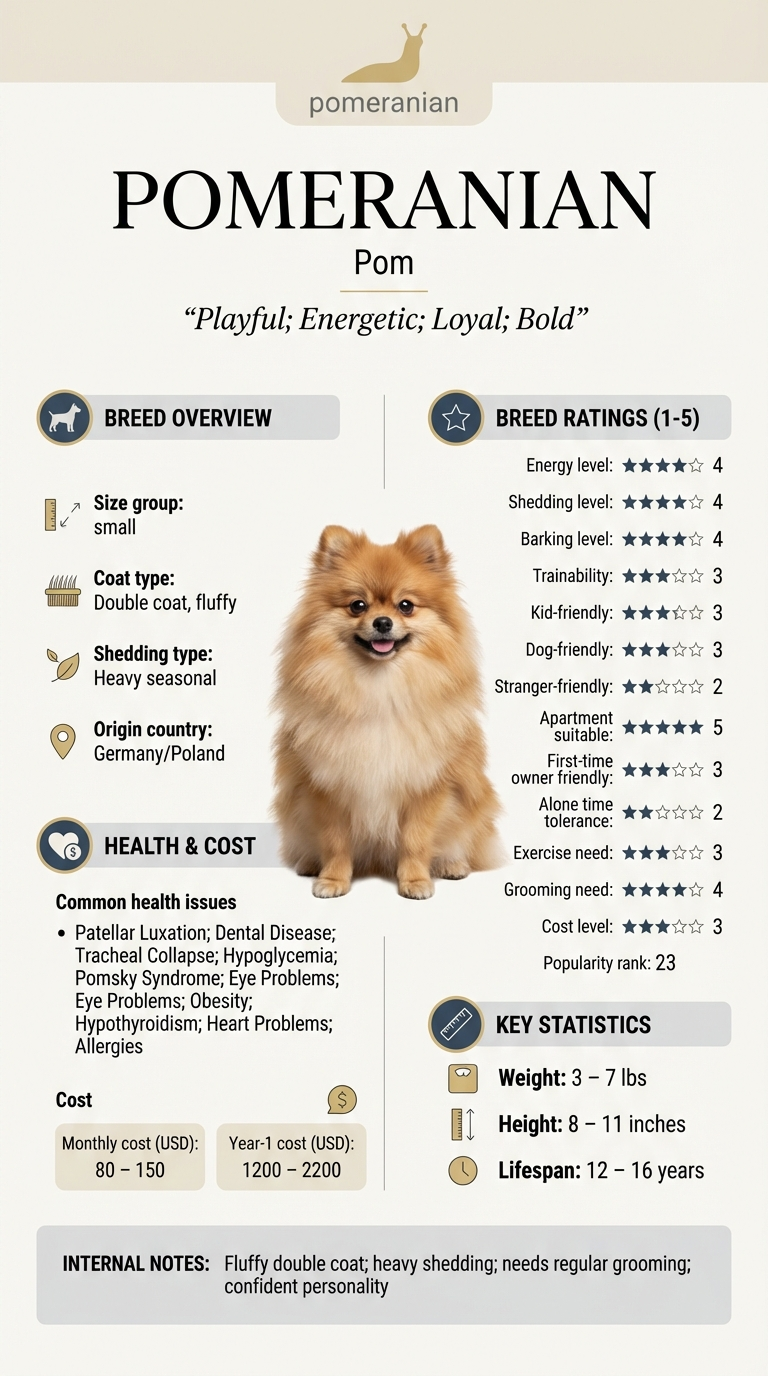
Management costs can vary, but expect to spend around $80 to $150 monthly on vet visits and care supplies. Budget for a potential increase as your dog's needs change.
Related DogBreedCompass guides
Pomeranian behavior problems – Learn more about common health issues in Pomeranians, including PRA.
Pomeranian progressive retinal atrophy (pra-rcd3) training – Explore effective training strategies to help manage your Pomeranian's behavior.
Pomeranian separation anxiety guide – Find out how to support your Pomeranian in coping with separation anxiety.
Pomeranian cost breakdown – Get a comprehensive overview of the costs associated with owning a Pomeranian.
Pomeranian eye problems guide – Check out other common eye problems that can affect Pomeranians.