Pembroke Welsh Corgi Obesity: Causes and Solutions
Quick answer
What are quick tips for managing Pembroke Welsh Corgi obesity?
To manage Pembroke Welsh Corgi obesity, ensure they get at least 30-60 minutes of exercise daily and monitor their food intake. Use puzzle toys to make mealtime fun and stimulating.
Pembroke Welsh Corgi obesity is a growing concern for many owners. Managing your Corgi's weight is crucial for their overall health and happiness.
Many first-time Corgi owners, busy families, or those living in apartments may find it tough to manage their dog's weight. If you’re juggling a hectic schedule or unsure about proper feeding and exercise, your Corgi may be at risk of becoming overweight.
Important reminder
This guide is not medical advice. If your dog shows pain, sudden behavior change, or worsening symptoms, consult a licensed veterinarian.
Some links may be affiliate links. We may earn a commission at no extra cost to you. We only suggest products we believe are helpful for dog owners.
We research and check what we publish, but we do not warrant that any figure, date, price, or statement is accurate, complete, or current, and we accept no liability for any loss, cost, injury, or other harm arising from the use of this site. Use it as one reference among several. You remain responsible for your own decisions and for your dog's care - confirm anything that matters with a licensed veterinarian or another qualified professional before you act on it. Full disclaimer.
Check this first
When Pembroke Welsh Corgi Obesity is an Emergency
Recognizing when Pembroke Welsh Corgi obesity becomes an emergency can save your dog's life. It’s crucial to distinguish between serious warning signs and cases that can be managed at home. If your Corgi shows any of the red-flag signs, call your vet immediately.
If any of these apply, call your vet or an emergency clinic now. The rest of this page is for the cases that are not an emergency.
What this problem looks like
Pembroke Welsh Corgi obesity is a common issue that can lead to serious health problems. These lovable little dogs are often overfed or under-exercised, causing them to gain weight. Owners may notice their Corgi becoming less active and having difficulty with normal activities like playing or walking.
Common triggers
Overfeeding due to their begging behavior
Lack of sufficient exercise
Inadequate understanding of proper dietary needs
Health issues like hypothyroidism
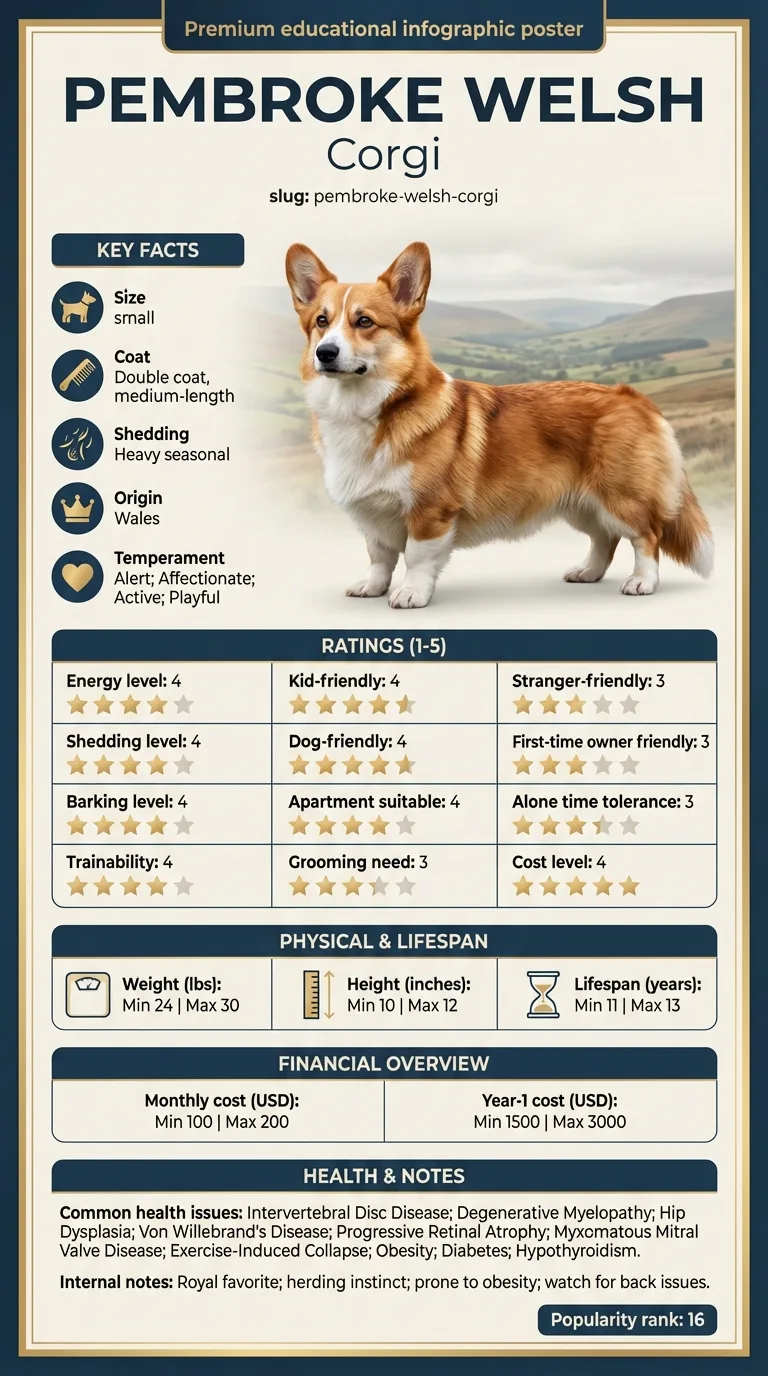
Obesity affects a significant portion of Pembroke Welsh Corgis, making it a widespread concern among this breed. Many Corgis struggle with weight management, especially in households that may not prioritize their exercise needs.
Why this happens
Breed factors
Pembroke Welsh Corgis are naturally predisposed to obesity due to their small size and love for food. Their high energy levels can lead to overeating, especially if they aren’t getting enough exercise. Additionally, their herding background means they may have a strong drive to beg for food, leading to weight gain.
Environment factors
Environmental factors can play a huge role in obesity as well. Limited space for exercise, lack of structured playtime, and easy access to food can contribute to weight issues. Owners may inadvertently overfeed due to their affectionate nature, leading to a cycle of weight gain.
What you can do at home (once it is not an emergency)
When to talk to your vet
It's important to talk to your vet if your Corgi’s weight is affecting their health or mobility. If you're unsure about their diet, or if they display symptoms like lethargy or excessive thirst, a vet visit is crucial for proper guidance and health checks.
At home, alongside your vet's plan
Establish a regular feeding schedule with measured portions to control calorie intake. Use a measuring cup to avoid overfeeding.
Incorporate daily exercise into your routine. Aim for at least 30 minutes of vigorous play or brisk walks each day.
Monitor treats and snacks, opting for healthier options like carrot sticks instead of high-calorie treats. Limit treats to 10% of daily calorie intake.
Engage your Corgi with mentally stimulating games to help burn off energy without relying solely on food.
Mistakes That Make Pembroke Welsh Corgi Obesity Worse
Addressing Pembroke Welsh Corgi obesity can be tricky. Here are common mistakes that may worsen the situation and safer alternatives to consider.
Overfeeding treats: Giving too many snacks can lead to weight gain. Instead, limit treats to no more than 10% of their daily calories and choose healthy options.
Ignoring portion sizes: Free-feeding can cause overeating. Measure your Corgi's food and stick to regular feeding times to manage their intake.
Skipping exercise: Lack of activity can contribute to obesity. Aim for at least 30-60 minutes of exercise daily, including walks and playtime.
Using food as a reward: This can create a cycle of overeating. Consider using praise or playtime as rewards instead of food.
Neglecting regular vet check-ups: Health issues can contribute to weight gain. Schedule regular vet visits to monitor your Corgi's health and weight.
Not adjusting diet with age: Older Corgis may need fewer calories. Shift to lower-calorie food as your dog ages to help maintain a healthy weight.
Being inconsistent: Mixed signals can confuse your Corgi. Establish a consistent routine for feeding and exercise to help them understand expectations.
More Pembroke Welsh Corgi health & behavior issues
You should expect to see improvements in your Pembroke Welsh Corgi's weight and energy levels within 6 to 12 weeks of implementing a proper diet and exercise plan.
Success means your Corgi achieves a healthy weight, has increased energy, and shows enthusiasm during walks and playtime. You'll also notice fewer signs of stress on their joints, leading to an overall happier dog.
Red-Flag Signs to Call Your Vet
Here are some critical symptoms that require urgent veterinary care:
- Difficulty breathing or panting excessively
- Severe lethargy or inability to get up
- Vomiting or diarrhea that lasts more than a day
- Signs of pain, such as whimpering or reluctance to be touched
- Rapid weight gain in a short period
- Swelling in the abdomen
These symptoms indicate that your Corgi may be facing serious health issues related to obesity, like heart disease or diabetes.
Pembroke Welsh Corgi Obesity: Causes and Solutions - Red-Flag Signs to Call Your Vet
Difficulty breathing or panting excessively
Severe lethargy or inability to get up
Vomiting or diarrhea lasting more than a day
Signs of pain or discomfort
Rapid weight gain in a short time
Swelling in the abdomen
Mild Cases That Can Be Monitored
In less severe cases, there are signs you can manage with careful observation. If your Corgi is slightly overweight but active, consider implementing a weight management plan. Track their diet and activity levels closely, and consult your vet for tailored advice.
Pembroke Welsh Corgi - Mild Cases That Can Be Monitored
Signs to Watch and Wait
Look out for these milder symptoms, which indicate your Corgi's obesity isn't critical yet:
- Slight weight gain
- Decreased playfulness but still engages in activities
- Occasional difficulty in getting up or down
- Increased food begging without other alarming signs
If you notice these, create a diet and exercise plan while keeping a close eye on your Corgi's behavior.
Slight weight gain
Decreased playfulness but still active
Occasional difficulty getting up or down
Increased food begging
Finding Balance: A Corgi's Weight Loss Journey
Jessica, a busy teacher in Dallas, noticed her Pembroke Welsh Corgi, Max, was becoming lethargic and struggling to keep up during walks. After a vet visit, she learned Max was overweight and at risk for serious health issues. Determined to help him, Jessica researched how to stop Pembroke Welsh Corgi obesity. She revamped Max's diet, switching to measured portions of high-quality dog food and cutting down on treats. Together, they started a daily routine of short, engaging walks and play sessions. Slowly but surely, Max began to shed pounds and regain his playful spirit. After three months, he was not only lighter but also more energetic, making walks much more enjoyable for both of them.
Key takeaway: Small, consistent changes in diet and exercise can lead to significant improvements in your Corgi's health and happiness.
Frequently asked questions
Why does my Pembroke Welsh Corgi have obesity?
Pembroke Welsh Corgis can become obese due to overfeeding, lack of exercise, or health issues. Their love for food combined with a sedentary lifestyle can lead to weight gain. Regular vet check-ups can help rule out any underlying health problems.
How to stop Pembroke Welsh Corgi obesity?
To combat Pembroke Welsh Corgi obesity, start by adjusting their diet to include high-quality, low-calorie food. Incorporate daily exercise, such as walks and playtime, to help maintain a healthy weight. Consistency is key; monitor their weight regularly.
What are the signs of obesity in Pembroke Welsh Corgis?
Signs of obesity in your Pembroke Welsh Corgi include difficulty in movement, a noticeable lack of energy, and an inability to feel their ribs. If their waist is not easily identifiable, they may be overweight. Regular vet visits can help keep track of their weight.
What is the best diet for a Pembroke Welsh Corgi to prevent obesity?
A balanced diet high in protein and fiber, while low in fat, is ideal for preventing obesity in Pembroke Welsh Corgis. Consult your vet for specific recommendations based on your dog's age, activity level, and health. Portion control is also crucial.
What are the warning signs of obesity in my Pembroke Welsh Corgi?
Key signs of obesity in Pembroke Welsh Corgis include difficulty in feeling their ribs, lack of energy, and excessive weight compared to their breed standard. If your Corgi struggles with routine activities like playing or walking, it's time to assess their weight.
How can I help my older Pembroke Welsh Corgi lose weight safely?
For older Pembroke Welsh Corgis, weight loss should be gradual. Focus on a balanced diet and appropriate portion sizes, and consult your vet for a tailored exercise plan that considers any existing health issues.
Can obesity in Pembroke Welsh Corgis lead to other health problems?
Yes, obesity in Pembroke Welsh Corgis can lead to serious health issues such as diabetes, joint problems, and heart disease. Maintaining a healthy weight is crucial for their overall well-being.
What role does diet play in preventing Pembroke Welsh Corgi obesity?
Diet is crucial in preventing obesity in Pembroke Welsh Corgis. Providing high-quality dog food with controlled portions and limiting treats can help manage their weight effectively.
When should I consult a vet about my Pembroke Welsh Corgi's weight?
If you notice significant weight gain or struggle to manage your Pembroke Welsh Corgi's obesity despite diet and exercise changes, it's essential to consult a vet. They can provide guidance on health risks and appropriate weight loss strategies.
What are quick tips for managing Pembroke Welsh Corgi obesity?
To manage Pembroke Welsh Corgi obesity, ensure they get at least 30-60 minutes of exercise daily and monitor their food intake. Use puzzle toys to make mealtime fun and stimulating.
Living
How often should I exercise my Pembroke Welsh Corgi?
Aim for at least 30-60 minutes of exercise each day for your Pembroke Welsh Corgi. This can include walks, playtime, or interactive games to keep them active and engaged.
Health
Can obesity affect my Pembroke Welsh Corgi's health?
Yes, obesity can lead to serious health issues, including diabetes and joint problems. Keeping your Corgi at a healthy weight is essential for their overall well-being.
Costs
What should I look for in a dog food for my Pembroke Welsh Corgi?
Look for dog food with real meat as the first ingredient and minimal fillers. High fiber content can also help your Corgi feel fuller without excess calories.
Related DogBreedCompass guides
how to stop Pembroke Welsh Corgi obesity – Learn more about managing weight and health for your Pembroke Welsh Corgi.
A fuller vet-visit kit for Pembroke Welsh Corgi Obesity
The free prep sheet covers the same-day warning signs, a symptom log and the questions to ask. We are considering a fuller kit that adds a cost worksheet for the usual tests and treatments (US price ranges with their sources) and a plain-English guide to ways of covering the bill. It is not built yet; this list tells us whether it is worth building.
One email, no spam, unsubscribe anytime. Information only, not veterinary advice.