Behavior
What are quick tips for Great Dane owners dealing with PRA?
Keep your home free of obstacles and maintain a consistent layout. Use verbal commands to help guide your Great Dane around the house and during walks.

Quick answer
What are quick tips for Great Dane owners dealing with PRA?
Keep your home free of obstacles and maintain a consistent layout. Use verbal commands to help guide your Great Dane around the house and during walks.
Great Dane progressive retinal atrophy (PRA) is a serious condition that leads to progressive vision loss in these gentle giants.
Typically, owners of Great Danes who notice changes in their dog's vision or behavior may struggle with this issue. This can be especially tough for first-time Great Dane owners or families who are unaware of the breed's predisposition to this condition.
This guide is not medical advice. If your dog shows pain, sudden behavior change, or worsening symptoms, consult a licensed veterinarian.
Some links may be affiliate links. We may earn a commission at no extra cost to you. We only suggest products we believe are helpful for dog owners.
We research and check what we publish, but we do not warrant that any figure, date, price, or statement is accurate, complete, or current, and we accept no liability for any loss, cost, injury, or other harm arising from the use of this site. Use it as one reference among several. You remain responsible for your own decisions and for your dog's care - confirm anything that matters with a licensed veterinarian or another qualified professional before you act on it. Full disclaimer.
Check this first
Understanding when Great Dane progressive retinal atrophy (PRA) becomes an emergency is crucial for your dog's well-being. While some symptoms can be monitored, others require immediate veterinary attention. Recognizing the difference can save your dog's vision and health.
Red-Flag Signs to Call Your Vet Now: If your Great Dane shows sudden vision loss, especially if it’s accompanied by signs of distress or confusion, it’s time to act. Other emergencies include excessive tearing, signs of pain, or any noticeable changes in eye appearance, like swelling or redness. These symptoms suggest that underlying issues might be worsening.
Mild Cases to Monitor: If your Great Dane is experiencing gradual vision decline without significant distress, you can monitor the situation. Changes in behavior, such as hesitance in new environments or bumping into furniture, may be signs of PRA. Keep a close eye on these behaviors and consult your vet for a structured monitoring plan.
If any of these apply, call your vet or an emergency clinic now. The rest of this page is for the cases that are not an emergency.
Great Dane progressive retinal atrophy (PRA) is a serious condition that leads to gradual vision loss in these gentle giants. Owners may notice their Great Dane bumping into furniture, hesitating to move in unfamiliar places, or showing signs of anxiety as their vision deteriorates. This can be particularly distressing for both the dog and the owner, impacting daily life and activities.
Progressive retinal atrophy (PRA) is relatively common in Great Danes compared to other breeds. It's estimated that around 10-15% of Great Danes might develop this condition during their lifetime, making awareness and early detection crucial for managing the dog's health.
Great Danes are prone to genetic conditions like progressive retinal atrophy (PRA). This breed-specific risk can lead to progressive vision loss as they age, often starting in middle age. Their large size and unique genetics mean they may inherit conditions that affect their eyesight more severely than smaller breeds.
Environmental factors can also contribute to PRA. Poor nutrition, lack of proper veterinary care, and exposure to harmful substances may exacerbate the condition. Stressful living situations and inadequate socialization can lead to anxiety, which can further impact their overall health and well-being.
Talk to your vet if you notice any significant changes in your dog's vision or behavior. Early intervention can help manage progressive retinal atrophy and ensure your Great Dane receives the best care possible.
Avoiding common pitfalls can greatly improve your Great Dane's condition. Here are some mistakes to watch out for.
Start here: Great Dane Most Common Genetic Disorders: What to Screen For
See all Great Dane health problems, which breeds are prone to progressive retinal atrophy pra, or the full Great Dane breed guide for temperament, exercise needs and ownership costs.
Managing Great Dane progressive retinal atrophy (PRA) typically involves a gradual process over several months to years. Owners should expect to monitor their dog’s vision and adapt their environment accordingly. Regular veterinary check-ups will help track the condition's progression.
Success means maintaining a good quality of life for your Great Dane despite the vision loss. This includes creating a safe home environment, adjusting routines, and ensuring your dog can still enjoy activities like walks and playtime.
When Sarah adopted Max, her Great Dane, she was excited about their future together. A few months in, she noticed Max bumping into furniture and hesitating on walks. After a vet visit, she learned Max had progressive retinal atrophy (PRA). At first, she felt overwhelmed, but she quickly got to work on a plan. Sarah rearranged their home to create a clear path for Max and started using sound cues to help him navigate. She also attended a training class focused on helping dogs with vision issues. Over time, Max adjusted well, and they formed a deeper bond as they learned to communicate in new ways. Sarah found joy in seeing Max still enjoy life, even with his challenges.
Key takeaway: With patience and proactive adjustments, you can help your Great Dane adapt to progressive retinal atrophy (PRA) and continue to enjoy life together.
Great Dane progressive retinal atrophy (PRA) is a genetic condition that leads to gradual vision loss. It often appears in middle age and is caused by the degeneration of the retina. If you notice signs like difficulty seeing in low light, consult your vet for an accurate diagnosis.
While there's no cure for great Dane progressive retinal atrophy (PRA), you can help your dog adapt. Ensure their environment is safe and consistent, minimize obstacles, and use verbal cues to guide them. Training can also include teaching commands that help them navigate better.
Signs of Great Dane progressive retinal atrophy (PRA) may include difficulty seeing in dim light, bumping into objects, or hesitance in unfamiliar environments. Watch for changes in behavior, such as increased clinginess or anxiety when moving around.
Unfortunately, great Dane progressive retinal atrophy (PRA) is inherited and cannot be prevented. Responsible breeding practices can reduce the prevalence of this condition. If you're considering a Great Dane, inquire about the breeder’s health testing and genetic screening.
As your Great Dane's vision declines, they may become more reliant on other senses, like smell and hearing. Adjustments at home will be necessary, such as using consistent pathways and removing hazards. Regular vet check-ups can help manage their overall health during this time.
Currently, there is no treatment for great Dane progressive retinal atrophy (PRA) that can restore vision. However, supportive care and training can improve your dog's quality of life. Speak with your vet about options for managing the condition effectively.
Early signs of Great Dane progressive retinal atrophy (PRA) may include difficulty seeing in low light, hesitance to jump or navigate stairs, and bumping into objects. If you notice any changes in your dog's vision, it's important to consult your vet.
Currently, there is no cure for Great Dane progressive retinal atrophy (PRA). Management often involves creating a safe environment and using training techniques to help your dog adapt to their vision loss.
While PRA can develop at any age, symptoms often appear in middle-aged to older dogs. Regular veterinary check-ups are crucial to monitor your Great Dane's eye health as they age.
Yes, Great Dane progressive retinal atrophy (PRA) is often inherited. Responsible breeders should screen for genetic conditions to reduce the risk of passing PRA to future puppies.
If you notice any signs of vision changes, such as bumping into things or reluctance to move in unfamiliar environments, schedule a vet appointment. Early detection and intervention can help manage conditions like progressive retinal atrophy (PRA).
Keep your home free of obstacles and maintain a consistent layout. Use verbal commands to help guide your Great Dane around the house and during walks.
Consider using a harness with a handle to assist your Great Dane while walking. Engage their other senses through scent games and playtime.
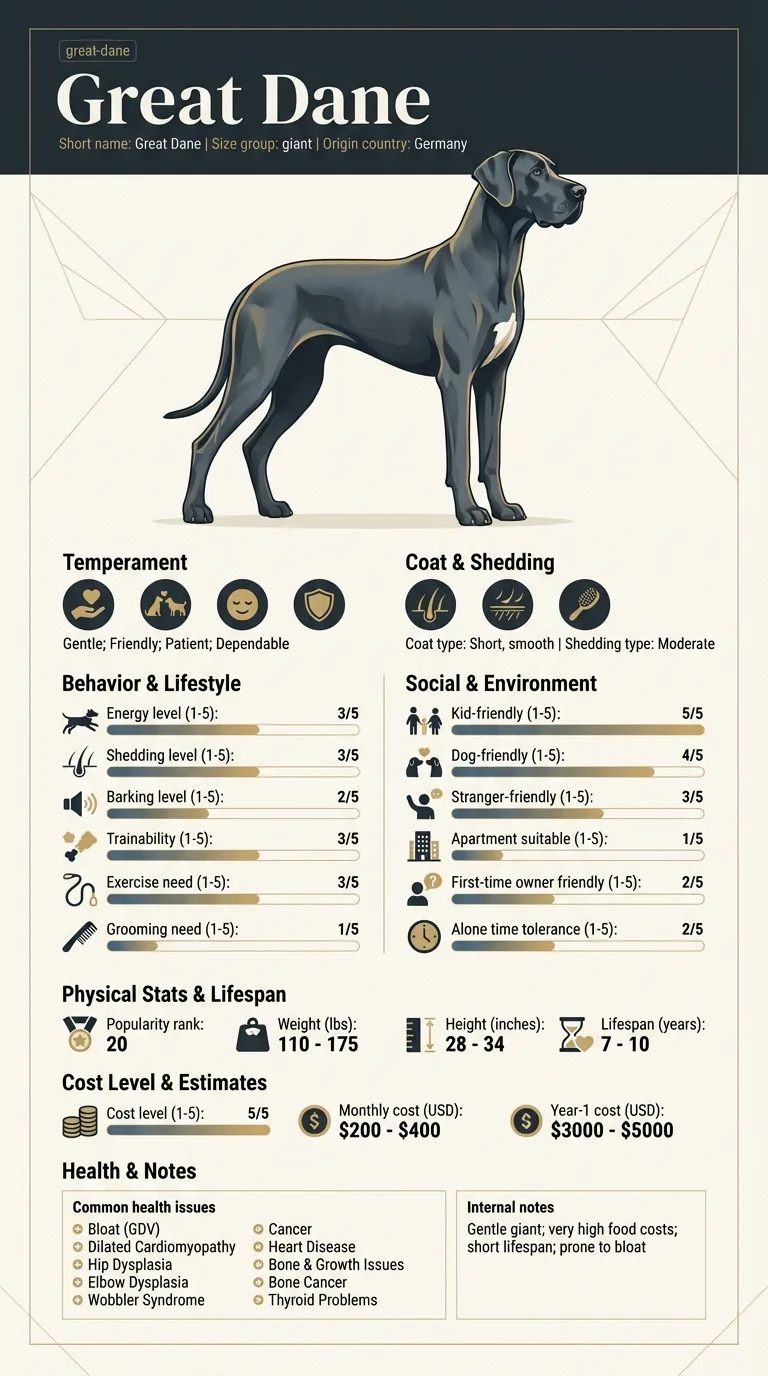
Caring for a Great Dane with progressive retinal atrophy (PRA) can increase costs due to potential veterinary visits and special needs. Budget for around $200 to $400 monthly for general care.
A one-page prep sheet for this condition: the signs, the questions to ask, what to get priced. Unlocks here.
You get: Vet visit prep sheet
No spam. One-click unsubscribe. See our privacy policy.
Preview page 1 before you decide.