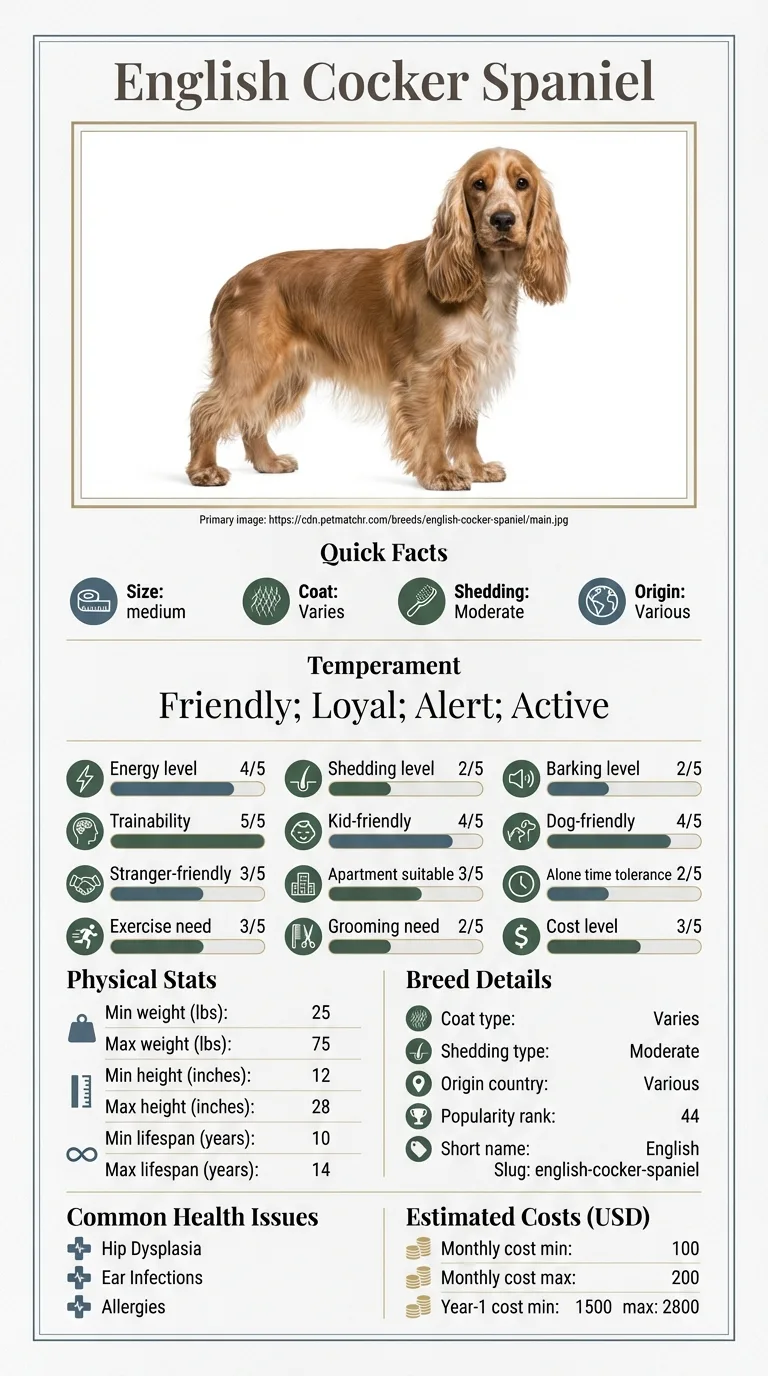
Understanding English Cocker Spaniel Separation Anxiety
English Cocker Spaniel separation anxiety can be a challenging issue for many owners. It's the distress your dog feels when left alone, which can lead to destructive behavior and stress for both of you.
What you can try
- Start by gradually increasing the time your English Cocker Spaniel spends alone. Begin with just a few minutes and slowly extend the duration to help them adjust.
- Create a safe and comfortable space for your dog with their favorite toys and a cozy blanket. Consider using calming music or a dog-safe puzzle toy to keep them occupied.
- Implement a consistent departure routine. Practice leaving and returning home without fuss to help your dog understand that you will always come back.
Mistakes that make this worse
Avoid these common mistakes to help your English Cocker Spaniel overcome separation anxiety.
- Excessive Comforting: Overly comforting your dog during anxious moments can reinforce their fear of being alone. Instead, try to remain calm and encourage independence by gradually increasing alone time.
- Ignoring Warning Signs: Dismissing your dog's signs of anxiety can lead to worsening behaviors. Pay attention to their cues, like whining or pacing, and address them with training.
- Inconsistent Routines: A lack of structure can confuse your dog and heighten anxiety. Establish a consistent routine for feeding, walks, and alone time to create a sense of security.
- Immediate Returns: Returning home at the first sign of distress teaches your dog that anxiety gets them what they want. Instead, wait for a calm moment before coming back.
- Punishing Anxiety: Scolding your dog for anxious behaviors only increases stress. Use positive reinforcement to reward calm behavior instead.
- Overstimulation Before Leaving: Engaging in high-energy activities right before leaving can make your dog more anxious. Instead, opt for calm play or relaxation exercises before you go.
- Too Much Attention When Home: Giving excessive attention when you return can make your dog more anxious about your departures. Keep greetings low-key to help them feel more secure.
When English Cocker Spaniel Separation Anxiety is an Emergency
It's crucial to recognize when your English Cocker Spaniel's separation anxiety becomes an emergency. If you notice severe behaviors like continuous howling, destructive chewing, or attempts to escape, it's time to call your vet. These signs can indicate that your dog is in extreme distress and may require immediate intervention.
Additionally, if your dog is showing signs of self-harm, such as excessive licking or biting at their skin, you should seek help right away. This behavior can lead to serious injuries and needs urgent attention.
In contrast, if your English Cocker Spaniel is simply whining or pacing when you leave, these are milder signs of separation anxiety. You can monitor these behaviors over time and develop a plan to help your dog feel more comfortable when alone. Gradual training methods and creating a comforting environment can be effective strategies in these less urgent situations.
Frequently asked questions
Why does my English Cocker Spaniel have separation anxiety?
English Cocker Spaniels can develop separation anxiety due to their strong bond with their owners. Changes in routine, moving to a new home, or even changes in family dynamics can trigger this behavior. It's important to identify the specific triggers and provide reassurance to help your dog feel safe.
How can I stop my English Cocker Spaniel's separation anxiety?
To address English Cocker Spaniel separation anxiety, start by creating a safe space for your dog with familiar toys and blankets. Gradually increase the time you leave them alone, rewarding calm behavior upon your return. Consider using calming products or consulting a professional trainer for additional strategies.
What are the signs of separation anxiety in an English Cocker Spaniel?
Signs of separation anxiety include excessive barking, destructive behavior, pacing, and drooling when you prepare to leave. Some dogs may also try to escape or exhibit changes in appetite. Observing these behaviors can help you determine if your dog is struggling with anxiety.
Is English Cocker Spaniel separation anxiety common?
Yes, separation anxiety is fairly common in English Cocker Spaniels due to their affectionate nature and desire for companionship. Proper socialization and training from a young age can reduce the likelihood of developing this problem. Being proactive is key.
Can training help with separation anxiety in English Cocker Spaniels?
Absolutely! Consistent training techniques, such as gradual desensitization and crate training, can help ease your dog's anxiety. Engaging in positive reinforcement can also promote confidence and reduce distress when left alone.
Should I consult a vet for my English Cocker Spaniel's separation anxiety?
If your dog's separation anxiety is severe or worsening, it’s a good idea to consult a vet. They can rule out any underlying health issues and may recommend behavioral therapy or medication as part of a comprehensive treatment plan.
What are the signs of separation anxiety in an English Cocker Spaniel?
Signs of separation anxiety can include excessive barking, destructive behavior, and attempts to escape. You might also notice your dog pacing or drooling when you prepare to leave. If these behaviors persist, it may be time to seek professional help.
Can separation anxiety develop in older English Cocker Spaniels?
Yes, older English Cocker Spaniels can develop separation anxiety, especially if there have been significant changes in their environment or routine. This could include the loss of a companion or a change in living situation. Monitoring their behavior and consulting a vet can help manage these changes.
How can I help my English Cocker Spaniel with separation anxiety when I have to leave for long hours?
Gradual desensitization is key. Start by leaving your dog alone for short periods and gradually increase the time. Providing engaging toys and puzzles can also keep them occupied. Consider hiring a dog walker or pet sitter for longer absences.
Is it possible for English Cocker Spaniels to overcome separation anxiety?
Yes, with consistent training and management, many English Cocker Spaniels can overcome separation anxiety. Techniques like positive reinforcement and creating a safe space can be effective. Patience and persistence are important in this process.
What should I do if my English Cocker Spaniel injures themselves due to separation anxiety?
If your dog injures themselves while trying to escape or due to anxiety, it’s crucial to contact your vet immediately. They can assess the injury and provide the necessary treatment. Additionally, addressing the root cause of the anxiety is essential to prevent future incidents.