DogBreedCompass
← Back to breed profile

Doberman Pinscher Progressive Retinal Atrophy (PRA-RCD3)

Doberman Pinscher progressive retinal atrophy (PRA-RCD3) is a serious condition that leads to vision loss in these loyal dogs.

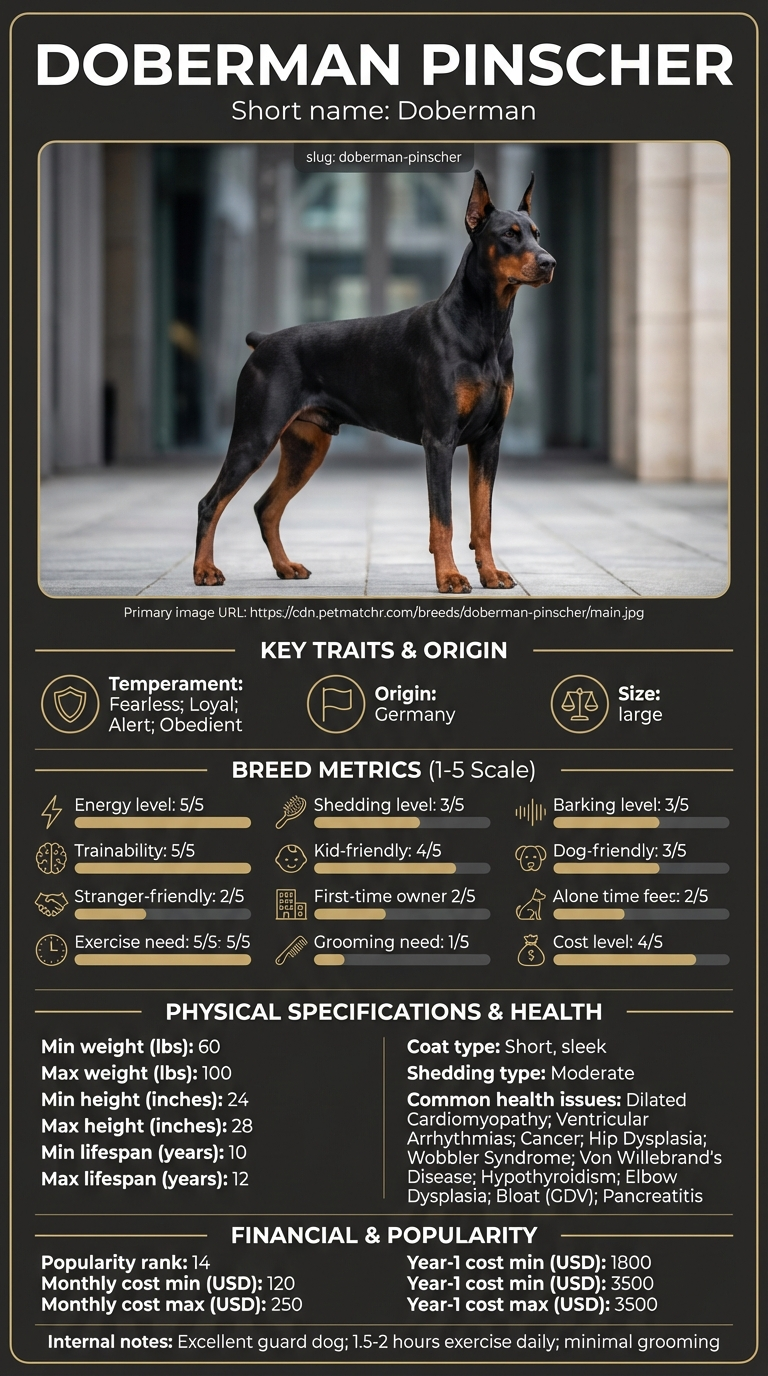
Doberman Pinscher Progressive Retinal Atrophy (PRA-RCD3) infographic

Owners of Doberman Pinschers, especially those who notice changes in their dog's vision, often face challenges with this issue. New dog owners or those unfamiliar with genetic conditions may find it particularly overwhelming.

Important reminder

This guide is not medical advice. If your dog shows pain, sudden behavior change, or worsening symptoms, consult a licensed veterinarian.

Some links may be affiliate links. We may earn a commission at no extra cost to you. We only suggest products we believe are helpful for dog owners.

What this problem looks like

Doberman Pinscher progressive retinal atrophy (pra-rcd3) is a genetic eye disorder that leads to gradual vision loss. This condition often starts with reduced night vision and can progress to complete blindness. For Dobermans, this issue can arise as early as two years of age and significantly impacts their daily activities.

Common triggers

  • Genetic predisposition from breeding
  • Environmental stressors
  • Age-related changes in vision

Progressive retinal atrophy (pra-rcd3) is relatively common in Doberman Pinschers, affecting a notable percentage of the breed due to its genetic nature. Many owners may notice symptoms between the ages of two and four, making it essential for early detection and management.

Why this happens

Breed factors

Doberman Pinschers are genetically predisposed to Progressive Retinal Atrophy (PRA-rcd3), a hereditary condition that leads to gradual vision loss. This breed's strong loyalty and alertness can mask their struggles with sight, making it hard to notice early signs.

Environment factors

Environmental factors can also play a role in the progression of PRA-rcd3. Poor lighting, lack of mental stimulation, and insufficient exercise can exacerbate the dog's condition, leading to heightened anxiety or behavioral issues as they adapt to their changing vision.

What you can try

At-home strategies

  • Create a consistent environment for your Doberman. Keep furniture in the same places to help them navigate safely.
  • Use scent trails or textures to guide them around your home. For example, add scented markers to areas where they can find food and water.
  • Engage in scent games to stimulate their mind and encourage them to use their other senses. Hide toys or treats around the house and let them find them.

When to consider a trainer

If your Doberman is showing anxiety or behavioral changes due to their vision loss, consider working with a professional trainer. A trainer experienced with vision-impaired dogs can provide tailored strategies to help your dog adjust and thrive.

When to talk to your vet

It's essential to consult your vet if you notice any signs of vision loss in your Doberman, such as bumping into objects or hesitance in new environments. They can provide guidance on managing PRA-rcd3 and recommend treatments or adaptations to improve your dog's quality of life.

Realistic expectations

Managing your Doberman Pinscher's progressive retinal atrophy (pra-rcd3) may take several months to establish effective routines. Regular veterinary check-ups and adjustments to your care approach are crucial.

Success involves your Doberman adapting to vision loss, learning new commands, and navigating their environment safely. You should also see improvements in their confidence and comfort.

Mistakes that make this worse

Avoid these common mistakes that can worsen your Doberman Pinscher's progressive retinal atrophy (PRA-rcd3). The right adjustments can help manage their condition more effectively.

  • Ignoring early symptoms: Many owners overlook initial signs of vision loss, like bumping into objects. Regular vet check-ups can catch problems early.
  • Lack of environmental adjustments: Not changing your home's layout can confuse your dog. Keeping furniture in consistent places helps them navigate better.
  • Neglecting training: Failing to reinforce commands or cues can lead to frustration. Regular training sessions help your Doberman adapt to their changing vision.
  • Inconsistent routine: A chaotic schedule can add stress to your dog. Sticking to a consistent daily routine provides comfort and predictability.
  • Over-restriction: Keeping your dog away from all activities can lead to boredom and anxiety. Gradually allowing safe exploration can keep them engaged.
  • Not using assistive tools: Some owners avoid using harnesses or guiding leashes. These tools can aid mobility and help your Doberman feel secure.
  • Relying solely on medication: Some believe medication is a cure-all. Combining medication with behavioral adjustments often yields the best results.

When Doberman Pinscher Progressive Retinal Atrophy (PRA-rcd3) is an Emergency

Remember, while mild cases can often be observed, any sudden changes in vision or behavior should never be taken lightly. When in doubt, it’s best to err on the side of caution and consult your vet.

Doberman Pinscher Progressive Retinal Atrophy (PRA-RCD3) - When Doberman Pinscher Progressive Retinal Atrophy (PRA-rcd3) is an Emergency

Emma and Duke: Navigating PRA-rcd3 Together

Emma, a first-time Doberman owner, noticed her dog Duke bumping into furniture and hesitating on walks. After a vet diagnosed him with progressive retinal atrophy (pra-rcd3), Emma felt overwhelmed. With guidance, she began training Duke with verbal cues and tactile markers around their home. Over time, Duke learned to trust his other senses, gaining confidence on walks and at home. Emma also joined a support group where she connected with other owners facing similar challenges, providing her with encouragement and tips.

Key takeaway: With patience and proper training, you can help your Doberman Pinscher adjust to progressive retinal atrophy (pra-rcd3) and maintain a happy, fulfilling life.
Frequently asked questions

Why does my Doberman Pinscher have progressive retinal atrophy (pra-rcd3)?

Doberman Pinschers are prone to progressive retinal atrophy (pra-rcd3) due to genetic factors. This condition leads to gradual vision loss as the retina deteriorates over time. Regular vet check-ups can help monitor your dog's eye health. This answer relates to Doberman Pinscher progressive retinal atrophy (pra-rcd3).

How can I help my Doberman Pinscher with progressive retinal atrophy (pra-rcd3)?

To assist your Doberman with pra-rcd3, maintain a consistent environment to reduce confusion. Use verbal commands and tactile cues to help guide them. Training and socialization can also provide mental stimulation.

What are the signs of progressive retinal atrophy (pra-rcd3) in Doberman Pinschers?

Signs of pra-rcd3 include difficulty seeing in low light, bumping into objects, and hesitancy in unfamiliar areas. You might also notice your Doberman becoming less active or avoiding certain activities. If you observe these signs, consult your vet.

Is there a cure for progressive retinal atrophy (pra-rcd3) in Dobermans?

Currently, there is no cure for pra-rcd3 in Doberman Pinschers. However, early detection and management can help improve their quality of life. Focus on creating a safe and familiar environment for your dog.

How can I train a Doberman Pinscher with progressive retinal atrophy (pra-rcd3)?

Training a Doberman with pra-rcd3 involves using positive reinforcement and consistent commands. Incorporate scent work and sound cues to help them navigate. Patience is key, and adapting your training methods can make a big difference.

What are the early signs of progressive retinal atrophy (pra-rcd3) in Doberman Pinschers?

Early signs of progressive retinal atrophy (pra-rcd3) in Doberman Pinschers include difficulty seeing in low light, bumping into objects, and hesitation when navigating unfamiliar areas. If you notice these symptoms, it's crucial to consult your vet for a proper diagnosis.

Can progressive retinal atrophy (pra-rcd3) lead to complete blindness in Doberman Pinschers?

Yes, progressive retinal atrophy (pra-rcd3) can lead to complete blindness as the condition progresses. Regular check-ups with your vet can help monitor the situation and manage your dog's quality of life.

How can I help my Doberman Pinscher cope with vision loss from progressive retinal atrophy (pra-rcd3)?

To help your Doberman adjust to vision loss, maintain a consistent environment, avoid rearranging furniture, and use verbal cues to guide them. Training can also help them adapt to their new situation, making life easier for both of you.

At what age do Doberman Pinschers typically start showing symptoms of progressive retinal atrophy (pra-rcd3)?

Symptoms of progressive retinal atrophy (pra-rcd3) can start appearing in young adulthood, typically between 1 to 3 years of age. Monitoring your Doberman's vision during this time is essential for early detection.

Is there a treatment for progressive retinal atrophy (pra-rcd3) in Doberman Pinschers?

Currently, there is no cure for progressive retinal atrophy (pra-rcd3) in Doberman Pinschers. However, supportive care and training can help improve their quality of life. Always consult your vet for the best management strategies.

Quick answers

View more answers
Behavior

What are quick tips for managing Doberman Pinscher progressive retinal atrophy (pra-rcd3)?

Keep your home well-lit and free of obstacles to help your Doberman navigate safely. Use consistent commands and provide a predictable routine to reduce anxiety. Regular vet visits are crucial for monitoring their condition.

Behavior

Can progressive retinal atrophy (pra-rcd3) affect my Doberman's behavior?

Yes, vision loss can lead to changes in behavior, including increased anxiety or reluctance to explore. Supporting your Doberman with training and familiar surroundings can help ease these behaviors.

Costs

How much does treatment for progressive retinal atrophy (pra-rcd3) cost?

While there is no treatment for pra-rcd3, regular vet check-ups can cost between $120 and $250 monthly. Budgeting for additional health issues related to vision loss is also wise.

Health

Is progressive retinal atrophy (pra-rcd3) hereditary in Doberman Pinschers?

Yes, pra-rcd3 is a genetic condition in Doberman Pinschers. Responsible breeding practices can help reduce the prevalence of this condition in future generations.

Related DogBreedCompass guides

Related guides