Behavior
What are quick tips to manage Doberman Pinscher insurance claims?
Keep regular vet appointments and maintain a healthy diet to prevent common health issues. Additionally, invest in training to address any behavioral problems early on.

Quick answer
What are quick tips to manage Doberman Pinscher insurance claims?
Keep regular vet appointments and maintain a healthy diet to prevent common health issues. Additionally, invest in training to address any behavioral problems early on.
Doberman Pinscher insurance claims can be a real concern for owners. Understanding the reasons behind these claims is crucial for responsible pet ownership.
Owners who might struggle with Doberman Pinscher insurance claims often include first-time dog parents and those living in urban settings. They may feel overwhelmed by the unexpected expenses and health risks associated with their pet.
This guide is not medical advice. If your dog shows pain, sudden behavior change, or worsening symptoms, consult a licensed veterinarian.
Some links may be affiliate links. We may earn a commission at no extra cost to you. We only suggest products we believe are helpful for dog owners.
We research and check what we publish, but we do not warrant that any figure, date, price, or statement is accurate, complete, or current, and we accept no liability for any loss, cost, injury, or other harm arising from the use of this site. Use it as one reference among several. You remain responsible for your own decisions and for your dog's care - confirm anything that matters with a licensed veterinarian or another qualified professional before you act on it. Full disclaimer.
Check this first
Understanding when Doberman Pinscher insurance claims signal an emergency can help you act quickly. If your dog suddenly shows signs of distress or a serious health issue, you may need to call your vet right away.
Red flags include persistent coughing, difficulty breathing, or severe vomiting. Other warning signs are sudden lethargy, loss of appetite, or unusual behavior changes that last more than a day. If you notice any of these symptoms, don’t wait—contact your vet immediately.
On the other hand, mild cases can often be monitored at home. If your Doberman has a minor skin issue or a slight cough without other symptoms, it may be safe to observe them for a short period. Keep track of any changes and look for patterns that could indicate a more serious issue down the line. If things don’t improve after a few days, reach out for professional advice.
If any of these apply, call your vet or an emergency clinic now. The rest of this page is for the cases that are not an emergency.
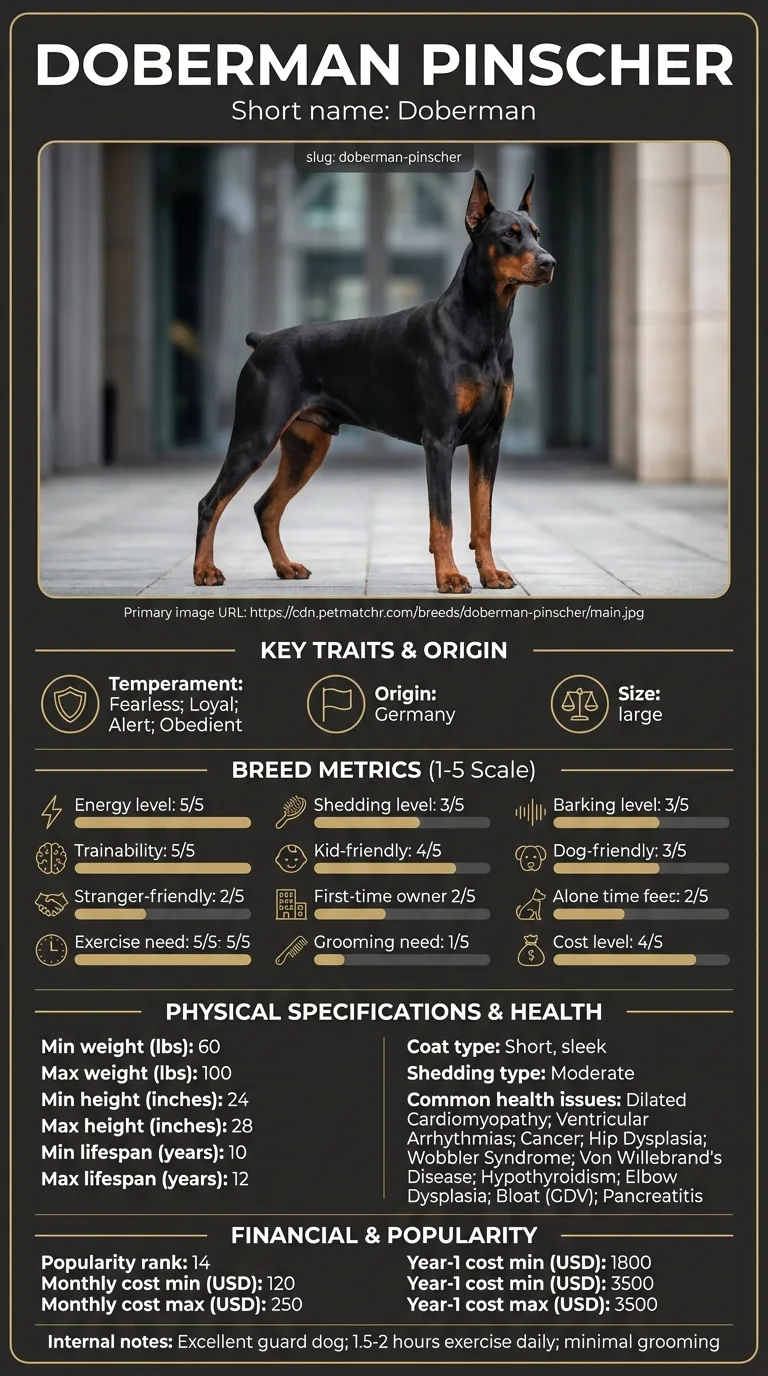
Doberman Pinscher insurance claims often arise from their predisposition to certain health issues, such as heart problems and hip dysplasia. Owners may find themselves facing frequent vet visits, which can lead to insurance claims. This breed is known for being loyal and protective, but their health needs can create financial stress for owners.
Insurance claims among Doberman Pinschers are relatively common due to their higher risk for several serious health conditions. Owners should be prepared for potentially increased medical costs compared to some other breeds.
Doberman Pinschers may have higher insurance claims due to their size and temperament. They are strong dogs that can sometimes exhibit aggressive behavior if not properly trained. Additionally, they are prone to certain health issues like hip dysplasia and heart conditions, leading to more veterinary visits.
The environment can significantly affect Doberman behavior. Factors like lack of socialization, insufficient exercise, and exposure to stressful situations can lead to anxiety or aggression. If a Doberman feels threatened or is not well-adjusted, this can increase the likelihood of incidents that result in insurance claims.
If your Doberman shows sudden changes in behavior, such as increased aggression or anxiety, consult your vet. They can rule out health issues that may be impacting your dog's behavior and recommend appropriate interventions.
Addressing Doberman Pinscher insurance claims can be tricky. Here are some common mistakes owners make that could worsen the situation, along with safer alternatives.
Start here: Doberman Pinscher Most Common Genetic Disorders: Screening
See all Doberman Pinscher health problems, which breeds are prone to insurance claims, or the full Doberman Pinscher breed guide for temperament, exercise needs and ownership costs.
It typically takes 3 to 6 months to see significant improvements in your Doberman Pinscher's behavior, especially if you're addressing specific issues that lead to insurance claims.
Success means a noticeable reduction in claims and better overall behavior. Your Doberman should respond positively to training and show improved interactions with other dogs and people.
When Sarah adopted Bella, her energetic Doberman Pinscher, she quickly learned that Bella had a knack for causing trouble. Bella would bark excessively at strangers and had a few minor incidents with other dogs during walks. After receiving a couple of insurance claims for these incidents, Sarah felt overwhelmed. With the help of a positive reinforcement trainer, Sarah implemented training sessions focusing on socialization and impulse control. Over time, Bella became more relaxed and well-behaved, reducing incidents and insurance claims significantly.
Key takeaway: With dedication and the right training, you can help your Doberman Pinscher overcome behavior issues that lead to insurance claims. Consistent training can make a world of difference.
Doberman Pinschers are prone to certain health issues like Dilated Cardiomyopathy and Hip Dysplasia, which can lead to higher insurance claims. Regular vet check-ups and early detection can help manage these risks. Being proactive about their health can minimize potential claims.
To reduce insurance claims, focus on preventive care, including regular health check-ups and vaccinations. Training your Doberman for good behavior can also mitigate risks, as behavioral issues can lead to accidents requiring claims. Consider working with a professional trainer if needed.
Common health issues include Dilated Cardiomyopathy, Cancer, and Hip Dysplasia. These conditions often require expensive treatments, resulting in higher insurance claims. Being aware of these issues can help you take preventative measures.
If your Doberman has frequent health issues, consult your vet for a comprehensive health evaluation. They may recommend lifestyle changes or specific diets to improve their overall health. Keeping a close eye on their activity level and weight is also crucial.
Yes, Doberman Pinschers tend to have higher insurance claims due to their predisposition to specific health conditions. Understanding these risks can help you make informed decisions on insurance coverage and preventive care. It's essential to research and choose the right policy.
Doberman Pinschers are prone to certain health issues like Dilated Cardiomyopathy and Hip Dysplasia. These conditions can result in significant medical expenses, leading to higher insurance claims.
Regular vet check-ups and preventive care are key. Training your Doberman to manage behavior problems can also reduce risks, potentially lowering the chances of insurance claims.
Yes, older Doberman Pinschers may experience more health issues, leading to increased insurance claims. It's important to stay proactive with their healthcare as they age.
If a claim is denied, review the policy details and the reason for denial. You may need to gather additional documentation from your vet and appeal the decision with your insurance provider.
Absolutely! Training can address behavior problems that might lead to accidents or injuries. Proper training can not only improve your dog's behavior but also help manage their anxiety, leading to fewer claims.
Keep regular vet appointments and maintain a healthy diet to prevent common health issues. Additionally, invest in training to address any behavioral problems early on.
Consider a higher deductible plan and focus on preventive care to avoid costly claims. Research policies that offer breed-specific coverage options.
Contact your vet immediately and be prepared with your insurance details. Timely action can save your pet's life and reduce long-term costs.
A one-page prep sheet for this condition: the signs, the questions to ask, what to get priced. Unlocks here.
You get: Vet visit prep sheet
No spam. One-click unsubscribe. See our privacy policy.
Preview page 1 before you decide.