Health
What are quick tips for managing Cocker Spaniel glaucoma?
Ensure regular vet check-ups, watch for signs of discomfort, and follow prescribed treatments closely.

Quick answer
What are quick tips for managing Cocker Spaniel glaucoma?
Ensure regular vet check-ups, watch for signs of discomfort, and follow prescribed treatments closely.
Cocker Spaniel glaucoma is a serious eye condition that can lead to blindness if left untreated. Understanding this issue is crucial for your furry friend’s health.
Owners of Cocker Spaniels, especially those who notice signs of discomfort or changes in their dog's vision, often struggle with this issue. It can be particularly concerning for first-time dog owners who may not recognize the symptoms right away.
This guide is not medical advice. If your dog shows pain, sudden behavior change, or worsening symptoms, consult a licensed veterinarian.
Some links may be affiliate links. We may earn a commission at no extra cost to you. We only suggest products we believe are helpful for dog owners.
We research and check what we publish, but we do not warrant that any figure, date, price, or statement is accurate, complete, or current, and we accept no liability for any loss, cost, injury, or other harm arising from the use of this site. Use it as one reference among several. You remain responsible for your own decisions and for your dog's care - confirm anything that matters with a licensed veterinarian or another qualified professional before you act on it. Full disclaimer.
Check this first
Understanding when Cocker Spaniel glaucoma is an emergency can save your dog's vision and comfort. If you notice any severe symptoms, it's crucial to act quickly. Red-flag signs include sudden vision loss, excessive tearing, a bulging eye, or your dog showing signs of pain, like whining or aggression. These symptoms indicate high intraocular pressure and require immediate veterinary attention.
On the other hand, some symptoms can be monitored at home. Mild signs of glaucoma can include slight squinting, occasional redness, or minor discharge. In these cases, you can observe your dog closely and schedule a vet appointment for a thorough check-up. Make a plan to track any changes in behavior or eye appearance, as early detection can prevent escalation. Always consult your vet for the best course of action.
If any of these apply, call your vet or an emergency clinic now. The rest of this page is for the cases that are not an emergency.
Cocker Spaniel glaucoma is a serious eye condition that affects many dogs. This condition can lead to increased eye pressure, resulting in pain and potential vision loss. Daily signs include excessive tearing, squinting, and a cloudy appearance in the eyes.
Glaucoma is relatively common in Cocker Spaniels, especially as they age. It's important for owners to monitor their dog's eye health regularly and consult a vet if they notice any changes.
Cocker Spaniels can be predisposed to glaucoma due to their genetics. Certain anatomical features of their eyes can increase the risk of developing this eye pressure disease. It's important to note that inherited traits can make them more vulnerable to this condition.
Environmental factors can also contribute to glaucoma. For instance, if your Cocker Spaniel experiences high-stress situations or has limited access to proper veterinary care, these factors can exacerbate the risk of eye problems. Regular exposure to irritants or allergens can also lead to eye issues.
If you notice any signs of discomfort in your Cocker Spaniel's eyes or if they are diagnosed with glaucoma, contact your vet immediately. Regular check-ups are essential, especially for breeds prone to eye problems, so don't hesitate to seek professional advice.
When dealing with Cocker Spaniel glaucoma, certain owner behaviors can unintentionally worsen the situation. Here are some common mistakes to avoid and safer alternatives to consider.
Start here: Cocker Spaniel Most Common Genetic Disorders: Screening
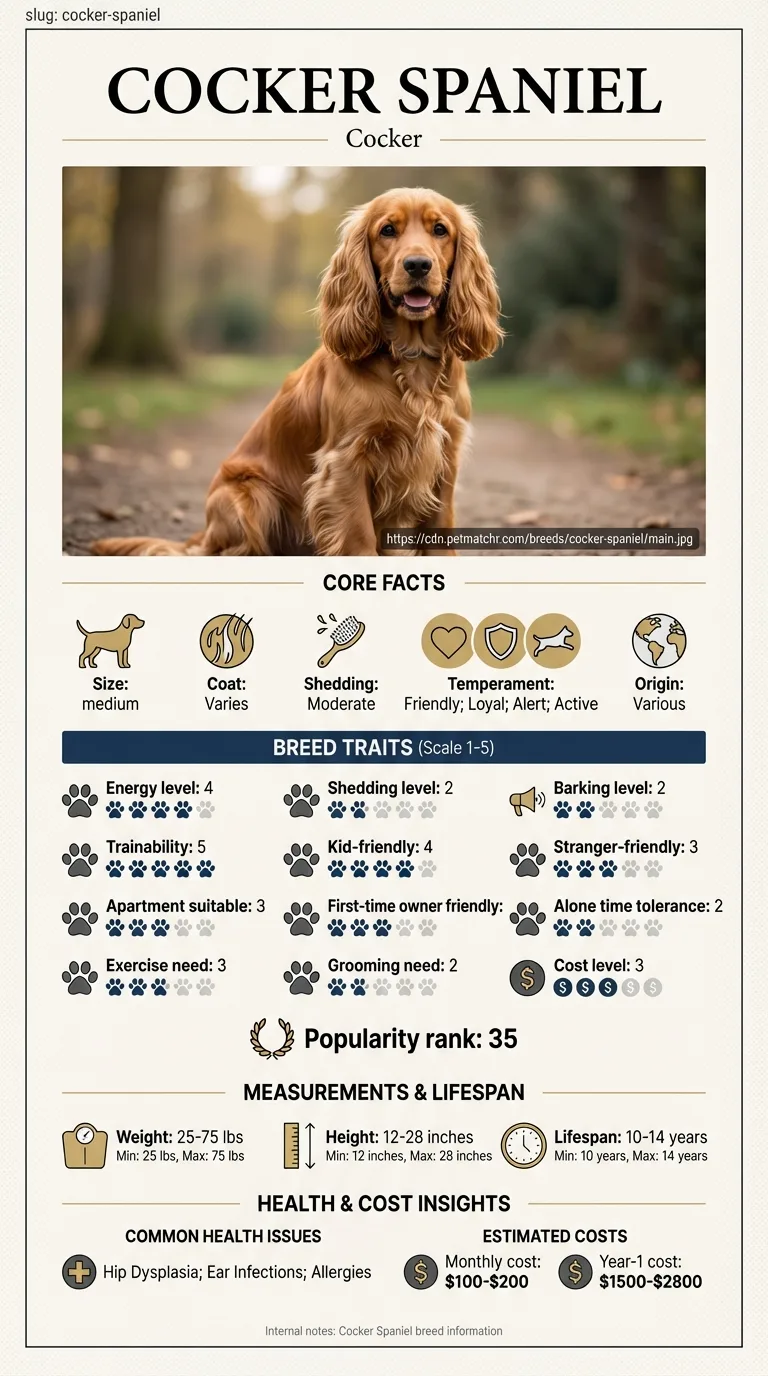
See all Cocker Spaniel health problems, which breeds are prone to glaucoma, or the full Cocker Spaniel breed guide for temperament, exercise needs and ownership costs.
Managing Cocker Spaniel glaucoma typically takes several weeks to months. Regular vet visits and monitoring are crucial in the early stages.
Success means maintaining your dog's eye health, minimizing discomfort, and preventing vision loss. Your Cocker should be able to engage in daily activities with minimal interference from the condition.
Emily, a first-time dog owner, noticed her Cocker Spaniel Bella was squinting and seemed uncomfortable. After a vet visit, Emily learned Bella had glaucoma. At first, it was overwhelming, but with guidance from her vet, Emily adjusted Bella's diet and established a consistent medication routine. Over time, Bella's symptoms improved, and she was able to enjoy her walks again.
Key takeaway: With the right support and a proactive approach, managing Cocker Spaniel glaucoma can lead to a better quality of life for both you and your dog.
Cocker Spaniels can develop glaucoma due to genetic factors or other underlying health issues. It's important to have regular eye check-ups with your vet to catch any signs of increased eye pressure early.
Look for signs like redness in the eye, excessive tearing, or cloudiness. If your dog is squinting or seems to be in pain, contact your vet immediately for an evaluation.
Treatment options may include medications to lower eye pressure or surgical procedures. Your vet will recommend the best approach based on the severity of the condition.
While you can't prevent glaucoma completely, regular veterinary check-ups can help catch issues early. Keeping your Cocker healthy with a balanced diet and proper exercise also supports overall eye health.
Dogs with glaucoma may show signs of discomfort, like avoiding bright light or becoming more withdrawn. If you notice these changes, consult your vet for guidance.
With proper treatment, many dogs can maintain a good quality of life. However, some may experience vision loss, so it's essential to monitor their condition regularly.
Early signs of glaucoma in a Cocker Spaniel can include excessive tearing, squinting, or a cloudy appearance in one or both eyes. If you notice these symptoms, it's vital to consult your vet promptly to prevent further complications.
Yes, glaucoma can be hereditary in Cocker Spaniels. If you're getting a puppy, ask the breeder about the health history of the parents to understand any potential risks for glaucoma and other eye conditions.
It's recommended to have your Cocker Spaniel's eyes checked at least once a year, especially as they age. Regular check-ups can help catch any signs of glaucoma early and keep your dog's vision healthy.
Treatments for Cocker Spaniel glaucoma may include medications to reduce eye pressure or surgery in more severe cases. Consult your veterinarian to determine the best course of action based on your dog's specific condition.
Ensure regular vet check-ups, watch for signs of discomfort, and follow prescribed treatments closely.
Treatment costs can range from $100 to $300 per month, depending on medication and vet visits.
Yes, untreated glaucoma can lead to vision loss and other complications, so prompt treatment is crucial.
Maintain a healthy diet, keep their environment clean, and avoid exposure to irritants.
A one-page prep sheet for this condition: the signs, the questions to ask, what to get priced. Unlocks here.
You get: Vet visit prep sheet
No spam. One-click unsubscribe. See our privacy policy.
Preview page 1 before you decide.