Health
What are some quick tips for Cocker Spaniel genetic load?
Monitor your dog's health closely and schedule regular vet check-ups. Consider a balanced diet and appropriate exercise to support overall well-being.

Quick answer
What are some quick tips for Cocker Spaniel genetic load?
Monitor your dog's health closely and schedule regular vet check-ups. Consider a balanced diet and appropriate exercise to support overall well-being.
Cocker Spaniel genetic load refers to the concentration of harmful genetic variants that can affect your dog's health. This is an important issue for dog owners to understand.
Owners of Cocker Spaniels, especially first-time dog parents or those with limited experience in dog health, often struggle with understanding genetic load. They may notice frequent health problems in their pets and feel overwhelmed when trying to navigate solutions.
This guide is not medical advice. If your dog shows pain, sudden behavior change, or worsening symptoms, consult a licensed veterinarian.
Some links may be affiliate links. We may earn a commission at no extra cost to you. We only suggest products we believe are helpful for dog owners.
We research and check what we publish, but we do not warrant that any figure, date, price, or statement is accurate, complete, or current, and we accept no liability for any loss, cost, injury, or other harm arising from the use of this site. Use it as one reference among several. You remain responsible for your own decisions and for your dog's care - confirm anything that matters with a licensed veterinarian or another qualified professional before you act on it. Full disclaimer.
Check this first
Recognizing when Cocker Spaniel genetic load is an emergency can make a big difference in your dog's health. If your Cocker shows severe symptoms like sudden lethargy, difficulty breathing, or collapse, it's time to call your vet immediately. These signs may indicate serious underlying health issues connected to genetic load that need urgent attention.
On the other hand, if your Cocker Spaniel is experiencing mild symptoms, such as slight changes in appetite or energy levels, you might choose to monitor them at home. Keep a close eye on their behavior and consider keeping a journal of any changes. This can help you track trends and provide valuable information to your vet later.
For those mild cases, establish a plan to address the genetic load. This could include regular vet check-ups, dietary adjustments, or specific training focused on their unique needs. However, if symptoms worsen or new ones develop, don’t hesitate to reach out to your veterinarian. Early intervention is key to managing health issues related to genetic load effectively.
If any of these apply, call your vet or an emergency clinic now. The rest of this page is for the cases that are not an emergency.
Cocker Spaniel genetic load refers to the accumulation of harmful genetic variants that can affect their health and behavior. This can manifest in various ways, such as increased susceptibility to certain health issues or behavioral problems. Owners may notice their Cocker Spaniel experiencing more frequent health issues or unusual behaviors, which can be concerning and frustrating.
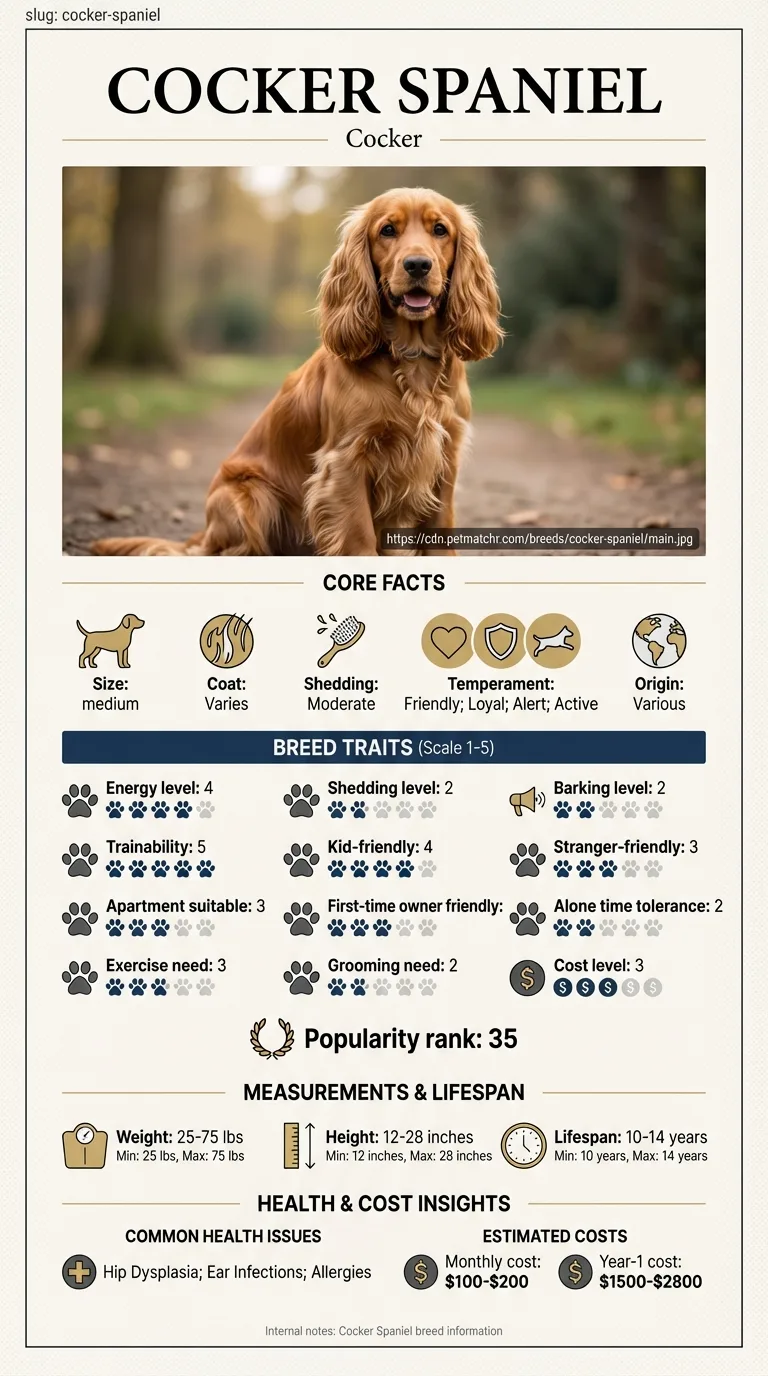
Cocker Spaniels are among breeds with a notable genetic load, leading to a higher incidence of issues like hip dysplasia and allergies. This means it's fairly common for owners to encounter health problems connected to genetics, making awareness and proactive care essential.
Cocker Spaniels can inherit a genetic load that makes them more susceptible to certain health issues. This includes conditions like hip dysplasia and ear infections, which are more common in this breed. Their genetic background can lead to a higher concentration of harmful genetic variants.
Environmental factors can also contribute to a Cocker Spaniel's genetic load. Poor diet, lack of exercise, and exposure to stress can exacerbate any inherited issues. Additionally, if they are not properly socialized or trained, behavioral problems may arise.
If you notice signs of distress, such as excessive scratching, difficulty walking, or changes in appetite, consult your vet. They can assess your dog’s health and recommend any necessary tests or treatments.
Avoiding common mistakes can help improve your Cocker Spaniel's genetic load issues. Here are some behaviors to steer clear of.
Start here: Cocker Spaniel Most Common Genetic Disorders: Screening
See all Cocker Spaniel health problems, which breeds are prone to genetic load, or the full Cocker Spaniel breed guide for temperament, exercise needs and ownership costs.
Addressing Cocker Spaniel genetic load can take several months to a year, depending on the severity of the issues and the care routine used.
Success looks like a healthier Cocker Spaniel with reduced health issues, improved behavior, and a better quality of life for both the dog and the owner.
Emily, a busy nurse from Chicago, adopted Max, a Cocker Spaniel, who had been diagnosed with common genetic conditions. She noticed that he often seemed anxious and had frequent ear infections. After consulting her vet, Emily learned about the importance of a balanced diet, regular vet check-ups, and specific training to manage Max's anxiety. She committed to a consistent routine and enrolled Max in a training program focused on socialization and anxiety management. Over six months, Max became more confident and healthier, enjoying walks in the park without fear.
Key takeaway: With dedication and the right support, managing a Cocker Spaniel's genetic load can lead to significant improvements in health and behavior.
Cocker Spaniels may have a genetic load due to their breeding history. Some breeds have higher concentrations of harmful genetic variants, which can lead to health issues. Understanding these risks can help you prepare for your dog's health needs.
While you can't change your dog's genetic makeup, you can manage the effects. Regular vet check-ups, a balanced diet, and consistent training can help mitigate some issues. Also, consider genetic testing to understand your dog's specific risks.
Cocker Spaniels are prone to several health issues, including hip dysplasia, ear infections, and allergies. Being aware of these can help you monitor your dog's health more effectively. Early detection and intervention can make a significant difference.
Yes, training can help manage behavioral issues that may arise from genetic load. Consistent training techniques can improve your dog's behavior and reduce anxiety. Focus on positive reinforcement to build a trusting relationship.
Supporting your Cocker Spaniel's health involves regular exercise, a nutritious diet, and routine vet visits. Keeping your dog active and engaged can help prevent some health issues. Also, consider supplements if recommended by your vet.
Signs of genetic load in Cocker Spaniels can include unusual behavior, frequent health problems, or a family history of genetic disorders. If your Cocker seems lethargic, has trouble with coordination, or is more prone to infections, it's time to consult your vet.
Yes, a higher genetic load may lead to a shorter lifespan due to increased susceptibility to health issues. Regular vet check-ups and a healthy lifestyle can help manage risks and potentially extend your Cocker's life.
Training your Cocker Spaniel to cope with genetic load issues involves consistent positive reinforcement techniques. Focus on building their confidence and managing any anxiety they may have, using basic commands and socialization skills.
Genetic testing can provide valuable insights into potential health issues your Cocker Spaniel may face. It can help you plan better care and training strategies, especially if you notice any concerning behaviors or health conditions.
If your Cocker Spaniel exhibits persistent behavioral issues or health concerns that interfere with daily life, it's crucial to seek veterinary help. Early intervention can make a significant difference in managing genetic load effects.
Monitor your dog's health closely and schedule regular vet check-ups. Consider a balanced diet and appropriate exercise to support overall well-being.
Aim for at least 15-30 minutes of training each day. Consistency is key to reinforcing good behavior.
Yes, Cocker Spaniels are generally kid-friendly. However, supervision is important to ensure safe interactions.
If your Cocker Spaniel shows signs of anxiety, consult your vet for recommendations. Training and behavioral strategies can also help.
A one-page prep sheet for this condition: the signs, the questions to ask, what to get priced. Unlocks here.
You get: Vet visit prep sheet
No spam. One-click unsubscribe. See our privacy policy.
Preview page 1 before you decide.