Behavior
What are some quick tips for managing Boxer exercise-induced collapse (EIC)?
Limit your Boxer's strenuous activities and keep exercise sessions short and cool. Always provide plenty of water and monitor them closely during play.

Quick answer
What are some quick tips for managing Boxer exercise-induced collapse (EIC)?
Limit your Boxer's strenuous activities and keep exercise sessions short and cool. Always provide plenty of water and monitor them closely during play.
Boxer exercise-induced collapse (EIC) is a serious condition that can affect your dog's activities and health. It leads to sudden collapse during or after exercise, which can be alarming for owners.
Many owners of Boxers or similar breeds face this issue, especially those who enjoy active lifestyles. It's common for first-time dog owners to be caught off guard, as they might not recognize the signs of EIC until it's too late.
This guide is not medical advice. If your dog shows pain, sudden behavior change, or worsening symptoms, consult a licensed veterinarian.
Some links may be affiliate links. We may earn a commission at no extra cost to you. We only suggest products we believe are helpful for dog owners.
We research and check what we publish, but we do not warrant that any figure, date, price, or statement is accurate, complete, or current, and we accept no liability for any loss, cost, injury, or other harm arising from the use of this site. Use it as one reference among several. You remain responsible for your own decisions and for your dog's care - confirm anything that matters with a licensed veterinarian or another qualified professional before you act on it. Full disclaimer.
Check this first
Understanding when Boxer exercise-induced collapse (EIC) is an emergency can save your dog's life. If your Boxer collapses suddenly during or after exercise, it’s crucial to assess the situation quickly. Call your vet immediately if your dog shows any of these red-flag signs:
- Loss of consciousness or unresponsiveness - Difficulty breathing or gasping for air - Seizures or unusual movements - Persistent weakness or inability to stand
These symptoms indicate a serious condition that needs urgent medical attention. On the other hand, if your Boxer shows less severe signs, like mild panting or temporary fatigue, you can monitor the situation at home. If this happens, take these steps:
- Allow your dog to rest in a cool, shaded area. - Ensure they have access to water to stay hydrated. - Limit vigorous activities for the rest of the day.
Keep an eye on their recovery. If symptoms persist or worsen, don’t hesitate to reach out to your vet. Monitoring mild cases is essential, but being aware of the warning signs can help you respond appropriately and ensure your Boxer stays safe during playtime.
If any of these apply, call your vet or an emergency clinic now. The rest of this page is for the cases that are not an emergency.
Boxer exercise-induced collapse (EIC) is a serious condition that can occur during or after intense physical activity. It often manifests as a sudden collapse, leaving owners worried and confused. This problem is especially common in Boxers due to their high energy levels and exercise needs.
EIC is fairly common in Boxers, particularly those engaged in rigorous activities. Many owners report instances, especially in younger dogs. Understanding the signs can help manage this condition effectively.
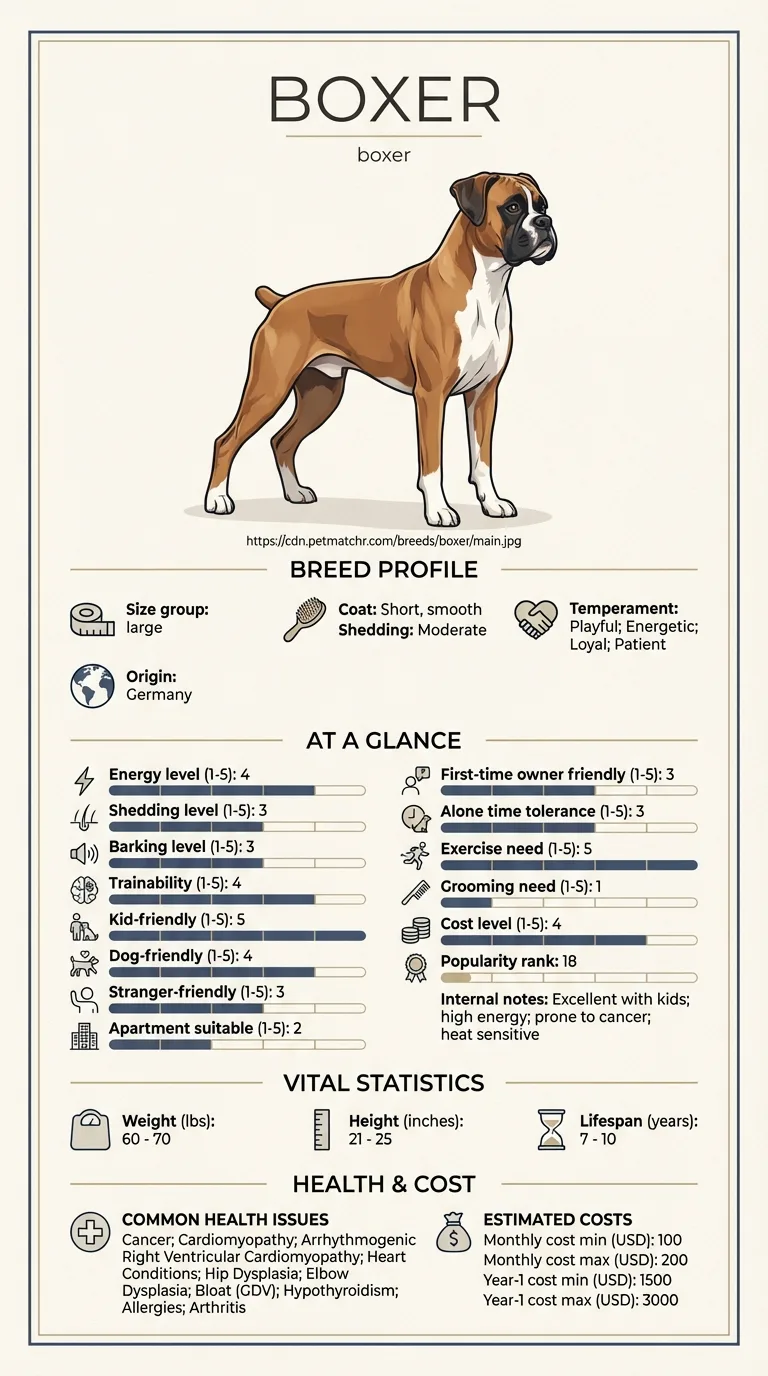
Boxers are energetic and strong dogs. Their high energy level can lead to exercise-induced collapse (EIC) if they are over-exerted. This breed is also known for their playful nature, which might push them to ignore fatigue signals.
Environmental factors like heat and humidity can worsen EIC symptoms. If your Boxer is exercised in extreme weather or without proper breaks, they are at a higher risk for collapse. Additionally, inadequate hydration during play can contribute to this issue.
If your Boxer experiences frequent collapses or shows other concerning symptoms, it's essential to consult your vet. They can rule out other health issues and provide specific guidance on managing EIC safely. Regular check-ups are crucial, especially given the breed's predisposition to various health problems.
Avoiding these common mistakes can help your Boxer manage exercise-induced collapse (EIC) more effectively.
Start here: Boxer Most Common Genetic Disorders: What to Screen For
See all Boxer health problems, which breeds are prone to exercise induced collapse eic, or the full Boxer breed guide for temperament, exercise needs and ownership costs.
It can take several weeks to months to manage and reduce the incidents of exercise-induced collapse (EIC) in a Boxer. Consistent care and monitoring are key.
Success means your Boxer can enjoy exercise without collapsing, showing improved stamina and less anxiety during physical activity.
Emily, a first-time Boxer owner, was excited to take her dog Max on daily jogs. However, after a few weeks, Max suddenly collapsed during one of their runs. Concerned, Emily learned about Boxer exercise-induced collapse (EIC) and realized she needed to adapt their routine. She consulted with a vet and a trainer, who helped her create a tailored exercise plan that included short bursts of activity with plenty of breaks. Over time, Max became more conditioned, and Emily learned to recognize his limits. Now, they enjoy their jogs together, with Max staying safe and happy.
Key takeaway: Understanding your Boxer's needs and adjusting their exercise routine can help manage EIC effectively.
Boxer exercise-induced collapse (EIC) occurs due to a genetic condition affecting muscle control during intense exercise. Dogs may suddenly collapse after vigorous activity, but they typically regain consciousness quickly. It's crucial to consult a vet for a proper diagnosis and to rule out other health issues.
To manage Boxer exercise-induced collapse (EIC), limit intense physical activities, especially in hot weather. Gradually build up their exercise tolerance and always keep them hydrated. Work closely with a veterinarian to develop a tailored exercise plan.
Signs of EIC in Boxers include sudden weakness, unsteady gait, or collapse during or after exercise. You may also notice rapid breathing or lethargy. If these symptoms occur, stop the activity immediately and consult your veterinarian.
Yes, exercise-induced collapse (EIC) is often hereditary and can be passed down from parent to offspring. Responsible breeders typically screen their dogs for this condition. It's important to ensure you are adopting from a reputable source.
Currently, there is no direct treatment for Boxer exercise-induced collapse (EIC). Management strategies involve modifying exercise routines and providing supportive care. Always consult your vet for guidance on managing your dog's condition.
If your Boxer collapses during exercise, immediately stop all activity and ensure they are in a safe environment. Keep them calm and cool, and monitor their breathing. If they do not recover quickly, seek veterinary assistance.
For Boxers with exercise-induced collapse (EIC), low-impact activities like walking or swimming are generally safer. Avoid high-intensity or prolonged exercises, especially in hot conditions. Always consult your veterinarian for personalized recommendations.
Early signs of Boxer exercise-induced collapse (EIC) include sudden weakness, stumbling, or collapsing during or after vigorous exercise. If your Boxer shows these symptoms, it's crucial to stop the activity immediately and allow them to rest.
For older Boxers, it's essential to adapt their exercise routine to avoid overexertion. Shorter, more frequent walks and engaging in low-impact activities can help manage their energy without triggering EIC.
Yes, exercise-induced collapse (EIC) can be hereditary in Boxers. If your dog's parent had EIC, they may be at a higher risk, so consider discussing genetic testing with your vet for better awareness.
If your Boxer exhibits signs of exercise-induced collapse (EIC) or collapses frequently during exercise, it's essential to consult your veterinarian. They can provide guidance on management options and rule out other health issues.
Training can help manage Boxer exercise-induced collapse (EIC) by teaching your dog to recognize their limits. Gradual conditioning and controlled playtime can reduce the risk of EIC, but always consult with a professional trainer or vet for tailored advice.
Limit your Boxer's strenuous activities and keep exercise sessions short and cool. Always provide plenty of water and monitor them closely during play.
Signs of overexertion include excessive panting, drooling, or stumbling. If you notice these signs, stop the activity and let them rest.
While exercise-induced collapse (EIC) is manageable, it can affect your Boxer's activity levels. With proper care, many Boxers can still lead happy lives.
Symptoms of EIC typically appear in young, athletic Boxers between 1 to 3 years old. Early detection and management are key.
Training can help by gradually increasing your Boxer's tolerance for exercise. However, always prioritize safety and consult a vet for guidance on training methods.
A one-page prep sheet for this condition: the signs, the questions to ask, what to get priced. Unlocks here.
You get: Vet visit prep sheet
No spam. One-click unsubscribe. See our privacy policy.
Preview page 1 before you decide.