Behavior
What are quick tips for managing Boxer brachycephalic airway syndrome (boas)?
Keep your Boxer cool, avoid strenuous activities in heat, and monitor their breathing closely. Regular vet check-ups can also help manage their health.

Quick answer
What are quick tips for managing Boxer brachycephalic airway syndrome (boas)?
Keep your Boxer cool, avoid strenuous activities in heat, and monitor their breathing closely. Regular vet check-ups can also help manage their health.
Boxer Brachycephalic Airway Syndrome (BOAS) can lead to serious breathing difficulties, especially in hot weather.
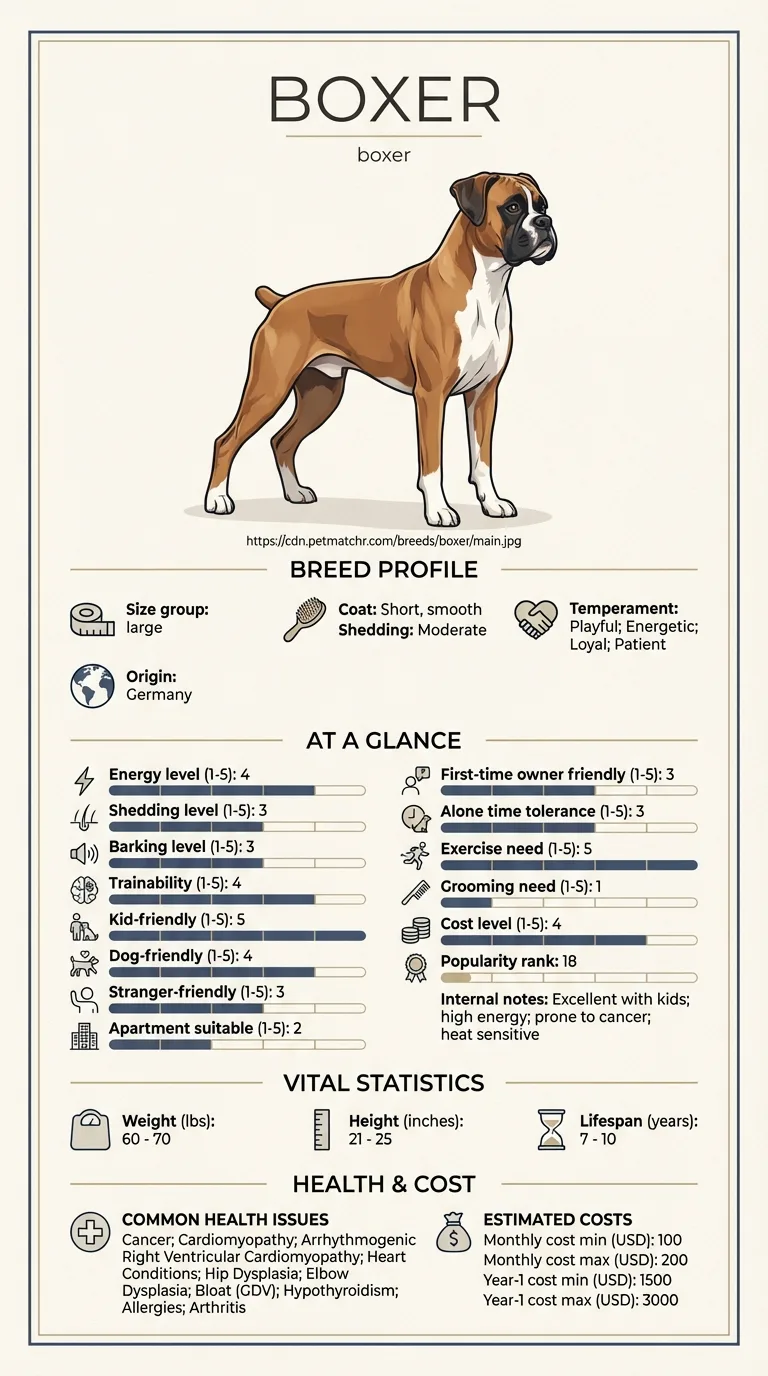
First-time Boxer owners or those living in warmer climates often struggle with BOAS. They may see their dog panting excessively or having trouble exercising, leading to concern over their pet's well-being.
This guide is not medical advice. If your dog shows pain, sudden behavior change, or worsening symptoms, consult a licensed veterinarian.
Some links may be affiliate links. We may earn a commission at no extra cost to you. We only suggest products we believe are helpful for dog owners.
We research and check what we publish, but we do not warrant that any figure, date, price, or statement is accurate, complete, or current, and we accept no liability for any loss, cost, injury, or other harm arising from the use of this site. Use it as one reference among several. You remain responsible for your own decisions and for your dog's care - confirm anything that matters with a licensed veterinarian or another qualified professional before you act on it. Full disclaimer.
Check this first
Recognizing when Boxer brachycephalic airway syndrome (BOAS) requires immediate vet attention is crucial. If your Boxer shows severe signs such as difficulty breathing, excessive panting, or blue-tinged gums, you must call your vet right away. These symptoms can indicate a life-threatening situation that needs urgent care.
Other red flags include loud, labored breathing, fainting, or a sudden inability to exercise. If your dog collapses or seems disoriented after a short walk, don’t hesitate—seek veterinary help immediately. Quick action can save your dog's life.
In contrast, mild cases of BOAS can often be monitored at home. If your Boxer occasionally snorts or coughs, or has slight wheezing during hot weather, these may not be immediate concerns. Keeping a close eye on their behavior and maintaining a calm environment can help. Make sure to limit exercise during hot days and provide plenty of water and shade. If symptoms persist or worsen, schedule a vet visit to discuss how to manage your dog's condition effectively.
If any of these apply, call your vet or an emergency clinic now. The rest of this page is for the cases that are not an emergency.
Boxer brachycephalic airway syndrome (BOAS) is a common breathing issue for Boxers due to their short snouts. Owners often notice their dogs having difficulty breathing, especially during exercise or hot weather. This can lead to snoring, coughing, and even fainting spells in severe cases.
Brachycephalic airway syndrome is quite common in Boxers, affecting a significant number of these dogs. Many owners may not realize their dog has this condition until they observe unusual breathing patterns.
Boxers are brachycephalic breeds, meaning they have short noses and flat faces. This physical trait can lead to structural issues in their airways, making it harder for them to breathe. It's common for Boxers to experience breathing difficulties, especially during exercise or in hot weather.
Environmental factors also play a role in Boxer brachycephalic airway syndrome (BOAS). For instance, high temperatures and humidity can exacerbate breathing problems. Additionally, obesity can worsen airway obstruction, making it essential to manage their weight and provide a comfortable living space.
If your Boxer experiences persistent breathing issues, coughing, or lethargy, contact your vet. They can assess your dog's condition and recommend treatments, which may include weight management or medications to ease breathing.
To help your Boxer with brachycephalic airway syndrome (BOAS), avoid these common mistakes. Each one can inadvertently worsen their breathing issues or delay recovery.
Start here: Boxer Most Common Genetic Disorders: What to Screen For
See all Boxer health problems, which breeds are prone to brachycephalic airway syndrome boas, or the full Boxer breed guide for temperament, exercise needs and ownership costs.
You can expect to see improvement in your Boxer’s breathing within a few weeks of starting care and management strategies. However, significant changes may take several months, especially if surgery is needed.
Success means your Boxer breathes more comfortably, especially during exercise or warm weather. You'll notice less wheezing and panting, and your dog will seem more energetic and playful.
Maria adopted Duke, her Boxer, and quickly noticed he struggled to breathe during their daily walks. Concerned, she researched Boxer brachycephalic airway syndrome (boas) and learned about the importance of training and environmental adjustments. By gradually introducing shorter walks, avoiding the heat, and consulting her vet about potential surgery, Duke's breathing improved significantly. Over time, he became more active and playful, and Maria felt relieved that she could keep her furry friend healthy and happy.
Key takeaway: Early intervention and consistent management can make a huge difference in a Boxer with brachycephalic airway syndrome (boas).
Signs of Boxer brachycephalic airway syndrome (boas) include loud breathing, snoring, coughing, and difficulty exercising. Your Boxer may also show signs of distress in hot weather due to breathing difficulties. If you notice these symptoms, it's important to consult a vet.
To help your Boxer, keep them cool and limit strenuous exercise during hot weather. Training can also help manage their breathing issues by teaching them to take breaks when panting. If symptoms worsen, consult your vet for possible medical interventions.
Signs include excessive panting, difficulty breathing, snoring, and coughing. You may also notice your Boxer struggling during exercise or showing distress in hot environments. If you see any of these symptoms, it's essential to consult your veterinarian.
Yes, focus on positive reinforcement methods that encourage calm behavior and controlled exercise. Gradually increase physical activity while monitoring their breathing. Frequent breaks during playtime can also help manage their stress levels.
In some cases, surgery can improve breathing for Boxers with severe BOAS. However, this decision should be made with your veterinarian, who can assess the severity of the condition and discuss potential risks and benefits.
Yes, older Boxers can develop brachycephalic airway syndrome (boas) or have worsening symptoms as they age. Their airways can become more restricted, leading to increased breathing issues. Regular vet check-ups are essential to monitor their condition.
Surgery can be an option for severe cases of Boxer brachycephalic airway syndrome (boas). Procedures may involve widening the nostrils or removing excess tissue from the throat. Discuss this option with your veterinarian to determine the best course of action.
To help your Boxer manage brachycephalic airway syndrome (boas) at home, keep them cool and avoid strenuous exercise during hot weather. Regular weight management and using a harness instead of a collar can also alleviate pressure on their airways. Always consult your vet for personalized advice.
Boxers with brachycephalic airway syndrome (boas) have narrower airways, making it harder for them to breathe, especially in heat. This can lead to overheating and respiratory distress. It's crucial to provide them with a cool environment and limit outdoor activities during hot weather.
Keep your Boxer cool, avoid strenuous activities in heat, and monitor their breathing closely. Regular vet check-ups can also help manage their health.
Create a calm environment, limit exercise on hot days, and use a harness instead of a collar to avoid pressure on their throat.
Bring your Boxer to a cooler area, offer water, and let them rest. If the panting continues, contact your vet for advice.
A one-page prep sheet for this condition: the signs, the questions to ask, what to get priced. Unlocks here.
You get: Vet visit prep sheet
No spam. One-click unsubscribe. See our privacy policy.
See a sample page before you decide.
Early access list
The free prep sheet covers the same-day warning signs, a symptom log and the questions to ask. We are considering a fuller kit that adds a cost worksheet for the usual tests and treatments (US price ranges with their sources) and a plain-English guide to ways of covering the bill. It is not built yet; this list tells us whether it is worth building.
One email, no spam, unsubscribe anytime. Information only, not veterinary advice.