Behavior
What are quick tips for Beagle small nostrils (stenotic nares)?
Maintain your Beagle's weight and avoid high-intensity activities. Keep them cool in hot weather to prevent breathing distress.

Quick answer
What are quick tips for Beagle small nostrils (stenotic nares)?
Maintain your Beagle's weight and avoid high-intensity activities. Keep them cool in hot weather to prevent breathing distress.
Beagle small nostrils (stenotic nares) can lead to breathing difficulties, making it a critical issue for owners.
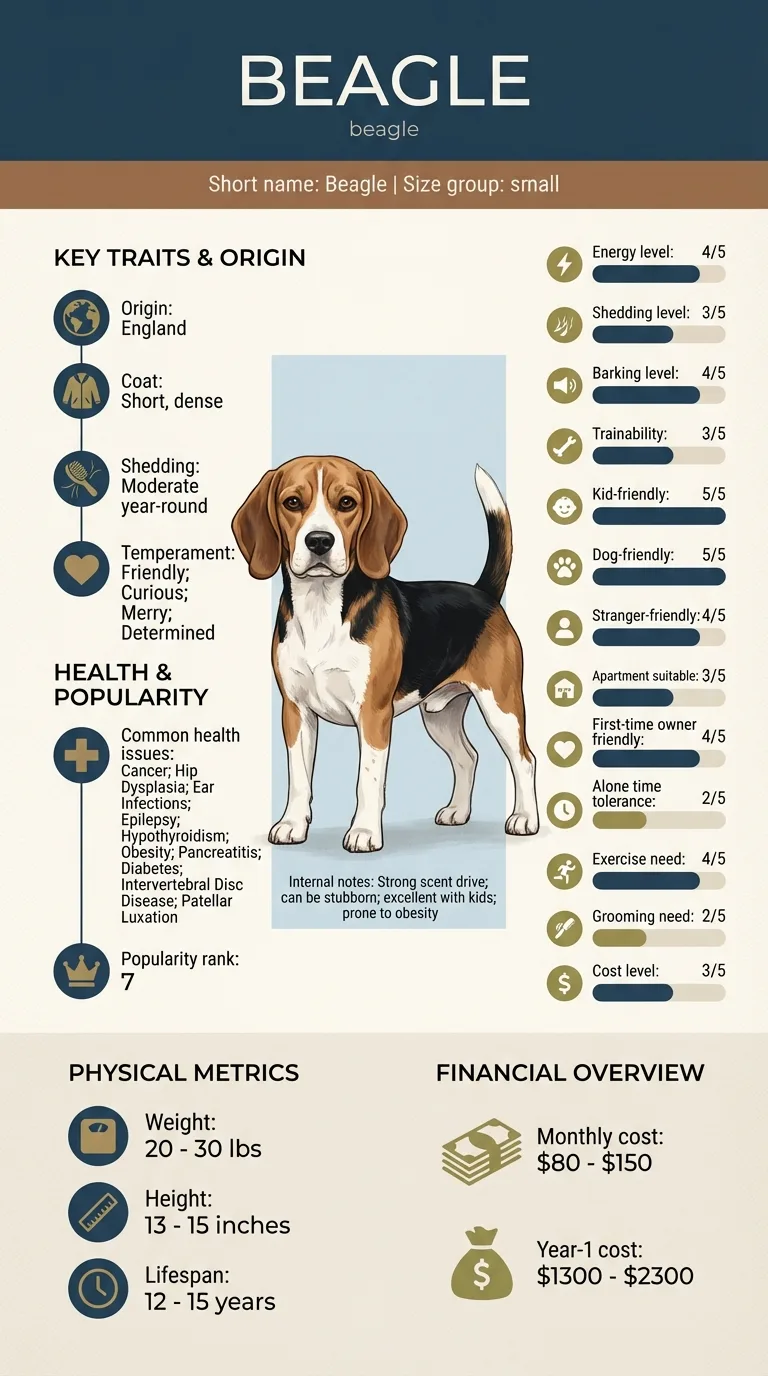
Typically, Beagle owners who notice their pets panting excessively or struggling to breathe may face this challenge. First-time dog owners or busy families may find it overwhelming to address this condition.
This guide is not medical advice. If your dog shows pain, sudden behavior change, or worsening symptoms, consult a licensed veterinarian.
Some links may be affiliate links. We may earn a commission at no extra cost to you. We only suggest products we believe are helpful for dog owners.
We research and check what we publish, but we do not warrant that any figure, date, price, or statement is accurate, complete, or current, and we accept no liability for any loss, cost, injury, or other harm arising from the use of this site. Use it as one reference among several. You remain responsible for your own decisions and for your dog's care - confirm anything that matters with a licensed veterinarian or another qualified professional before you act on it. Full disclaimer.
Check this first
It’s crucial to know when your Beagle's small nostrils (stenotic nares) may require immediate veterinary attention. Red flags include severe breathing difficulties, such as loud wheezing or gasping for air. If your Beagle collapses, shows signs of extreme lethargy, or has bluish gums, call your vet right away. These symptoms indicate a serious obstruction that needs urgent care.
In contrast, if your Beagle experiences mild breathing noise or seems to snore while sleeping, you may monitor the situation for a bit. Observing if these symptoms worsen or if your dog shows any distress during playtime can help you decide. Keeping a close eye on their activity levels and breathing patterns is essential, especially if they have a history of respiratory issues.
Always trust your instincts—if something feels off, it's better to err on the side of caution. Regular check-ups can also help detect any potential complications early on.
If any of these apply, call your vet or an emergency clinic now. The rest of this page is for the cases that are not an emergency.
Beagle small nostrils, or stenotic nares, is a common issue where the nostrils are narrower than normal. This can lead to difficulty breathing, especially during exercise or hot weather. Owners may notice their Beagle snorting, coughing, or struggling to breathe, which can be alarming.
Approximately 20% of Beagles are affected by stenotic nares, making it a frequent concern among this breed. It's especially common in puppies and young adults as their activity levels increase.
Beagles have small nostrils, known as stenotic nares, which can cause breathing difficulties. This trait is common in the breed due to their genetic makeup, making them prone to respiratory issues. Their short snouts can lead to obstructed airflow during exercise or excitement.
Environmental factors can also play a role in exacerbating breathing problems. High temperatures or humidity can make it harder for a Beagle to breathe comfortably. Additionally, exposure to smoke, dust, or allergens can worsen their respiratory condition.
If your Beagle shows signs of severe breathing difficulties, such as excessive panting or lethargy, it's crucial to consult a vet. They can evaluate the severity of the stenotic nares and discuss potential surgical options or other treatments.
Understanding common mistakes can help you support your Beagle's breathing issues more effectively. Here are some frequent missteps to avoid.
Start here: Beagle Most Common Genetic Disorders: What to Screen For
See all Beagle health problems, which breeds are prone to small nostrils stenotic nares, or the full Beagle breed guide for temperament, exercise needs and ownership costs.
You can expect to see improvements in your Beagle's breathing within a few weeks of implementing care and management strategies. Full resolution may take several months, especially if surgery is needed.
Success means your Beagle can breathe more freely, shows increased energy levels, and participates actively in walks and play without excessive panting or distress.
Sam, a busy nurse from Denver, noticed that his Beagle, Bella, often struggled to catch her breath, especially during walks. After researching, he learned about small nostrils (stenotic nares) and how they could impact her health. Sam started implementing specific training techniques to help Bella adapt her breathing during exercise. He also consulted with a vet about potential surgical options. Over the course of three months, Bella's breathing improved significantly, allowing her to enjoy longer walks without panting excessively.
Key takeaway: Understanding your dog’s specific health issues and seeking professional help can lead to significant improvements in their quality of life.
Beagles often have small nostrils due to their breed characteristics. This condition, known as stenotic nares, can lead to breathing difficulties. It's essential to monitor your Beagle for signs of distress while exercising or during hot weather.
To help your Beagle, ensure they maintain a healthy weight and avoid strenuous activities that strain their breathing. Regular vet check-ups are crucial, as surgery may be an option for severe cases. Training them to take breaks during exercise can also be beneficial.
Signs include wheezing, excessive panting, and difficulty breathing, especially during exercise. If your Beagle is struggling to catch their breath or seems lethargic, it's time to consult a vet for advice. Early intervention can prevent more severe issues.
Yes, stenotic nares can impact your Beagle's quality of life by limiting their ability to exercise and enjoy outdoor activities. Managing their condition with proper care and vet guidance can help enhance their everyday experience. Regular monitoring is key.
Surgery is a common solution for severe cases of stenotic nares, but it's not the only option. Weight management and controlled exercise can help alleviate symptoms. Consult your veterinarian to explore the best course of action for your Beagle.
Small nostrils in Beagles are often a genetic trait, particularly common in brachycephalic breeds. This condition can lead to breathing difficulties, especially during exertion or in hot weather.
Signs that your Beagle may have breathing issues include excessive snoring, labored breathing, or reluctance to exercise. If you notice these symptoms, it’s best to consult your vet for advice.
While small nostrils can affect Beagles of any age, older Beagles may experience increased symptoms due to other age-related health issues. Regular check-ups can help monitor their breathing and overall health.
While there are no true home remedies, ensuring your Beagle maintains a healthy weight and avoiding strenuous exercise can help manage symptoms. Consult your vet for tailored advice and potential treatments.
You should see a vet if your Beagle shows signs of severe breathing difficulty, such as wheezing or gasping for air. Early intervention can be crucial in preventing more serious health problems.
Maintain your Beagle's weight and avoid high-intensity activities. Keep them cool in hot weather to prevent breathing distress.
Use positive reinforcement to encourage short training sessions. Gradually increase the duration as your Beagle adjusts to their breathing capacity.
Yes, this condition can lead to more serious respiratory issues if left unmanaged. Regular vet visits are essential to monitor their health.
Absolutely. Beagles with stenotic nares may tire quickly or struggle to breathe during exercise. Short, frequent walks are often better than long runs.
If your Beagle shows signs of breathing distress, such as wheezing or excessive panting, consult your vet immediately. Prompt action can prevent serious issues.
A one-page prep sheet for this condition: the signs, the questions to ask, what to get priced. Unlocks here.
You get: Vet visit prep sheet
No spam. One-click unsubscribe. See our privacy policy.
Preview page 1 before you decide.