Behavior
What are some quick tips to manage Basset Hound bloat?
Feed smaller, more frequent meals and avoid exercise right after eating. Consider using elevated feeding bowls to slow down their eating pace.
Basset Hound bloat, or gastric dilatation-volvulus (GDV), is a serious condition that can endanger your dog's life. (Basset Hound bloat (gastric dilatation-volvulus/gdv))
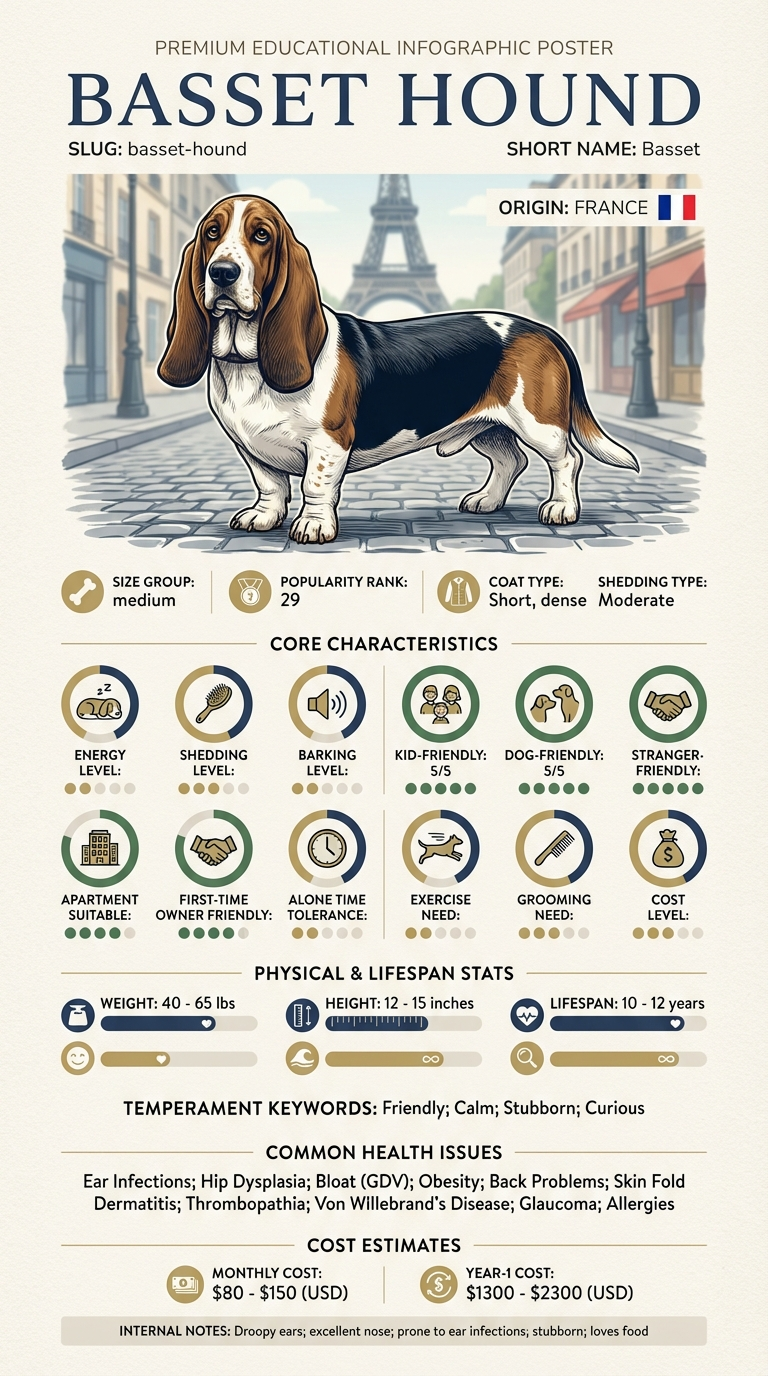
Owners of Basset Hounds, especially those who are first-time dog parents, often face challenges with this problem. Busy families and individuals who may not be aware of the breed's health risks also find themselves concerned when their dogs show signs of discomfort.
This guide is not medical advice. If your dog shows pain, sudden behavior change, or worsening symptoms, consult a licensed veterinarian.
Some links may be affiliate links. We may earn a commission at no extra cost to you. We only suggest products we believe are helpful for dog owners.
Basset Hound bloat, also known as gastric dilatation-volvulus (GDV), is a serious condition where the stomach fills with gas and twists. This can cause severe pain, restlessness, and a distended abdomen. Owners may notice their Basset Hound pacing, trying to vomit without success, or showing signs of distress.
Bloat is relatively common in Basset Hounds, particularly because of their unique body shape. While it can occur in any dog, Basset Hounds are particularly susceptible due to their deep-chested build. Owners should be aware of the signs and act quickly, as this condition can be life-threatening.
Basset Hounds are prone to bloat (gastric dilatation-volvulus or GDV) due to their deep chests and unique anatomy. These characteristics can make them more vulnerable to stomach twisting, especially after eating or drinking. Their love for food can also lead them to eat too quickly, increasing the risk.
Bloat can also be influenced by environmental factors such as feeding habits, exercise routines, and stress levels. Feeding your Basset Hound large meals or allowing them to gulp water can contribute to the problem. High-stress situations, like loud noises or changes in routine, may also trigger bloat.
If you notice your Basset Hound is anxious or stressed during meals, a trainer can help with behavioral strategies. They can also guide you on feeding habits that prevent bloat.
If your Basset Hound shows signs of bloat, such as a swollen abdomen, restlessness, or excessive drooling, contact a vet immediately. Bloat is a life-threatening condition and needs prompt medical attention.
Managing Basset Hound bloat can take several weeks to months. You'll need to consistently implement dietary changes and monitor your dog's behavior closely.
Success means your Basset Hound shows fewer signs of discomfort after eating and maintains a stable weight. Regular vet check-ups confirm a healthy stomach and digestive system.
Avoiding certain common behaviors can help mitigate Basset Hound bloat (gastric dilatation-volvulus/GDV). Here are some key mistakes to steer clear of.
Basset Hound bloat, or gastric dilatation-volvulus (GDV), can escalate quickly. It's crucial to recognize when it's an emergency versus when it can be monitored. If your Basset shows signs like uncontrollable retching, a swollen abdomen, or severe lethargy, these are red flags. Call your vet immediately, as these symptoms can indicate that their stomach is twisting, which is life-threatening.
In other cases, if your Basset Hound exhibits mild discomfort, such as slight bloating or occasional gagging without distress, you can observe them for a short period. Ensure they’re comfortable, and consider adjusting their feeding routine. Monitor their behavior closely and keep in touch with your veterinarian for guidance.
Knowing the difference can save your pet’s life. Always err on the side of caution—if you're unsure, it’s best to consult your vet right away. Remember, quick action is crucial when it comes to Basset Hound bloat, so don't hesitate to seek help.
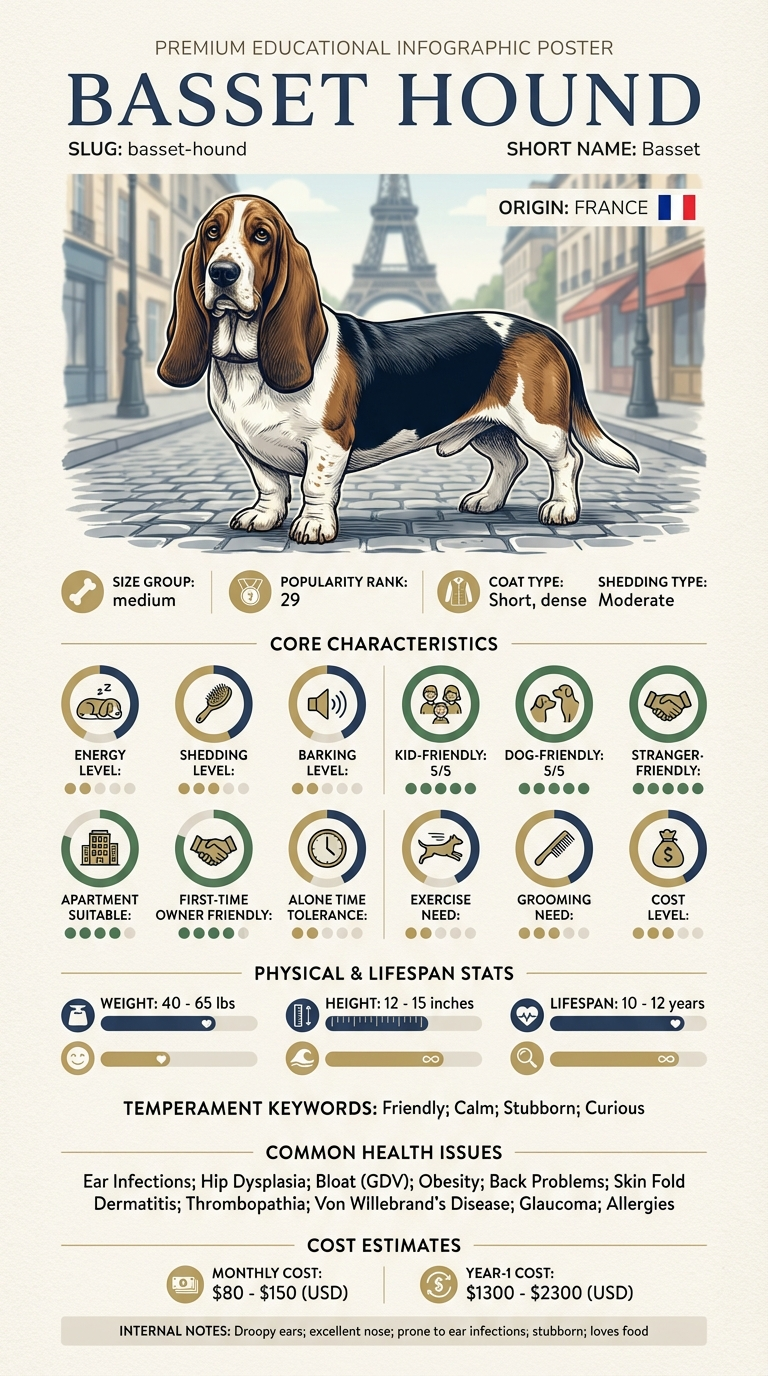
Sarah, a busy nurse in Seattle, noticed her Basset Hound, Charlie, was uncomfortable after meals. After a vet visit, she learned about gastric dilatation-volvulus (GDV) and how serious it could be. Determined to help Charlie, Sarah adjusted his feeding schedule, switching to smaller meals more frequently and ensuring he stayed calm after eating. Within a month, Charlie was much more comfortable, and his vet reported positive changes during his check-ups.
Key takeaway: With consistent dietary adjustments and close monitoring, you can effectively manage Basset Hound bloat and improve your pet's quality of life.
Bloat in Basset Hounds can occur due to several factors, including rapid eating, stress, and genetics. It's crucial to monitor their eating habits and avoid vigorous exercise immediately after meals. If your dog shows signs of bloating, such as a swollen abdomen or distress, seek veterinary help right away.
To help prevent bloat, feed your Basset Hound smaller, more frequent meals instead of one large feeding. Use elevated bowls and avoid exercise right after meals. Additionally, consider discussing preventive measures with your vet, especially if bloat is common in your dog's family history.
Symptoms of bloat include a distended abdomen, excessive drooling, restlessness, and signs of pain. Your Basset Hound may also attempt to vomit without success. If you notice these symptoms, it's essential to take them to a vet immediately, as this condition can be life-threatening.
Bloat can be fatal if not treated quickly. The stomach can twist, cutting off blood supply and leading to shock. Immediate veterinary care is critical to improve the chances of survival.
While training won't directly prevent bloat, it can help establish a calm environment during feeding times. Teaching your Basset Hound to wait for their food or eat slowly can minimize the risk. Incorporating training into their routine can promote overall well-being.
Treatment for bloat typically involves stabilizing the dog and decompressing the stomach. This may require emergency surgery to untwist the stomach and prevent recurrence. The cost for treatment can range from $1,500 to $7,500, depending on the severity.
Early signs of Basset Hound bloat can include a swollen abdomen, restlessness, excessive drooling, and attempts to vomit without success. If you notice these symptoms, it's crucial to seek veterinary help immediately, as this condition can escalate quickly.
Yes, Basset Hounds can experience bloat multiple times. Once a dog has had GDV, they may be at higher risk for future episodes. It's important to discuss preventative measures with your vet if your Basset has had this condition before.
To help prevent bloat in your Basset Hound, consider feeding smaller, more frequent meals instead of one large meal. Also, avoid vigorous exercise right before and after eating, and monitor their water intake to prevent gulping.
Take your Basset Hound to the vet immediately if you notice signs of bloat, such as a swollen stomach, distress, or unproductive vomiting. Prompt treatment is critical, as GDV can be life-threatening and requires urgent medical attention.
Yes, older Basset Hounds may be at a higher risk for bloat due to factors like decreased mobility and changes in digestion. Regular check-ups with your vet can help monitor their health and reduce the risk of developing serious conditions like GDV.
Feed smaller, more frequent meals and avoid exercise right after eating. Consider using elevated feeding bowls to slow down their eating pace.
Bloat is a medical emergency. If your Basset Hound shows symptoms, get them to a vet immediately.
Yes, adjusting their diet to smaller meals can help reduce the risk of bloat in Basset Hounds.
Yes, Basset Hounds, along with other deep-chested breeds, are more prone to bloat, making awareness crucial.
Seek veterinary attention immediately, as bloat can be life-threatening if not treated quickly.