Costs
What is the Vizsla first year cost?
That is one-time setup plus $100 to $200 a month.

See Vizsla price across all cities →
Quick answer
What is the Vizsla first year cost?
That is one-time setup plus $100 to $200 a month.
Bringing a Vizsla into your home can be a rewarding experience, but it's essential to understand the costs involved.
Costs can increase due to emergencies, unexpected vet visits, or big-ticket items like training classes and pet insurance.
The Vizsla cost in Washington D.C. can vary greatly based on factors like initial purchase, monthly care, and unexpected expenses. First-year costs are generally higher due to one-time expenses like vaccinations and spaying/neutering. Monthly expenses include food, grooming, and vet visits, making budgeting essential for potential owners.
Estimate · source: us average · confidence: medium · updated 2026-09-05 · not a quote
| Item | Cost range |
|---|---|
Initial purchase price Price varies by breeder and location. Adopted Vizslas may have lower costs. | $500 - $1500 |
Vaccinations and spaying/neutering Essential for health; costs may vary by vet. | $200 - $500 |
Training classes Training is crucial for this energetic breed. | $100 - $300 |
| Item | Cost range |
|---|---|
Monthly food and supplies High-quality food is important for a Vizsla’s health. | $50 - $100 |
Pet insurance Can mitigate unexpected vet bills; varies based on coverage. | $30 - $70 |
Grooming Vizslas have low grooming needs but may require occasional baths. | $20 - $30 |
Each range starts from a national baseline for this breed's size class and is then adjusted for local cost of living and veterinary pricing. The baselines, and the source each one came from, are listed on our sources page (dataset 2026.09). Two inputs, the purchase price and the emergency reserve, have no published national figure we could verify, so we leave them to you rather than invent them.
These are planning estimates, not quotes. Your own numbers will move with the individual dog, your vet and your insurer. Build a budget with your own figures.
When considering the Vizsla cost in Washington D.C., pet insurance can be a helpful tool.
This is especially true for Vizslas, who may face health issues like hip dysplasia and cancer.
Additionally, if you're considering adopting older pets or those with preexisting conditions, the costs may outweigh potential benefits.
Owning a Vizsla in Washington D.C. Here are some practical tips to help manage your Vizsla expenses.
When considering the Vizsla cost in Washington D.C., it's crucial to think beyond initial expenses. Hidden costs can sneak up on you, impacting your budget in ways you might not expect. Regular grooming, for instance, may seem minor, but it can add up to $50-$100 every few months, especially if you factor in the occasional professional trim or bath.
Vizslas are generally healthy, but unexpected vet visits can occur. You might face bills ranging from $100 for minor issues to $1,000 for more serious concerns like surgeries.

Your Vizsla will need gear like collars, leashes, and toys. These items wear out or get lost, leading to costs of $20-$100 annually. Remember to account for quality items since your energetic dog will likely put them through the wringer.

In Washington D.C., a daycare can cost around $300-$600 monthly, while classes might add another $100-$300 over time. These expenses are vital for a well-adjusted and happy Vizsla.

Living in Washington D.C. can significantly affect the overall cost of owning a Vizsla. The city boasts a high cost of living, which translates into higher expenses for dog-related services.
For instance, veterinary care is often more expensive due to the density of pet owners and the quality of care provided in urban settings.
In D.C., you can expect to pay between $150 and $300 for routine vet visits. Additionally, dog grooming and training services might also come with a premium price tag. The climate in Washington D.C.
can impact your Vizsla's exercise routine as well. Hot summers and chilly winters may require adjustments to your walking and playtime schedule.
Moreover, housing costs play a crucial role in your Vizsla's overall expenses. If you're renting, pet-friendly apartments may have higher rents or additional pet fees. On the flip side, owning a home can mean added responsibilities, like maintaining a yard for your Vizsla to play in.
Local parks and dog-friendly areas are plentiful, but some may require permits or fees. Overall, understanding these local dynamics can help you budget effectively for your Vizsla.

She quickly learned that the Vizsla cost in Washington D.C. wasn't just about the adoption fee. Emily set a monthly budget of $150 for Max, covering food, supplies, and routine vet check-ups. However, she was surprised by an unexpected expense when Max developed a minor ear infection, costing her an extra $300 on top of her planned budget. This incident taught her to factor in emergency vet bills and the importance of having a buffer in her budget for unexpected health issues.
Key takeaway: Planning for a Vizsla's costs in Washington D.C. requires careful budgeting for both regular and surprise expenses.
The Vizsla cost in Washington D.C. This includes expenses like food, vet visits, and supplies.
Vizslas can be considered moderately expensive. Their initial purchase price, combined with ongoing costs, means you'll want to budget carefully.
The Vizsla monthly cost generally falls between $100 and $200. This covers food, grooming, and regular vet visits.
Rates can vary based on coverage and the dog's age.
Vizsla vet bills in Washington D.C. can vary widely.
Budgeting an additional $500 to $1,000 per year is wise.
Grooming costs for a Vizsla are relatively low due to their short coat. Expect to spend $30 to $50 every couple of months for professional grooming.
While pet insurance isn't required, it can be a smart investment for a Vizsla. Monthly premiums typically range from $30 to $60.
It's wise to have an emergency fund for your Vizsla, ideally around $1,000 to $2,000. This can cover unexpected health issues or accidents that may arise.
Living in Washington D.C. may increase some costs associated with owning a Vizsla. Higher pet service prices, like grooming and training, are common. Additionally, consider the cost of dog-friendly parks and facilities in the area.
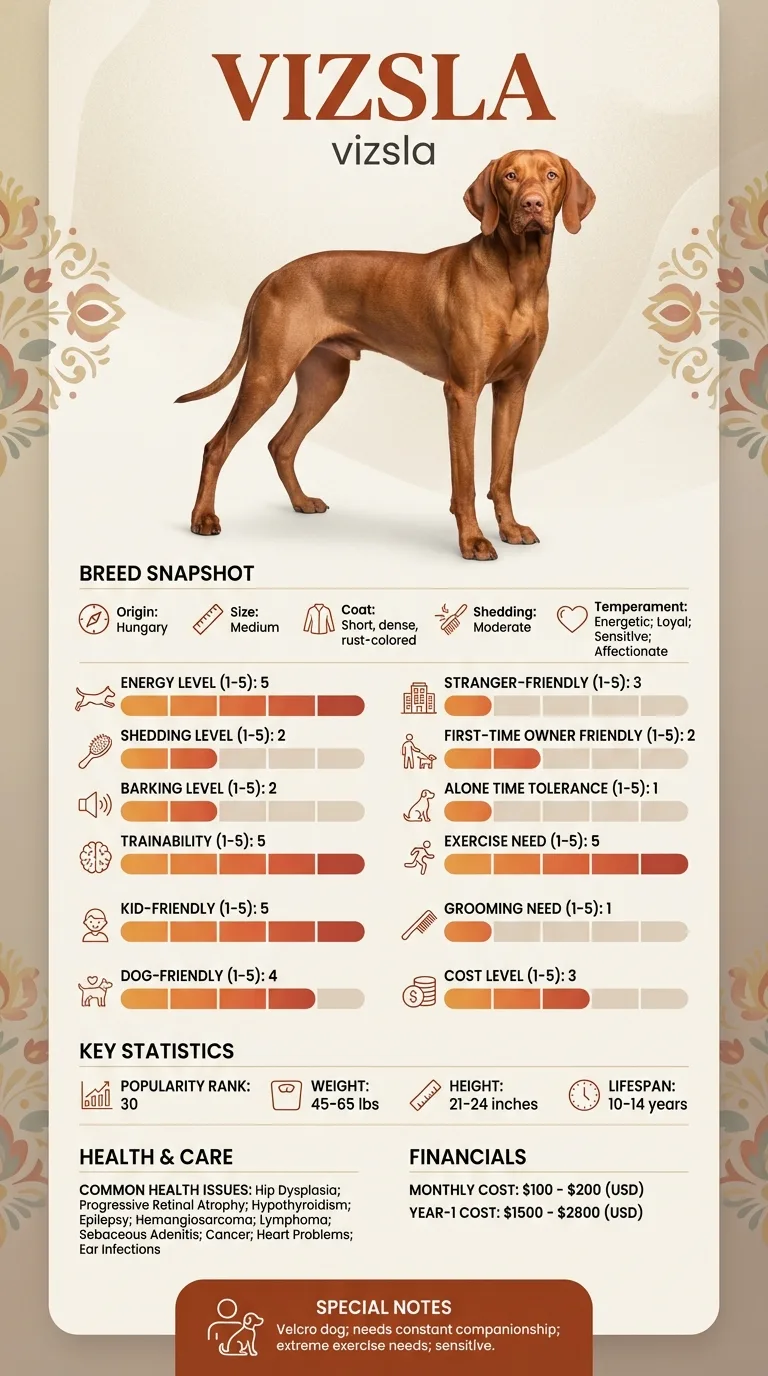
The Vizsla first year cost in Washington D.C. can range from $1,500 to $2,800. This includes expenses like adoption fees, vaccinations, supplies, and initial training. It's important to budget accordingly for a happy and healthy start.
That is one-time setup plus $100 to $200 a month.
Ongoing costs for a Vizsla in Washington DC come to $100 to $200 a month. Monthly food and supplies alone accounts for $50 to $100.
Vizslas may face health issues like hip dysplasia and heart problems. Regular vet check-ups are essential.
To budget for a Vizsla, plan for initial costs, monthly expenses, and unexpected vet bills. Setting aside $200 a month is a good start.
Vizslas require consistent training and socialization due to their energetic nature. Consider investing in training classes to help them thrive.
This guide is not medical advice. If your dog shows pain, sudden behavior change, or worsening symptoms, consult a licensed veterinarian.
Some links may be affiliate links. We may earn a commission at no extra cost to you. We only suggest products we believe are helpful for dog owners.
We research and check what we publish, but we do not warrant that any figure, date, price, or statement is accurate, complete, or current, and we accept no liability for any loss, cost, injury, or other harm arising from the use of this site. Use it as one reference among several. You remain responsible for your own decisions and for your dog's care - confirm anything that matters with a licensed veterinarian or another qualified professional before you act on it. Full disclaimer.
One sheet with every line item, the emergency fund and when insurance pays off - unlocks on this page.
You get: 12-month budget sheet
No spam. One-click unsubscribe. See our privacy policy.
Preview page 1 before you decide.